Coffee Grinder Guide: Why It Matters More Than the Beans (And What to Actually Buy)

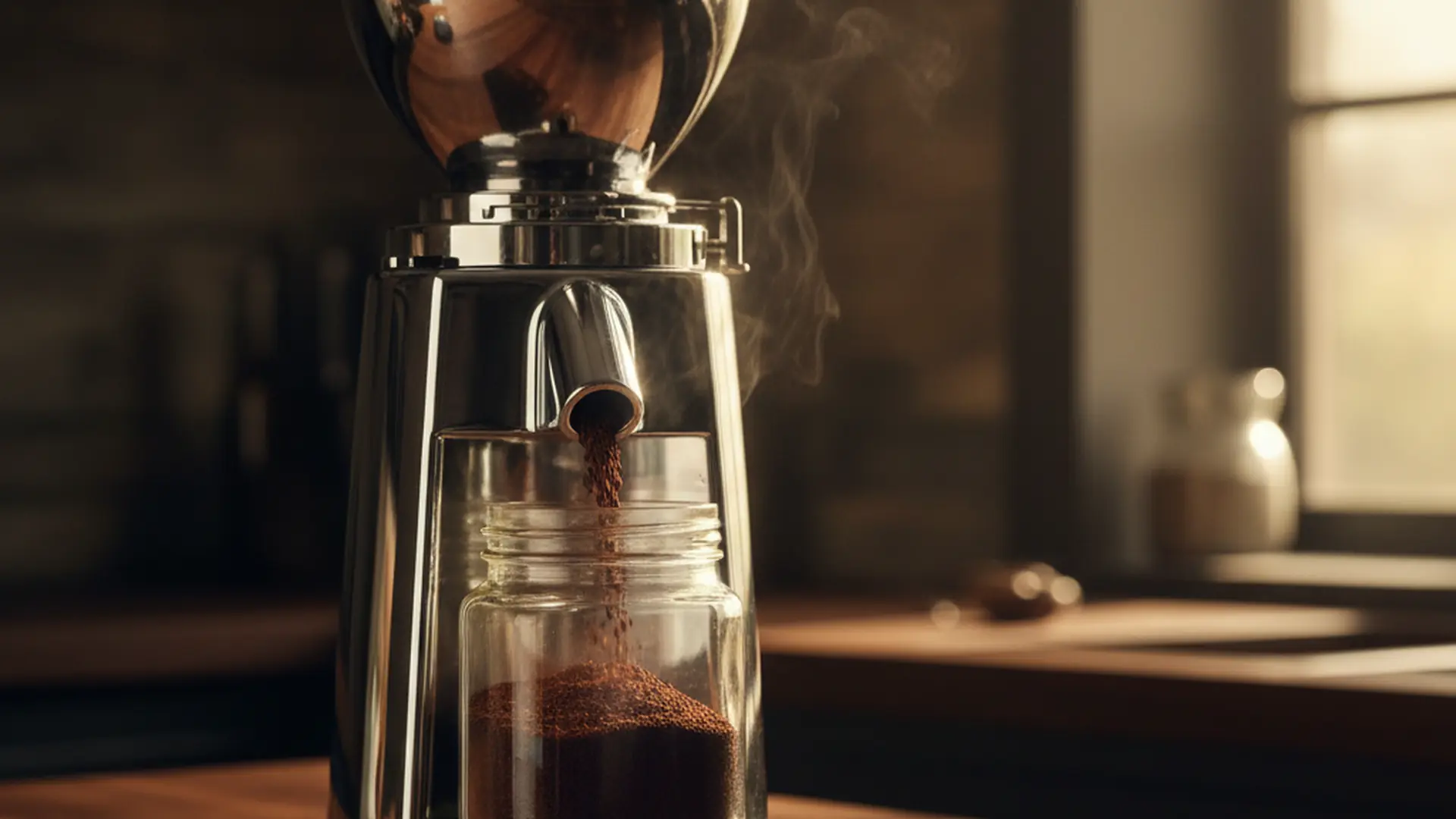
Every dad I know has done this dance. Buys a $22 bag of single-origin beans from somewhere with a hand-drawn logo. Carries them home like contraband. Dumps them in the same $19 blade grinder he’s owned since college. Brews. Sips. Makes the face. Says “I dunno, it tastes… fine?” It doesn’t taste fine. It tastes like sad cardboard with notes of regret.
Quick answer: The grinder matters more than the beans. Skip blade grinders entirely and buy a burr grinder, which makes uniform particles for even extraction. For pour-over and drip, a $50–$120 manual or $150–$250 electric is plenty. For espresso, budget at least $300. Under $1,500, spend on the grinder before the machine.
- Burr beats blade, always. Burrs crush beans to a uniform size; blades chop random shrapnel and scorch the grounds with friction heat.
- Uniform particle size is the whole game. Even grounds extract evenly, so the cup tastes like one thing instead of sour, bitter, and ashy fighting at once.
- Match spend to method. $50–$120 manual or $150–$250 electric covers drip and pour-over; espresso starts at $300 and gets real around $500.
- For under $1,500 espresso setups, the grinder matters more than the machine. Cheap out on the machine, never the grinder.
- Grind right before brewing and clean monthly. Pre-ground coffee loses 60% of its aromatics within an hour, and rancid oils tax every cup.
Here’s the part nobody tells you in the coffee aisle: the grinder makes the cup more than the beans do. A great grinder with average beans makes good coffee. A bad grinder with great beans makes the same dishwater you’ve been drinking for a decade. The bag with the hand-drawn logo did not save you. (If you want a deeper look at what those bags actually promise, washed, natural, and honey processing decoded plainly is worth a read.)
This is the no-nonsense breakdown. Why grind matters. Burr vs blade (spoiler: blade loses). Conical vs flat. Manual vs electric. What to spend at each tier. The marketing traps that empty your wallet without improving your morning. And the one upgrade that genuinely changes how coffee tastes at home.
The 30-second answer
Skip blade grinders. Buy a burr grinder. For pour-over and drip: a $50–$120 manual or a $150–$250 electric burr is plenty. For espresso: budget at least $300, often more. The grinder matters more than the espresso machine for under $1,500.
If you remember nothing else: blade grinder out, burr grinder in.
Why grinding matters at all
Coffee extraction is a chemistry problem. Hot water pulls flavor compounds out of ground coffee at different rates depending on grind size. Big chunks under-extract — sour, weak, watery. Tiny dust particles over-extract — bitter, harsh, ashy. The same brew water hitting both extremes at once produces “fine” coffee that’s actually a chaotic mix of under-extracted big bits and over-extracted dust.
A good grinder makes uniform particles. Most pieces the same size. The water extracts at the right rate from most of them. The cup tastes like one thing instead of three things fighting each other.
That’s the whole game.
Blade grinders: why they’re already losing
A blade grinder is a propeller in a cup. You hit a button, it spins, it chops the beans into random shrapnel — some powder, some pebbles, some chunks too big to extract before your kettle goes cold. Then it heats the coffee from friction, scorching the outer particles before they hit hot water.
Two problems, one device:
- Inconsistent particle size. Random chop, random extraction.
- Friction heat. The blade is faster than water. Coffee gets cooked before it brews.
Blade grinders work for spices. They do not work for coffee. They cost $20 because they cost $20 to make. Throw it in the donation bin. (Or keep it for grinding cardamom — it’s actually decent at that.)
What burrs are, and why they win
A burr grinder uses two abrasive surfaces that crush beans between them. The beans pass through a controlled gap, get ground to that gap’s size, and fall out. Same gap = same particle size. Adjust the gap — you change the grind from espresso-fine to French-press-coarse without touching the beans.
Two main burr shapes:
Conical burrs
One cone-shaped burr sits inside a ring burr. Beans fall down through the gap by gravity. Common in mid-range home grinders ($100–$500). Quieter, slower, lower static, lower retention. Slight bimodal grind distribution (a small amount of dust alongside the main particles), which actually makes for forgiving pour-over and drip.
Flat burrs
Two flat ring burrs spinning against each other. Beans get pulled through by motor force. Common in high-end home grinders ($400+) and almost all commercial machines. Faster, more uniform particles, brighter cup clarity. Louder, more retention, more static.
For most home cooks: conical is plenty. If you’re chasing espresso clarity at $1,000+ machine territory, flat starts paying off.
Manual vs electric (the honest tradeoff)
Manual (hand crank)
- $50–$200 gets you grind quality that costs $300–$500 in electric.
- Quiet. Tiny on the counter. Travels well.
- You’re cranking for 60–90 seconds per cup. Not a chore for one cup. A workout for four.
- Best for: solo morning coffee, pour-over, AeroPress, travel.
Electric
- Convenience. One button.
- Better for households where multiple people make coffee at different times.
- Required for espresso (you need fast, fine, repeatable).
- Bigger, louder, more counter space.
- Best for: espresso, batch brewers, busy mornings, families.
If you make one cup a day on a pour-over, a $90 manual grinder beats a $200 electric. If you make 3 cups before 8 a.m., electric every time.
Steel vs ceramic burrs
Steel burrs (most common): sharper edges, faster, lighter cup, last 5–8 years for home use before noticeable dulling.
Ceramic burrs (some manuals, some entry-level electrics): stay sharp longer, slower grind, less heat. Not as crisp on espresso but fine for pour-over and immersion methods.
Both work. Don’t lose sleep over this. The geometry and quality of the burr matters more than the material.
The retention problem (the silent flavor killer)
Retention is grounds left inside the grinder after a dose. They sit. They go stale. They mix with the next dose.
If you grind 18 grams and 2 grams stay in the grinder, you got 16 fresh + 2 stale next time. That’s a 12% staleness tax on every cup.
Conical burr grinders generally have lower retention than flat burrs. Cleaner pathway designs (fewer dead spots, anti-static measures) keep grounds moving through.
The fix: clean your grinder regularly. Burr cleaning tablets (Urnex, Cafiza) every 3–4 weeks. Once a year, disassemble and brush out the burrs and chute. Twenty minutes total.
The static problem (why grounds fly everywhere)
You grind. You lift the catcher. Half the dose is stuck to the side of the bin like glitter on a kindergartener. That’s static.
Three fixes that actually work:
- RDT (Ross Droplet Technique). Spray the beans with a tiny mist of water before grinding. Half a second of spray. Cuts static by 80%.
- Anti-static catch. Some grinders ship with a knocking/tapping bin. Helps a little.
- WDT tool. A small tool with thin wires you stir grounds with after grinding. Breaks up clumps. Mostly an espresso thing.
The cheapest fix is RDT. A $4 spray bottle solves a $300 grinder’s static problem.
Best grinder by brewing method
| Brew Method | Grind Size | Minimum Grinder Tier |
|---|---|---|
| French press | Coarse | $50 manual or $100 electric |
| Pour-over (V60, Chemex) | Medium | $80 manual or $150 electric |
| Drip / batch brewer | Medium | $80 manual or $150 electric |
| AeroPress | Medium-fine | $60 manual or $100 electric |
| Moka pot | Fine (between pour-over and espresso) | $100 manual or $180 electric |
| Espresso | Very fine | $300 electric minimum, $500+ realistic |
| Cold brew | Extra coarse | $50 manual |
Espresso is its own animal. Pulling a real espresso shot needs a grinder that produces uniform fine particles in a tight, repeatable range. The $200 “espresso grinder” you found at a big-box store does not. Save until you can afford a real one or stick to brewed coffee — which is honestly more forgiving and just as enjoyable.
The price tiers (what you actually get at each)
Under $50: skip
This tier is blade grinders and the worst entry burr grinders. You’ll be replacing it in a year.
$50–$120: manual burr territory
1Zpresso JX-Pro, TIMEMORE Chestnut C2S conical burr manual grinder, Kingrinder K6. Grind quality that punches above the price by a wide margin. Best dollar-per-quality move in coffee, full stop. If you brew one or two cups at a time, this is the smart buy.
$150–$250: entry electric
Baratza Encore (drip and pour-over), OXO Brew, Fellow Opus. Quiet enough, consistent enough, daily-driver simple. Encore is the sane default for someone making drip coffee for a family.
$300–$500: real upgrade
Baratza Virtuoso+, Eureka Mignon Manuale, Fellow Ode Gen 2. Noticeable jump in cup clarity. Better burr geometry. Some are dual-purpose (pour-over and entry-level espresso).
$500–$900: dedicated espresso ground
Niche Zero, Eureka Mignon Specialita, DF64. The minimum tier where home espresso starts producing café-quality shots consistently.
$1,000+: enthusiast / hobby grinders
Niche Duo, Lagom P64, Mahlkönig X54. Diminishing returns for casual home use, real differences for café operators or coffee obsessives.
Marketing traps to spot
- “Conical steel burr blade grinder.” If a product description uses “burr” and “blade” interchangeably, it’s a blade grinder pretending. Look at the parts diagram.
- “40 grind settings!” Settings count is meaningless if the burr can’t produce uniform particles. A grinder with 7 settings and great burrs beats one with 40 settings and bad burrs.
- “Built-in scale and timer.” Useful but not a substitute for grind quality. A $300 “smart” grinder with mediocre burrs makes worse coffee than a $150 dumb grinder with good burrs.
- “Quiet ceramic burr.” Marketing-speak. Ceramic isn’t quieter; the motor is. Ceramic has its place — it’s not a tone-deciding feature.
- “Includes free coffee subscription.” A subscription is a recurring sale, not a feature. Buy the grinder, choose your beans separately.
- Espresso grinders under $200. They almost never produce true espresso grind quality. A few rare exceptions exist; most are upselling exercises.
Mistakes that quietly ruin your coffee
- Grinding 24 hours ahead. Pre-ground coffee loses 60% of its aromatics within an hour. Grind right before brewing, every time.
- Never cleaning the grinder. Old oils go rancid. The new cup tastes like the old cup, plus 10% staleness.
- Same grind size for everything. Pour-over coarseness in an espresso machine is hot water with brown vibes. Adjust per method.
- Buying beans by aesthetic. The bag with cool fonts isn’t fresher. Look for a roast date within the last 14 days.
- Storing beans in the freezer in the open bag. Moisture infiltrates. Coffee absorbs the freezer (yes, even sealed). If freezing, use a vacuum-sealed bag and pull out only what you’ll use that week.
- Skipping the scale. “Eyeballing” 18g of grounds means you’re brewing 14g some days and 22g others. Buy a $20 scale. Stop guessing.
The Grumpy Dad recommendation by household
One adult, one cup a day, pour-over or drip
Manual: 1Zpresso JX-Pro or Timemore C3 ($90–$150). Punches well above price. Lasts a decade.
Family of 3–5, one batch brewer, weekday mornings
Electric: Baratza Encore or Fellow Opus ($150–$200). One button, kid-proof, lives on the counter forever.
Coffee enthusiast, multiple methods (pour-over + AeroPress + occasional French press)
Electric: Baratza Virtuoso+ or Fellow Ode Gen 2 ($230–$350). Jumps to a real flavor difference. Worth it if coffee is a hobby, not just a habit.
Home espresso person under $1,500 total budget
Electric: Niche Zero or DF64 ($550–$650) paired with a $700–$800 espresso machine. If you cheap out anywhere, do it on the machine — not the grinder.
Camping, traveling, second home
Manual: Timemore Slim or Hario Skerton Pro ($60–$90). Survives bag toss. Doesn’t need power. Backup grinder forever. You can also grab a pour-over hand drip kit bundled with a manual grinder if you want everything in one box.
What grinder upgrades won’t fix
- Stale beans. Roast date matters. A $1,000 grinder doesn’t restore aromatic compounds that flew off two months ago. (For a full rundown on beans worth grinding, browse our coffee, tea, and espresso gear collection.)
- Bad water. Coffee is 99% water. Hard water with high TDS murders the cup. (More on this in our upcoming Water Hardness guide.)
- Wrong dose ratio. Grinder gets the size right; the scale gets the amount right.
- Wrong temperature. 200–205°F brew water for most methods. Boiling water from a screaming kettle is too hot.
- Lack of a clean kitchen towel within reach when you’re rushing. (You’d be surprised.)
If you only remember five things
- Burr beats blade. Always. No exceptions.
- Grind right before brewing. Pre-ground is permanent compromise.
- Match the grind to the brew method. Different sizes for different cups.
- Clean the grinder once a month. It tastes like neglect when you don’t.
- For under $1,500 espresso setups, the grinder matters more than the machine.
FAQ
Is a $90 manual grinder really better than a $150 electric?
For one cup at a time, yes — the burr quality of mid-range manuals (1Zpresso, Kingrinder, Timemore) genuinely beats most $150 entry electrics. The tradeoff is your wrist. For a daily single cup, the wrist is fine. For four cups before school, you want electric.
How often should I clean the grinder?
Quick wipe weekly. Burr cleaning tablets monthly. Full disassembly and brush-out twice a year. If you smell rancid coffee oil, do it sooner.
Should I freeze my beans?
For long-term storage (beyond 2 weeks), yes — vacuum-sealed bag, freezer, take out only what you’ll use that week. For active beans, an opaque airtight container at room temperature is fine. Skip the fridge — it’s the worst of both worlds (moisture + odors).
Does grinder weight matter?
For manuals, yes — heavier means more stable on the counter. For electrics, weight is a proxy for build quality but not a guarantee. A heavy electric isn’t automatically better.
Can I use a spice grinder for coffee?
Same blade grinder problem. It chops, it doesn’t grind. Don’t.
Is the Fellow Opus worth the hype?
For pour-over and drip, yes — it’s a well-designed entry electric burr at $195. For espresso, it can technically do it but isn’t fast or precise enough for repeatable shots. Fellow’s marketing implies espresso capability that doesn’t really hold up.
What’s the lifespan of burrs?
Steel burrs: 800–1,500 lbs of coffee for home, which is 5–8 years for most households. Ceramic: closer to 2,000+ lbs but slower grinding. Replacement burrs run $30–$80 — way cheaper than a new grinder.
The Grumpy Dad Promise
Buy the grinder before the next bag of beans. Spend $90–$200 once. Grind right before you brew. Use a scale. Use water that doesn’t taste weird from the tap. Do that, and your morning cup turns into the kind of thing you actively look forward to instead of the brown caffeine slurry you tolerate. Once the grinder is sorted, the honest dad’s guide to brewing specialty coffee at home covers what to do next.
The bag with the hand-drawn logo will finally taste like what the roaster intended. The dishwater era ends. Now go grind something.
FAQ
Does the grinder really matter more than the beans?
Yes. A good burr grinder with average beans makes good coffee, while a bad blade grinder ruins great beans. Uniform grind size controls extraction, and extraction is what you actually taste in the cup.
Conical or flat burrs — which should I buy?
For most home brewing, conical is plenty: quieter, lower retention, and forgiving on pour-over and drip. Flat burrs deliver brighter cup clarity and only start paying off once you’re chasing espresso at $1,000-plus machine territory.
If I’m on a budget for espresso, should I spend on the grinder or the machine?
The grinder, every time. Under a $1,500 total budget, pair a $550–$650 grinder like a Niche Zero or DF64 with a cheaper machine. Espresso needs uniform fine particles in a tight, repeatable range, and that comes from the grinder.
How do I stop grounds from flying everywhere?
Use RDT (the Ross Droplet Technique): mist your beans with a half-second spray of water before grinding. It cuts static by about 80%. A $4 spray bottle fixes a $300 grinder’s static problem.
Are more grind settings better?
No. Settings count is meaningless if the burrs can’t produce uniform particles. A grinder with 7 settings and great burrs beats one with 40 settings and bad burrs every time.
What grind size do I use for each brew method?
Coarse for French press and cold brew, medium for pour-over and drip, medium-fine for AeroPress, fine for moka pot, and very fine for espresso. Using one grind size for everything is how you get hot water with brown vibes.