Best Japanese Knives for Home Cooks in 2026: Santoku, Nakiri, Bunka & Where to Start

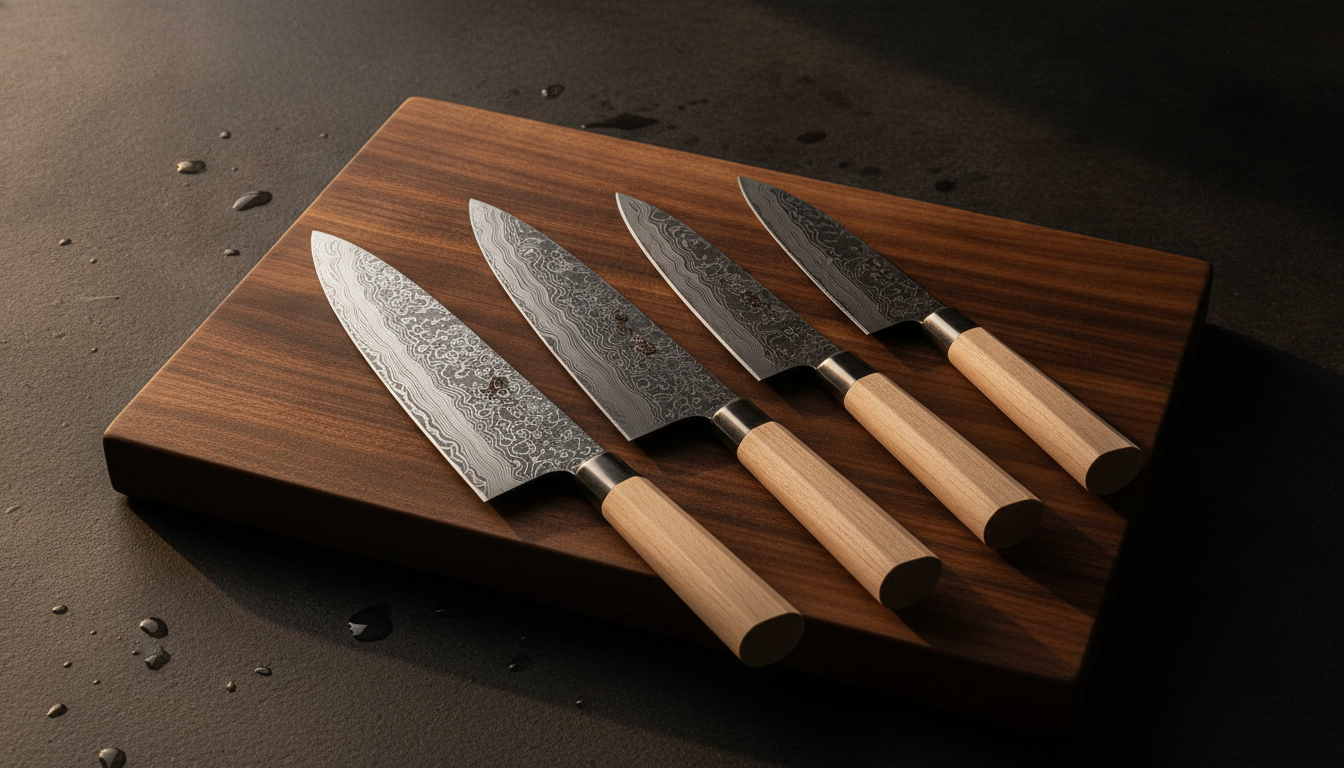
Somewhere in your kitchen is a knife you bought because it was on sale, came in a block of twelve, and looked vaguely like a knife a chef would use. It is dull. It crushes garlic instead of slicing it. And every time you use it, a small part of your soul files a complaint.
This is the guide that fixes that. No 4,000-word history of feudal Japanese metallurgy, no influencer cosplay. Just which Japanese knife to actually buy if you cook real dinners for real people, and where to start without remortgaging the house.
Why Japanese knives, and why a grumpy dad cares
Japanese kitchen knives are thinner, harder, and ground to a sharper angle than the German tanks most people grew up with. In plain English: they’re sharper, they stay sharper, and they make cooking feel less like a chore and more like a skill you suddenly have. The trade-off is that they reward people who don’t put them in the dishwasher. (We’ll get to that. Briefly. Because the answer is no.)
You don’t need ten of them. You need two or three that earn their place on the magnetic strip. Here’s how to pick.
Start with the shape, not the brand
Most people shop for knives by brand or by how shiny the Damascus pattern is. Wrong order. Start with what you actually cut.
The Santoku — the all-rounder for people who cook normal food
If you want one knife that does 80% of the work — vegetables, boneless meat, herbs, the daily grind — get a santoku. It’s the Japanese answer to the chef’s knife: a little shorter, flatter, and friendlier for the up-and-down chopping most home cooks actually do. Our Yoshida Hamono Funkai Santoku in Aogami #2 steel is the one we hand people who say “I just want a good knife and I don’t want to think about it.”
The Nakiri — for anyone who chops a lot of vegetables
Flat profile, straight edge, full-width blade. The nakiri is built for vegetables: it goes straight down to the board with no rocking, so you get clean cuts and your onions don’t end up half-crushed. If your weeknight cooking is heavy on produce, a Nakiri will change your relationship with dinner prep more than any gadget you own.
The Bunka — the show-off that’s also genuinely useful
A bunka is a santoku that went to art school. The reverse-tanto tip gives you precision for detail work (scoring, fine slicing) while the belly still handles everyday chopping. It’s the knife that gets picked up first at every gathering. The Aogami Bunka with a keyaki (elm) handle is our pick for the person who wants one knife that’s both a workhorse and a conversation piece.
The Petty — the little one you’ll reach for more than you’d expect
A petty is a utility knife: too big to be a paring knife, too small to be a chef’s knife, exactly right for fruit, cheese, garlic, and the 100 small tasks that don’t justify hauling out the big blade. The Satake Hammered Damascus Petty is the one that quietly becomes your most-used knife.
The honest starter lineup
If you’re building from scratch, you don’t need the whole drawer. You need this:
- One main knife — a santoku or bunka. This is the knife you cook with every night.
- One vegetable specialist — a nakiri, if you prep a lot of produce.
- One small knife — a petty for the fiddly stuff.
That’s it. Three knives that cover everything a home kitchen throws at you, and you’ll out-cut a 20-piece block set every single time. Browse the full lineup in our Japanese Knives collection.
What about steel? (The short version)
You’ll see two camps: carbon steel (like Aogami / “blue paper” steel) and stainless. Here’s the grumpy-dad summary:
Carbon steel gets sharper and stays sharper, but it will rust if you’re careless. Stainless is more forgiving and nearly maintenance-free, but tops out slightly less keen. Neither is “better” — they’re better for different people.
If you wipe your knife dry after using it like a functioning adult, carbon steel rewards you. If your knife lives a hard life and gets left wet on the counter, go stainless — the Satake 69-Layer Stainless Damascus Chef gives you the looks without the babysitting. We go deeper on this in Knife Steels 101.
How much should you actually spend?
| Budget | What you get | Verdict |
|---|---|---|
| Under $30 | Mass-produced, soft steel, dull in a month | You’ll buy it twice. Skip. |
| $50–$120 | Real Japanese steel, hand-finished, holds an edge | The sweet spot for home cooks |
| $120–$200 | Premium steel, artisan handles, heirloom-grade | Buy once, hand it down |
The honest news: you do not need to spend $300 to get a knife that humiliates everything in your current drawer. Most home cooks are perfectly served in the $55–$135 range. Our Grumpy Dad Co 8″ Damascus Chef Knife sits right in that pocket on purpose.
The part everyone skips: keeping it sharp
A great knife you never maintain becomes a mediocre knife in six months. Two habits fix this forever:
- Hand-wash and dry. Thirty seconds. The dishwasher is where good knives go to die.
- Hone and occasionally sharpen. A few passes on a whetstone every month or two keeps the edge honest.
If you bought carbon steel, add a thin wipe of food-grade camellia oil before storage and rust will never be your problem. Full routine in our Care Guide.
The grumpy bottom line
Buy fewer knives, buy better ones, and wipe them dry. Start with one main knife you love, add a nakiri if you chop vegetables, and a petty for everything small. Do that and you’ll cook better food, faster, with less swearing — which, around here, is the whole point.
Ready to stop fighting your tools? Start with the Japanese Knives collection and pick the one shape that matches how you actually cook.