Why Your Japanese Knife Doesn’t Feel “Razor Sharp” — And Why That’s Actually the Point
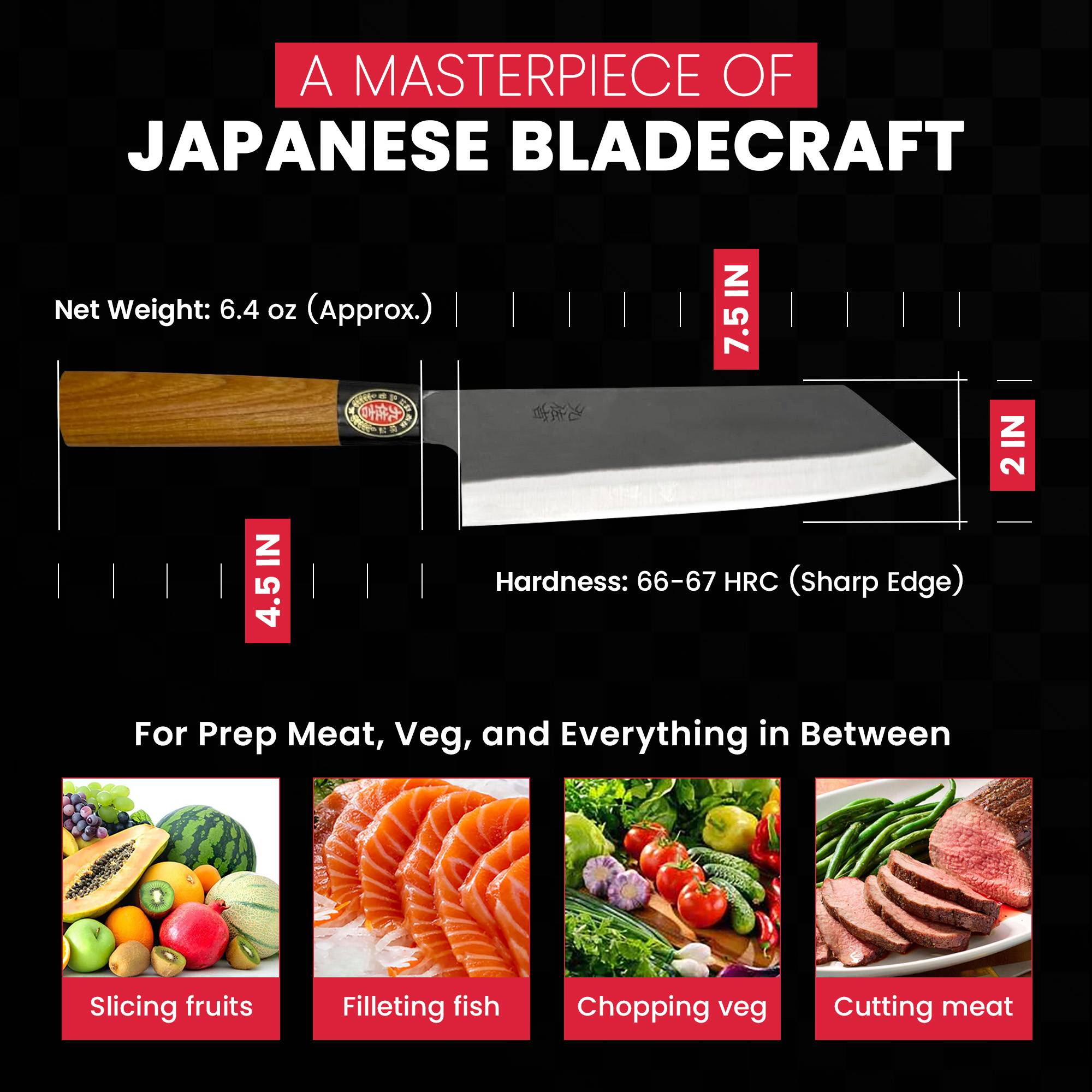
If you've ever picked up a Japanese knife rated at 66–67 HRC and thought, "This should feel insanely sharp... why doesn't it?" — you're not alone.
This question comes up all the time. Especially from cooks who've spent years using Western-style knives like Dalstrong.
And the answer isn't that the knife is dull.
It's that Japanese sharpness works differently.
The Sharpness Myth: Why Harder Steel Doesn't Feel More Aggressive
Most people associate "sharp" with bite. Aggression. Force.
Western knives are designed to deliver exactly that feeling. They're typically thicker behind the edge, made from softer steel, and heavier in the hand. That combination creates resistance — and resistance feels powerful.
Japanese knives flip that idea on its head.
At 66–67 HRC, steels like Aogami #2 (Blue Steel #2) are harder, thinner, more refined. Instead of digging in aggressively, the edge is designed to glide. Less drama. More precision.
If you're expecting bite, you'll miss the point entirely.
Why Japanese Knives Feel "Different" at First
If you use a Japanese knife the same way you use a Western knife, it may feel underwhelming. That's because Japanese knives are not designed for heavy rocking, pressing straight down, or powering through food.
They're designed for push cuts, pull cuts, controlled slicing.
Once you adjust how you move the blade, the sharpness becomes obvious. And effortless.
Most people don't realize the knife hasn't changed. They have.
The One Technique Change That Makes Everything Click
Stop pushing down. Start slicing.
Let the edge travel through the food, not into it. When you do, vegetables separate cleanly, proteins cut with less resistance, and fatigue disappears.
This is where Japanese knives shine — not through force, but through efficiency.
You'll know it's working when cutting feels easier, not harder.
Quick Tips to Unlock Peak Performance
If your Japanese knife doesn't feel the way you expected, try this before judging it.
Use the Right Cutting Board
Stick to wood or soft rubber. Avoid glass, bamboo, granite, and hard composite boards. Hard boards kill fine edges fast. This isn't preference. It's physics.
Refresh the Edge Lightly
You don't need aggressive sharpening. A few gentle passes on a leather strop or fine ceramic rod can bring back that "razor" feel instantly — without removing steel.
Respect the Steel
High-carbon steels like Aogami #2 reward care. Hand-wash only. Dry immediately. Wipe during prep if needed.
This isn't fragility. It's precision.
"So… Is a Japanese Knife Better?"
Not better. Different.
Japanese knives are for cooks who care about control, feel, clean cuts, and efficiency over force.
There's usually a short adjustment period. Then it clicks. And suddenly cooking feels easier.
Final Thought
If your Japanese knife doesn't feel "insanely sharp" right away, that's not a flaw.
It's an invitation to slow down, refine your technique, and let the blade do what it was designed to do.
Once you do, you won't want to go back.

🔪 Now go feel the difference
The fastest way to feel a real razor edge is a properly ground Japanese blade — start with our Japanese Knives or the Best Japanese Knives for Home Cooks guide. Wondering why harder steel doesn't mean "more aggressive"? That's Knife Steels 101. To keep that edge, see Sharpening & Storage and the Care Guide.