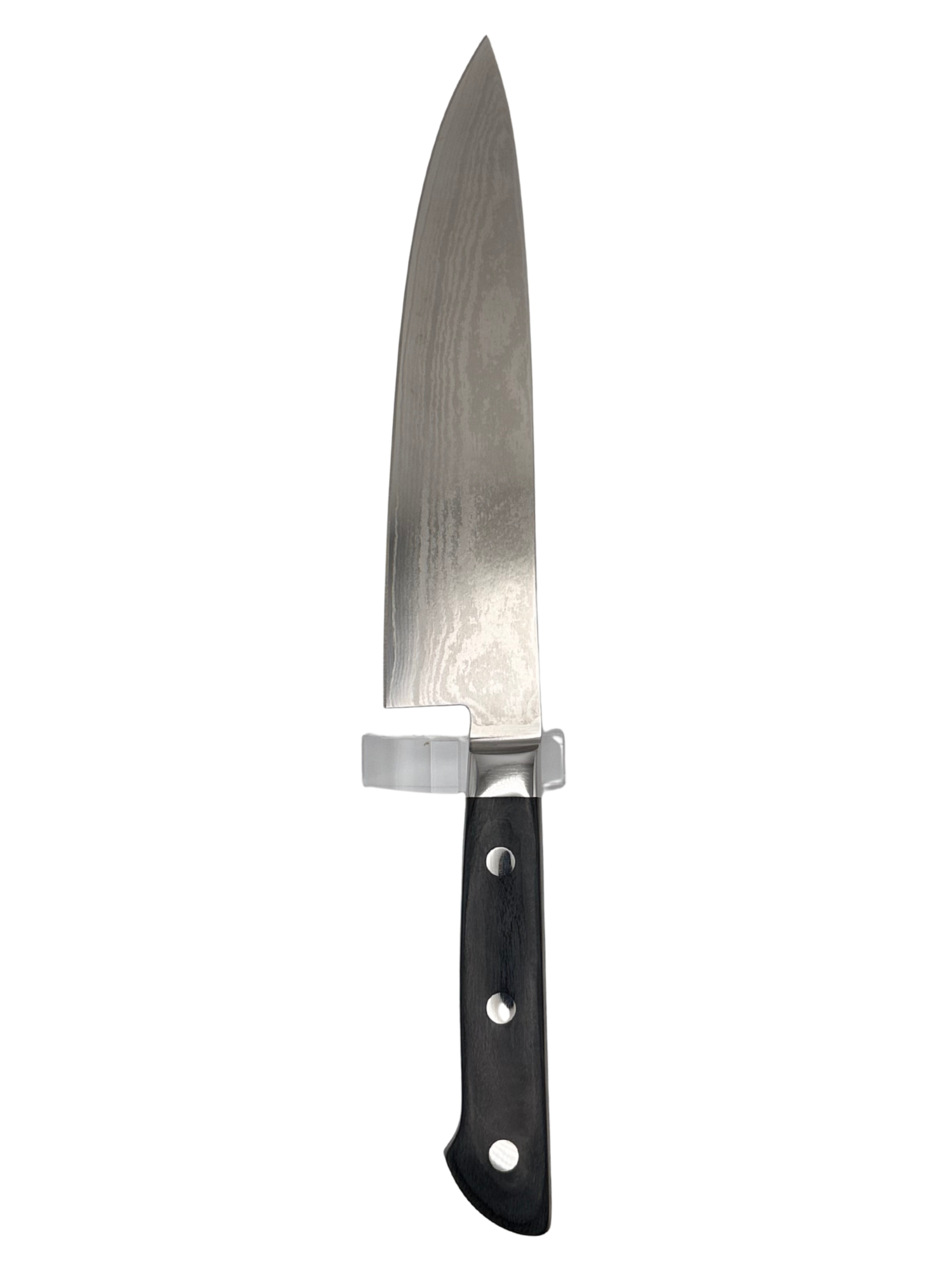
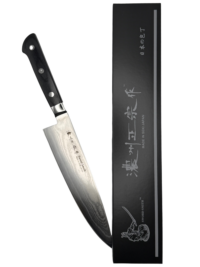
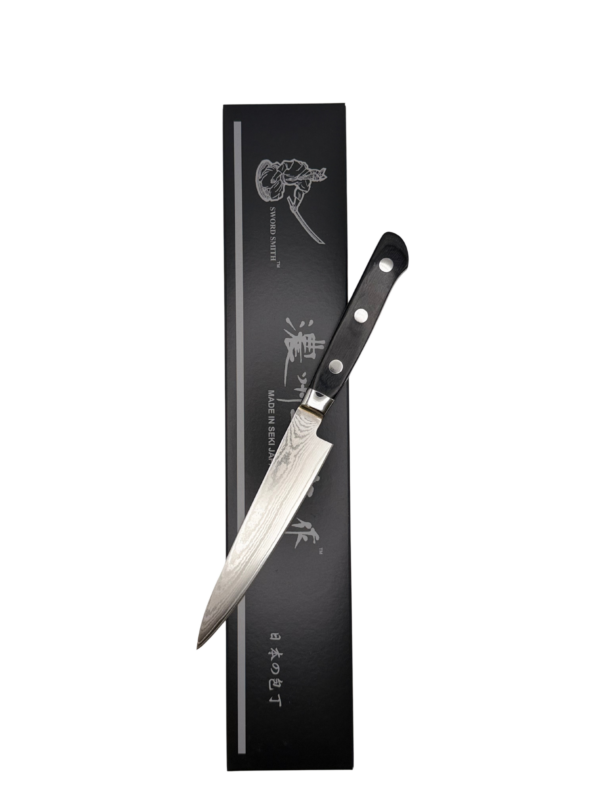
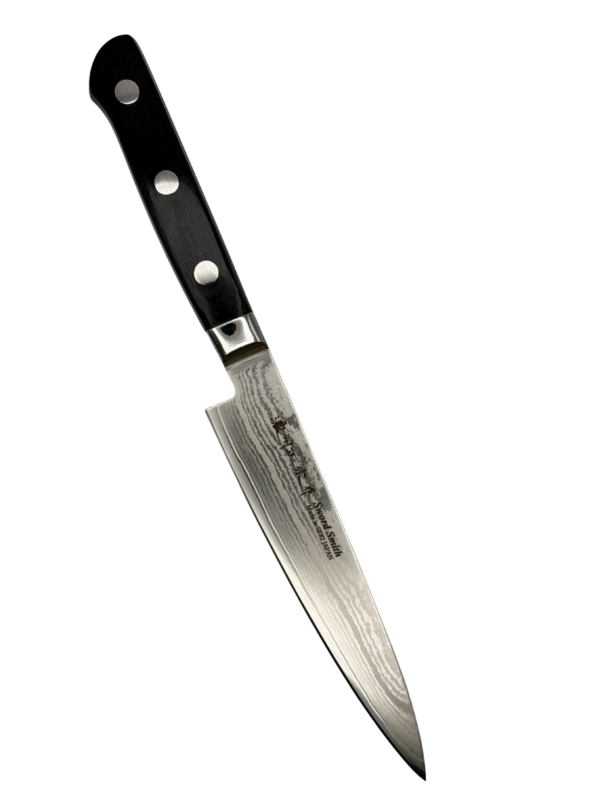
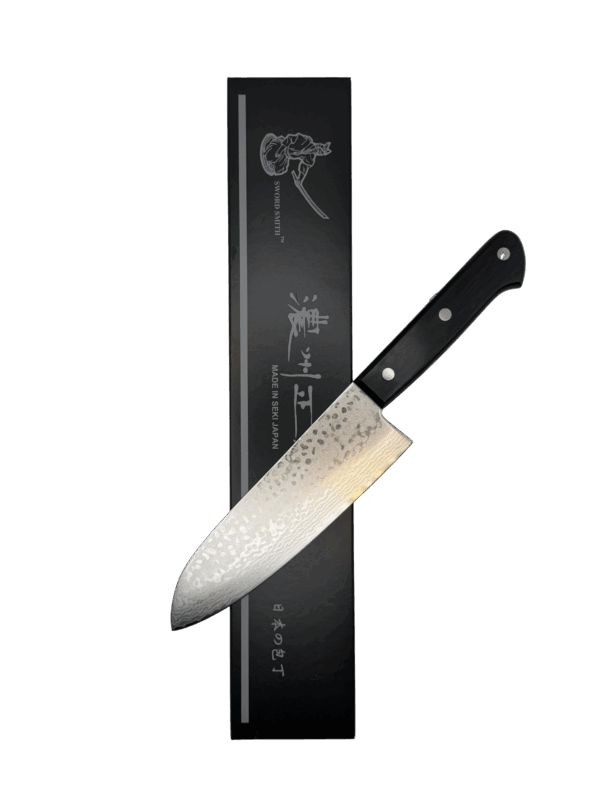
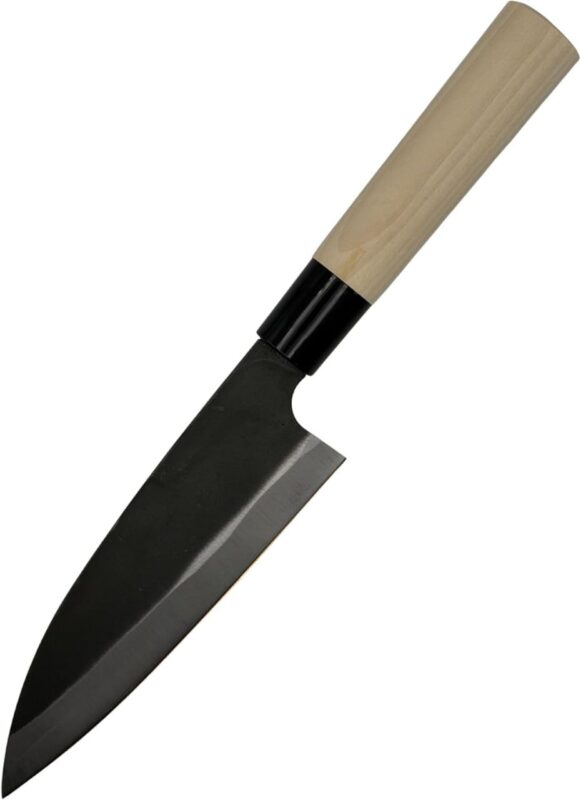
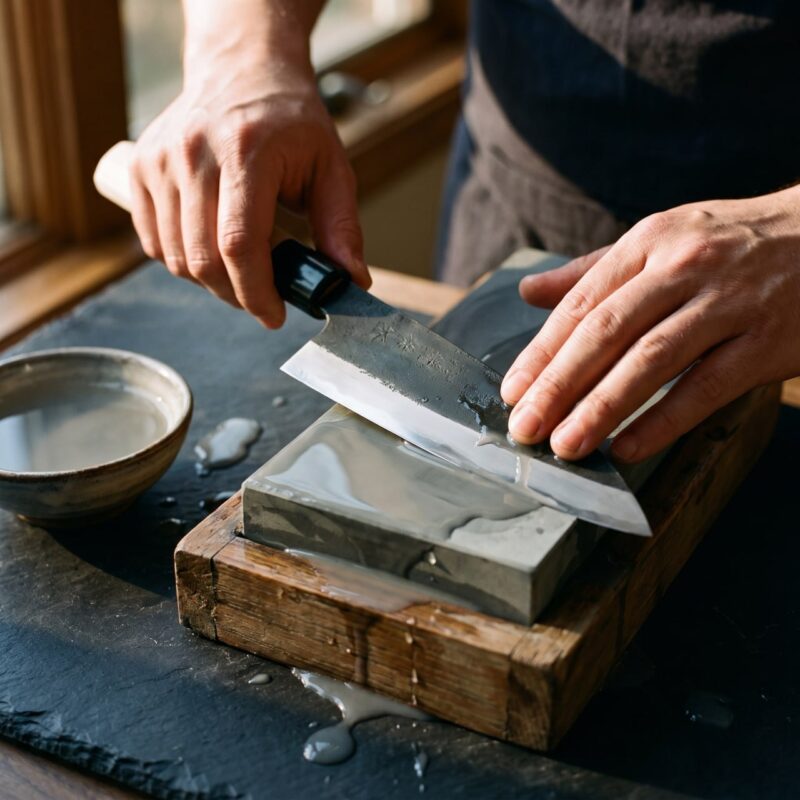
Satake 69-Layer Damascus Gyuto Chef Knife – 8-Inch, Made in Japan

(7 customer reviews)

$164.98

4 People watching this product now!

Details:

Japanese precision without the carbon-steel upkeep. An 8-inch everyday gyuto for meat, vegetables and daily meal prep — sharp out of the box, and forgiving if you forget to dry it.

  • Made in Japan by Satake Cutlery
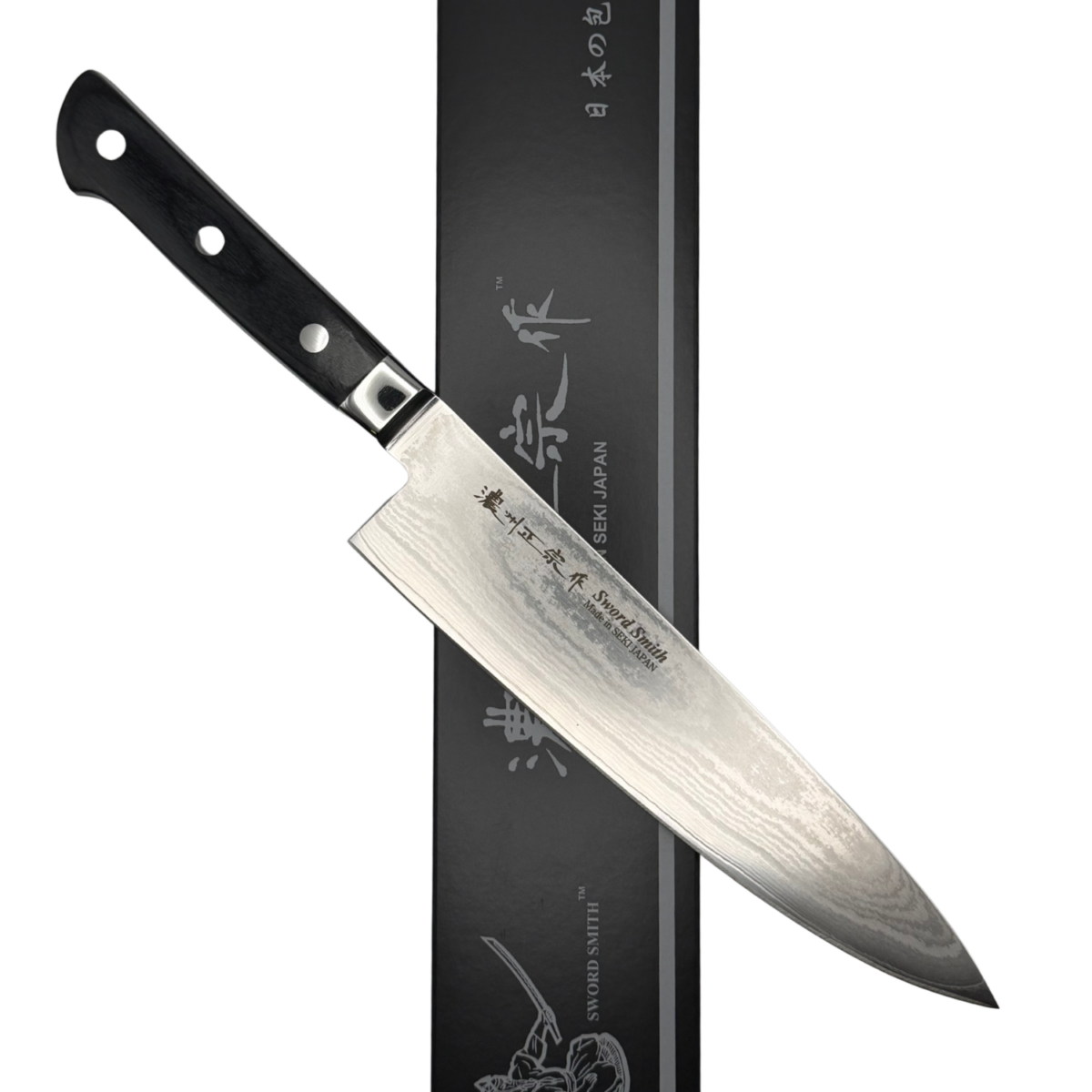
  • 69-layer Aichi stainless Damascus construction
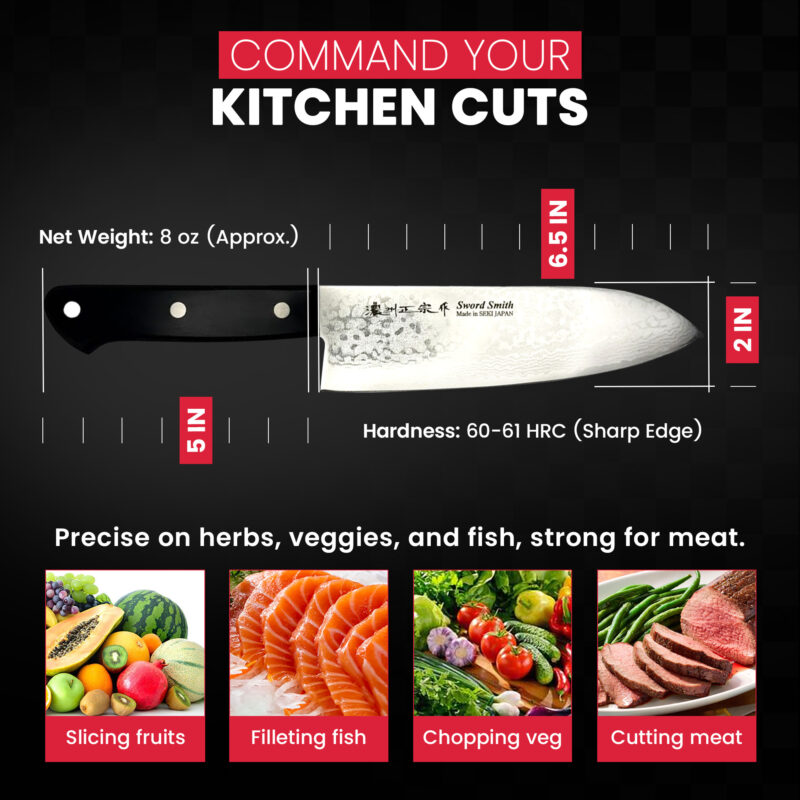
  • 60–61 HRC — holds an edge through a week of real cooking
  • 200 mm (8″) balanced gyuto profile, rocks and push-cuts
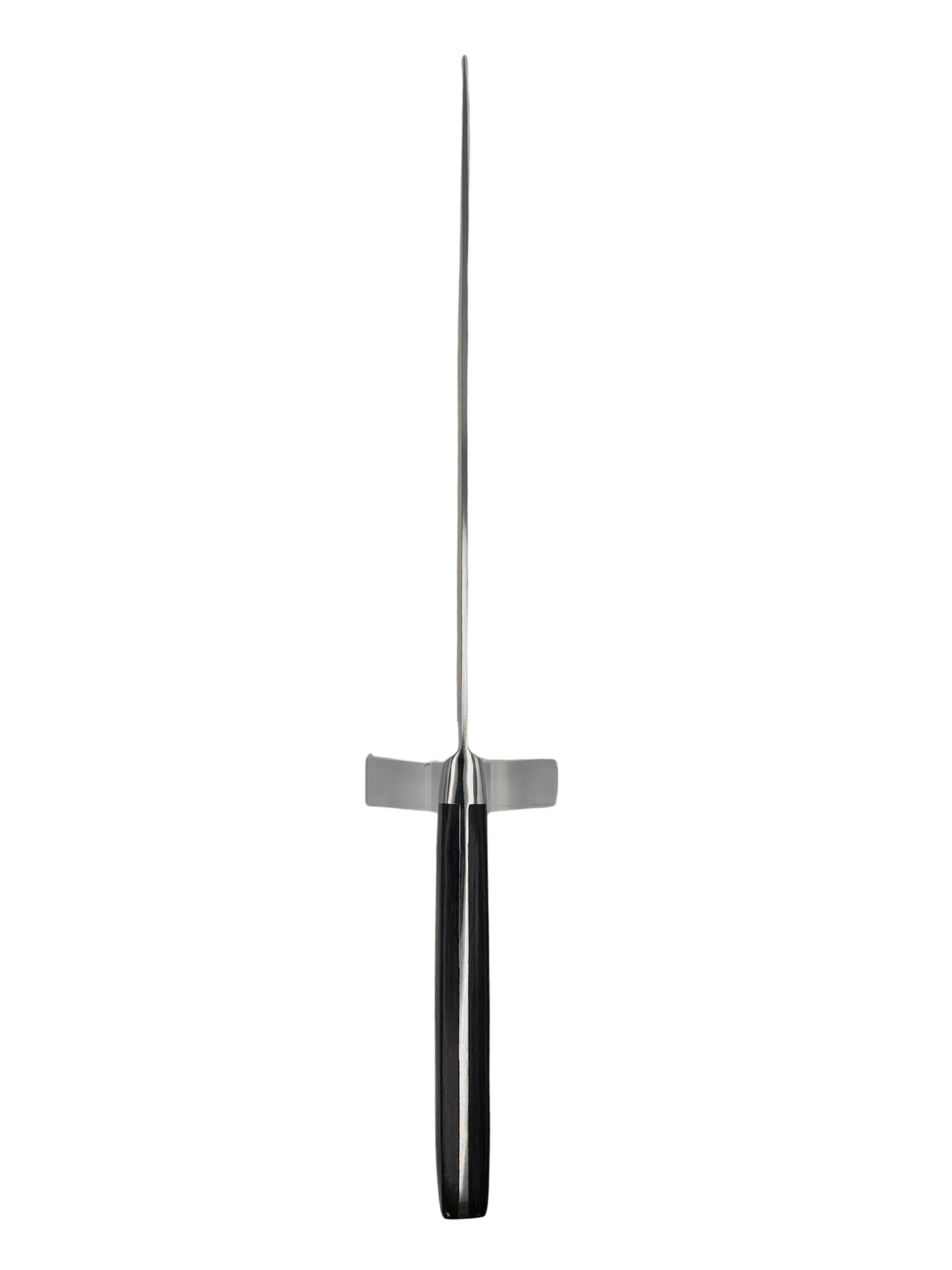
  • Double 50/50 bevel — right- and left-handed cooks alike

Free shipping on most items, continental USA · ↩️ 30-day returns — unused, unsharpened, original packaging (the exact terms)

Weight .4 lbs
Bevel

Blade Length

Color

Steel

HRC

Knife Type

Material

,

Steel

    100% Satisfaction Guaranteed

    About brand

    Satake logo with blue star design

    Satake Cutlery

    Founded in 1947 in Seki City, Japan—a place legendary for samurai swordsmithing—Satake Cutlery carries forward a centuries-old legacy of precision, tradition, and uncompromising craftsmanship. Every knife they produce is a reflection of Japan’s rich blade-making history, honed through generations of expertise.

    FIf you’re ready to upgrade from “good enough” to “crafted in Seki,” Satake is the name to trust.

    Authorized U.S. retailer, which means you get legendary blades and a 3-year warranty, backed by U.S.-based customer support

    Good steel. No fluff.

    Description

    The Satake 69-Layer Damascus Chef Knife delivers Japanese sharpness, balance, and control—without the demands of carbon steel.
    Made in Japan from Aichi stainless steel, it’s designed for cooks who want excellent performance with fewer rules.

    WHO IT’S FOR

    For you if:

    You want one knife that handles most tasks
    You cook often but don’t want extra maintenance
    You value sharpness, balance, and reliability

    Not for you if:

    You enjoy carbon steel rituals and patina
    You want maximum edge potential at all costs
    You prefer highly specialized blade shapes

    Different knives for different cooks.
    Clarity beats regret.

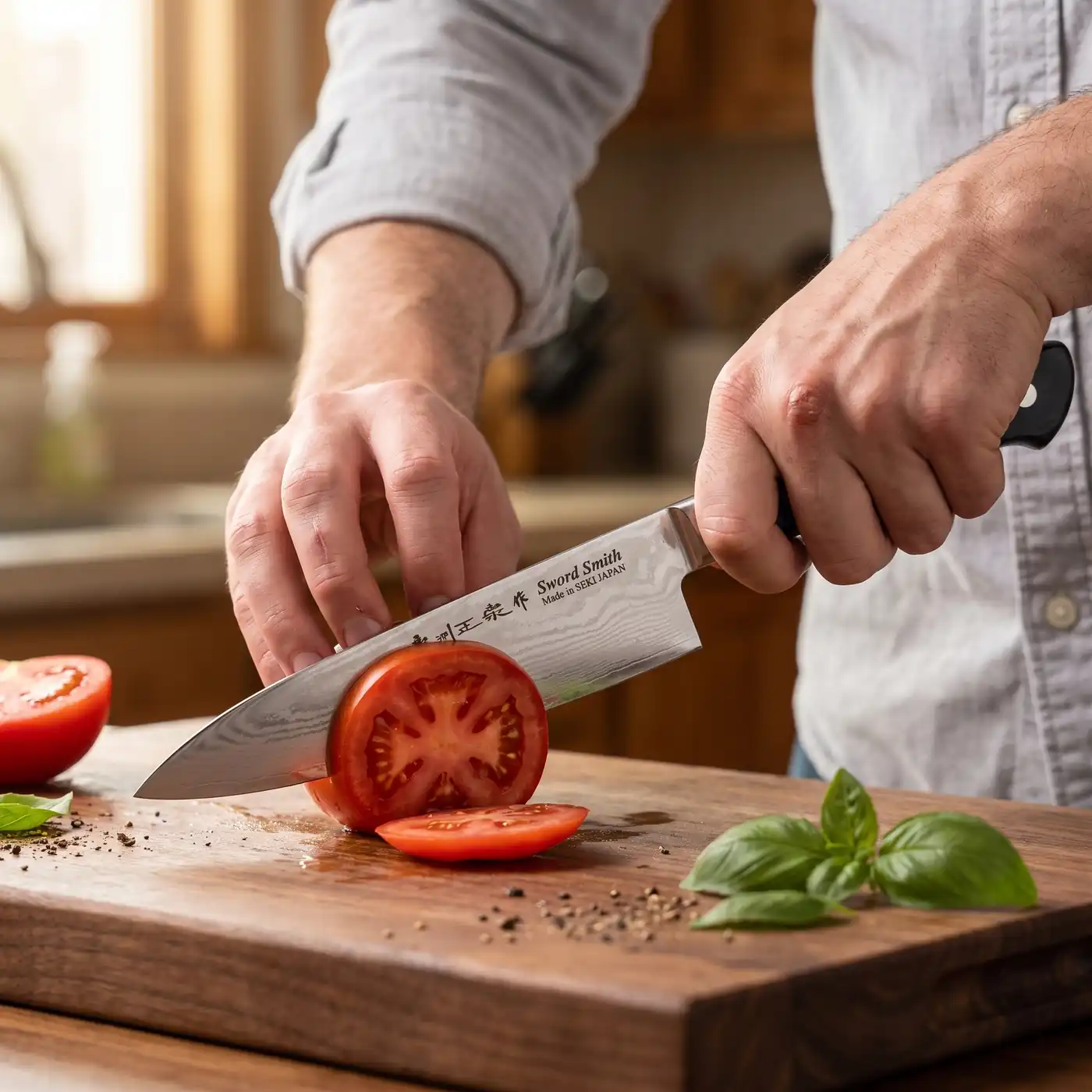
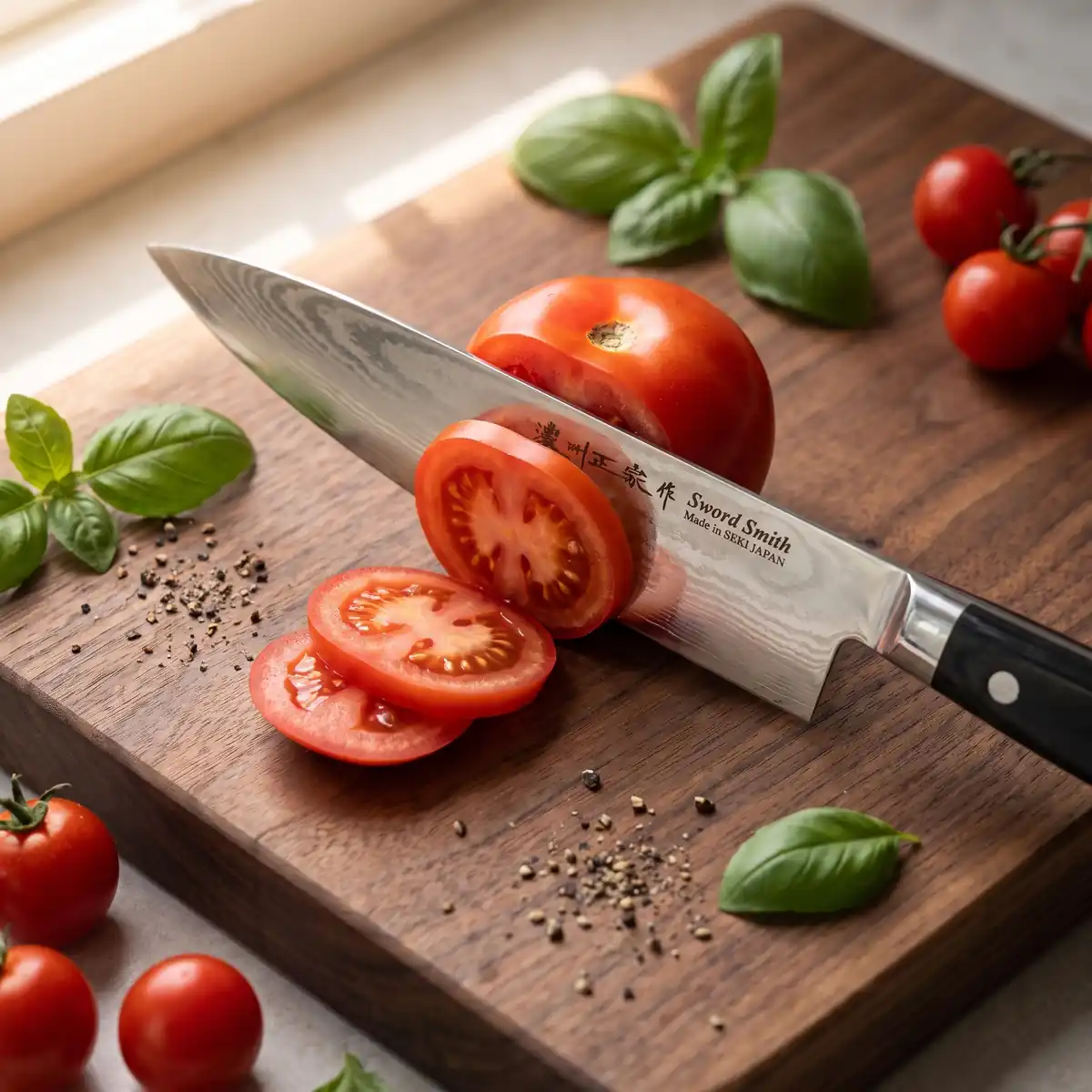
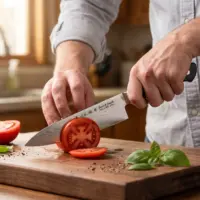
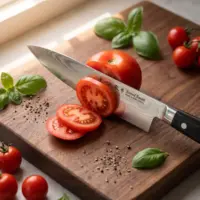
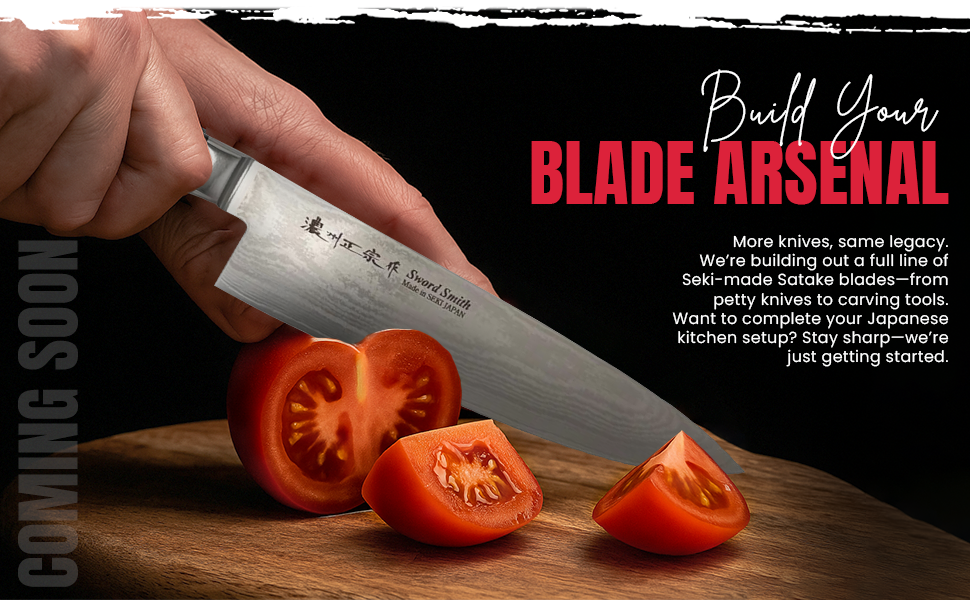
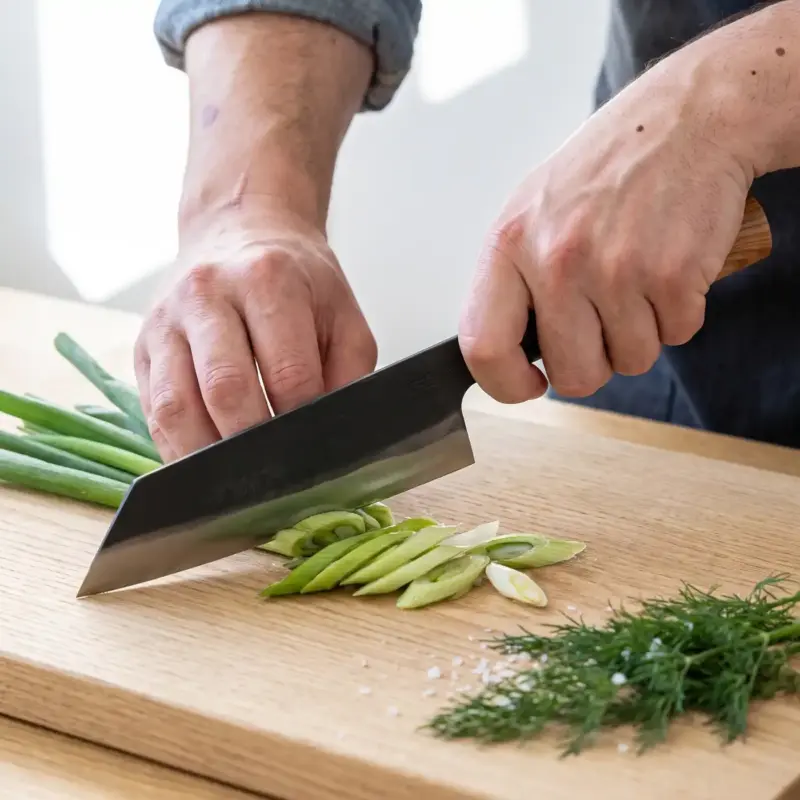
    Knife cutting tomatoes, promoting Japanese blades.

    Why Aichi Stainless Steel Matters

    Strong edge retention for daily use
    Excellent corrosion resistance
    More forgiving than carbon steel
    69 layers for durability and visual character

    This steel is chosen for consistency and practicality—performance you can rely on every day.

    Why the Chef Knife Works

    Versatile blade length for most kitchen tasks
    Smooth rocking and push cutting
    Efficient for vegetables, meat, fish, and herbs

    If you want one knife to do most of the work, this is the shape.

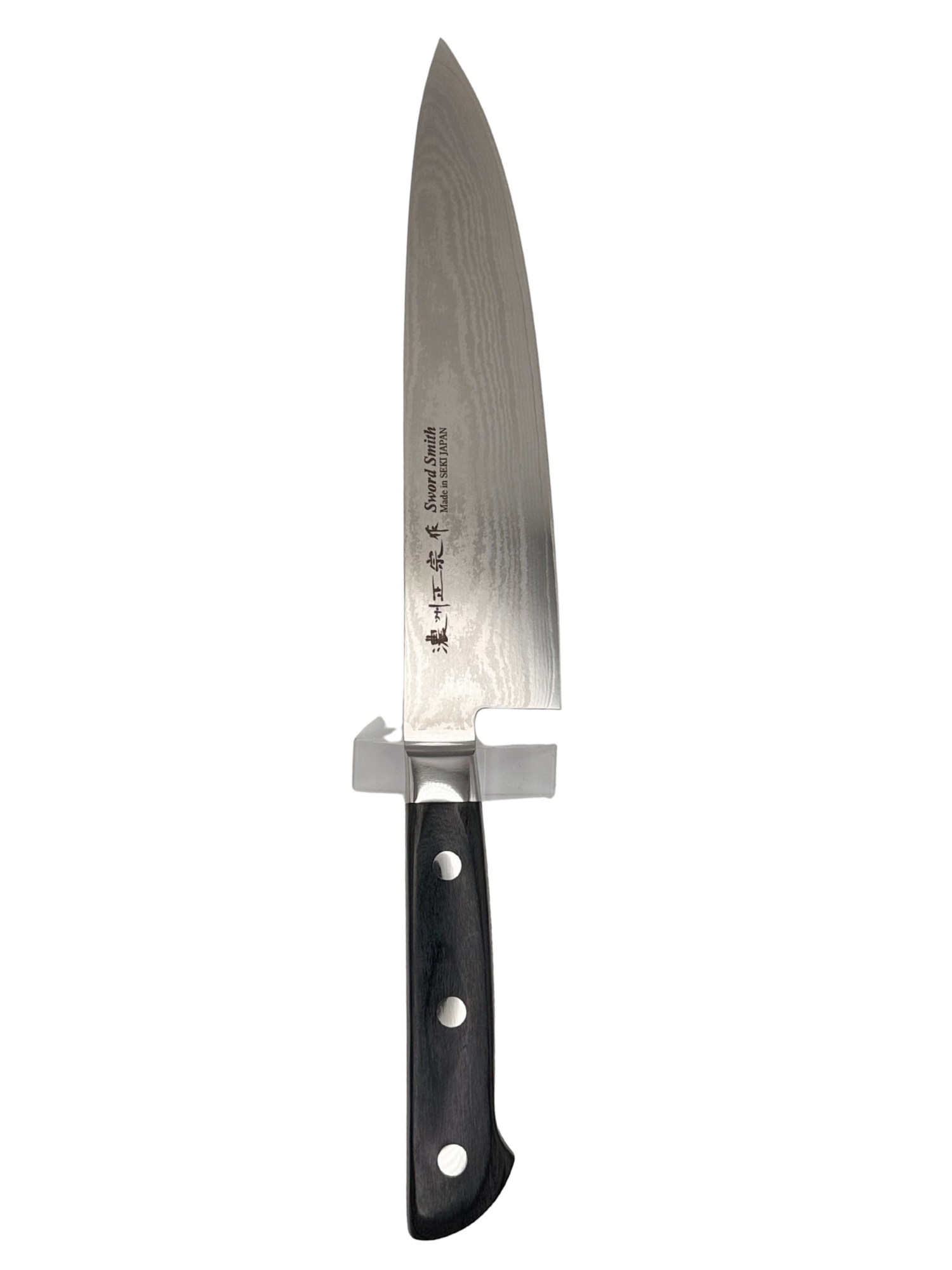
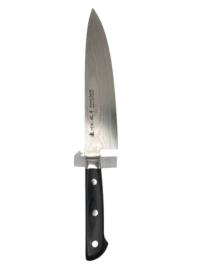
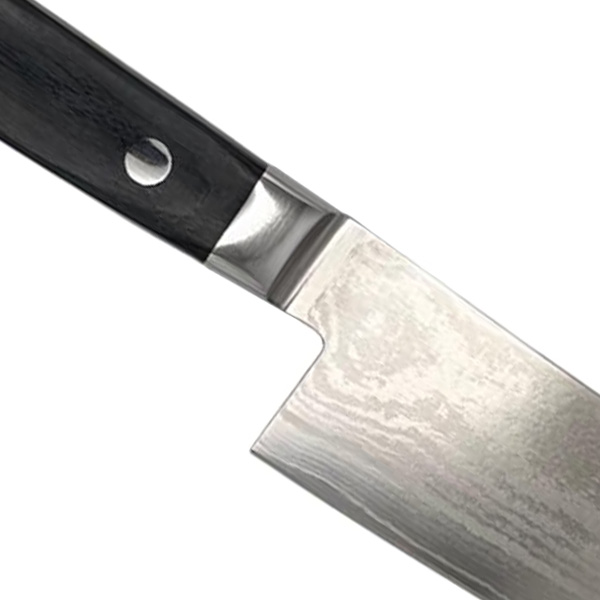
    Close-up of a chef's knife blade and handle.
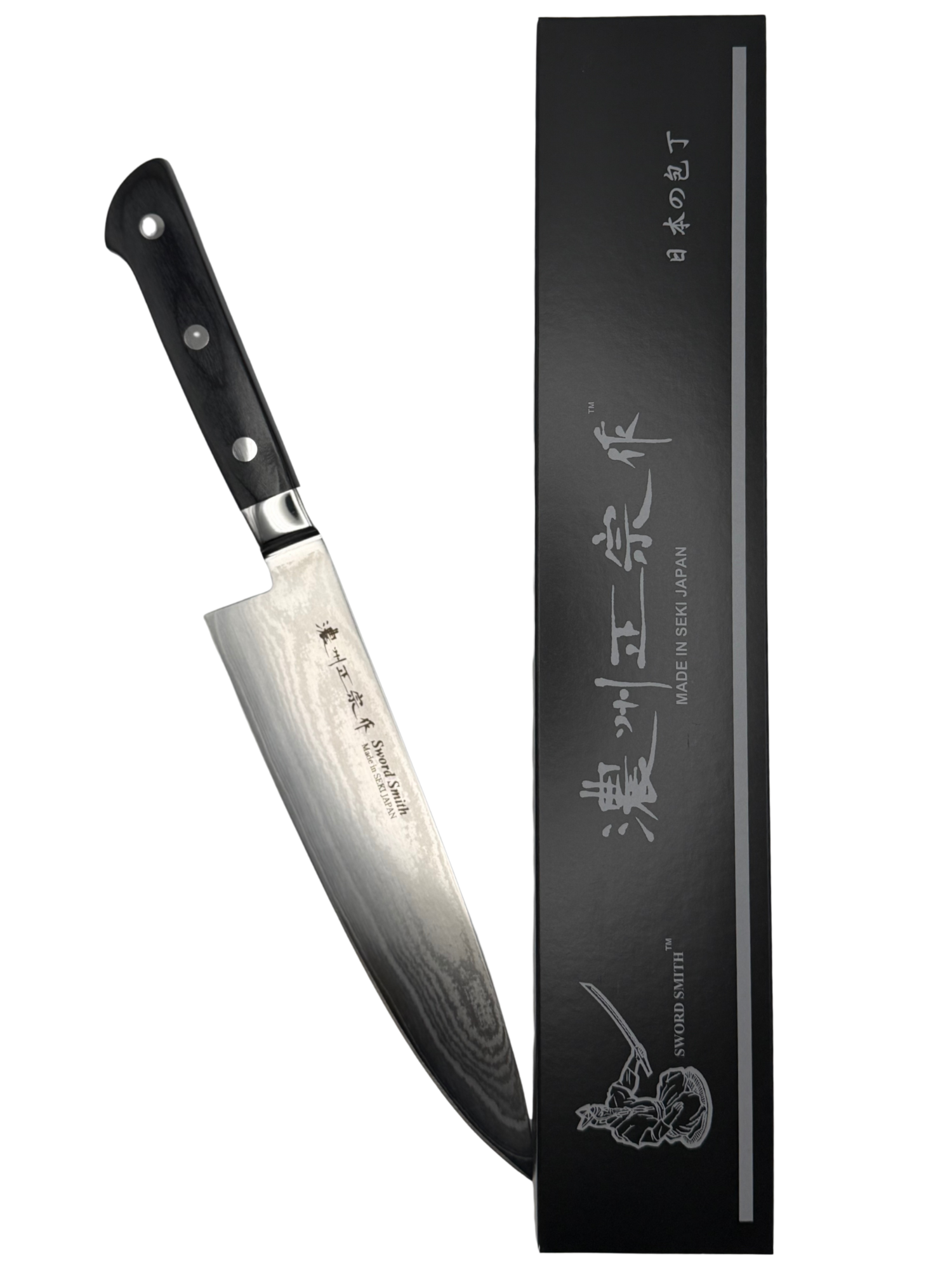
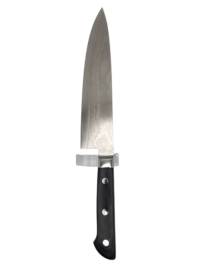
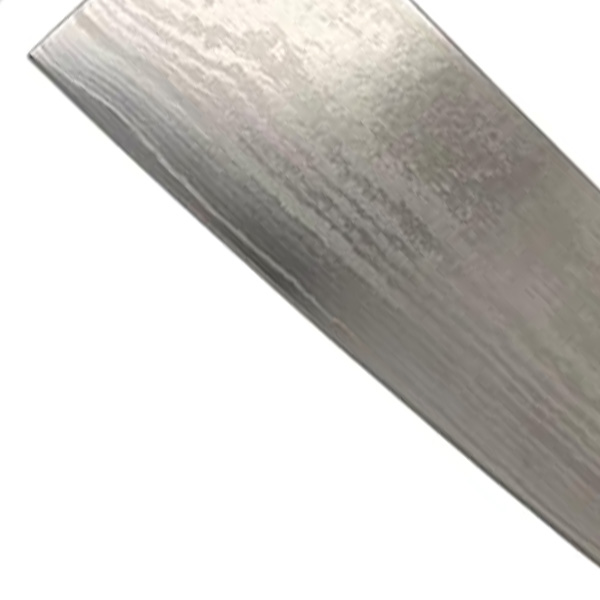
    Close-up of a Damascus steel blade

    Comfort and Control

    Balanced for long prep sessions
    Ergonomic handle for secure grip
    Predictable, neutral feel in hand

    Designed to stay comfortable whether you’re cooking dinner or working through a full prep session.

    Stainless Steel Care (As Easy as It Gets)

    Hand wash and dry after use
    No oiling required
    No patina to manage
    Sharpen when needed

    This knife fits real kitchens and real routines.

    Why We Carry This Knife

    Not everyone wants carbon steel.
    For those who want Japanese performance without extra maintenance, this Satake chef knife is the most practical place to start.

    Honest tools. Clear tradeoffs. No gimmicks.

    This isn’t the most demanding knife.
    It’s the most dependable one—if you want Japanese performance that fits your daily cooking.

    👉 Add the Satake Chef Knife to your kitchen

    FAQ

    1. Is this a good Japanese knife for beginners?

    Absolutely. Unlike high-carbon Japanese knives that require frequent maintenance, the Satake 69-Layer Aichi Damascus Chef Knife uses premium Japanese stainless steel, making it much more forgiving for everyday home cooks. It offers the precision and cutting performance Japanese knives are known for without the constant worry about rust or developing a patina.


    2. What can I use this chef knife for?

    This is a true all-purpose chef knife designed for everyday cooking. It excels at slicing brisket, trimming steaks, preparing chicken, chopping vegetables, mincing herbs, cutting fruit, and handling nearly every food preparation task in a home kitchen. For most households, this can easily become the one knife that stays on the cutting board every day.


    3. Does the Damascus pattern wear off over time?

    No. The beautiful 69-layer Damascus pattern is created by layering steel during manufacturing, not by laser etching or printing. With proper care, the pattern remains part of the blade for the life of the knife.


    4. How often will I need to sharpen it?

    Most home cooks only need to sharpen this knife two to four times per year, depending on how often it’s used and the type of cutting board. Using a wooden or soft composite cutting board will help maintain the edge longer.


    5. Is Aichi stainless steel better than VG10?

    Both are excellent Japanese stainless steels. VG10 is known for maximum hardness and edge retention, while Aichi stainless offers an outstanding balance of sharpness, durability, corrosion resistance, and easier sharpening. Many home cooks actually prefer this balance because it performs exceptionally well while requiring less effort to maintain.


    6. Can it replace my German chef knife?

    For most people, yes. If you’re upgrading from brands like Henckels, Zwilling, Victorinox, Mercer, or Wüsthof, you’ll notice significantly better cutting performance, a thinner blade that glides through food with less resistance, and improved precision for detailed prep work.


    7. Can I cut meat with this knife?

    Absolutely. This knife is ideal for slicing cooked brisket, trimming beef, preparing pork, portioning chicken, slicing fish, and cutting large vegetables. Like any fine Japanese knife, it is not intended for cutting through bones or frozen foods.


    8. Is it dishwasher safe?

    Technically, stainless steel resists corrosion, but we strongly recommend hand washing. Dishwashers expose knives to harsh detergents, heat, and impacts with other utensils that can dull the edge and damage the handle over time. Hand washing takes less than a minute and helps preserve the knife’s performance for years.


    9. Where is this knife made?

    This Satake Chef Knife is manufactured in Seki, Japan, a city with more than 700 years of blade-making tradition. Seki is internationally recognized as one of the world’s premier centers for Japanese cutlery, combining traditional craftsmanship with modern manufacturing techniques.


    10. Is this a good gift?

    Yes. This knife is one of our most popular gifts for Father’s Day, birthdays, Christmas, anniversaries, retirement, and housewarming celebrations. Whether the recipient loves grilling, BBQ, meal prepping, or simply enjoys cooking, it’s a gift they’ll use and appreciate every day.

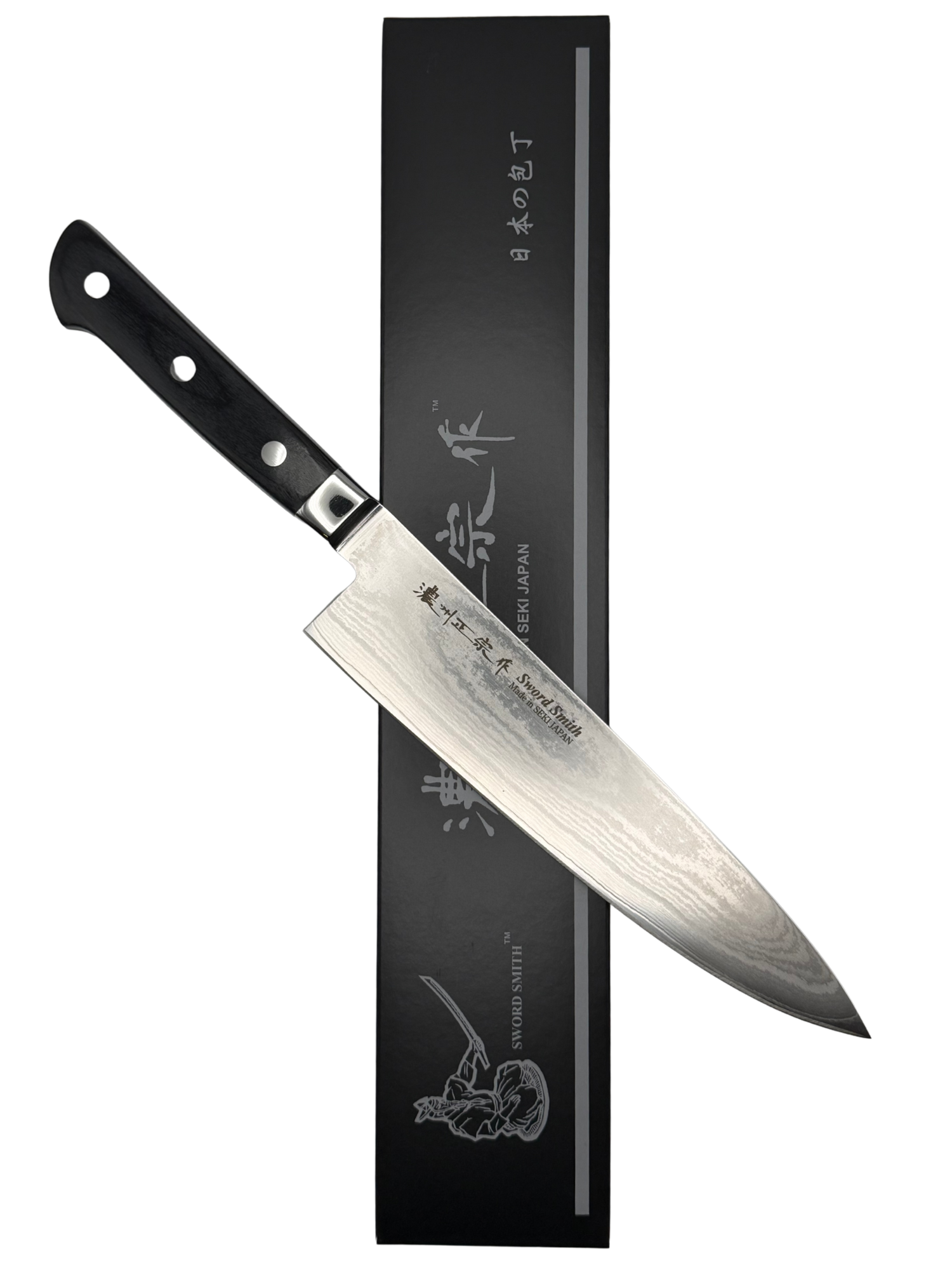
    Which Grumpy Dad Japanese knife is right for you?

    Three honest answers to "I want a Japanese knife." Pick the one that matches how you actually cook, not the one with the best photo.

    Knife Best for Maintenance Character
    Satake 69-Layer Damascus Gyuto — 200 mm, Aichi stainless, 60–61 HRC. The knife on this page. One knife that handles most of the job: vegetables, meat, fish, herbs. Rocks and push-cuts. If you only want to own one, own this one. Lowest of the three. Stainless core, stainless cladding. Hand wash and dry after use. No oiling. No patina to manage. Sharpen when it stops cutting. 69 layers of Aichi stainless Damascus. Double 50/50 bevel — the same edge on both sides. Gyuto profile, balanced for long prep. Made in Japan by Satake Cutlery.
    Satake Houcho VG10 Chef Knife — 180 mm, VG10 core, 60–61 HRC. The same job with less blade. Better if 200 mm feels like too much knife, or your cutting board is small. Same as above. VG10 stainless core under stainless cladding. Hand wash and dry, and that is the whole routine. VG10 core under 37-layer Damascus cladding. Triple-riveted Western full-tang handle — solid, not delicate. Double 50/50 bevel. Forged in Seki, Japan.
    Yoshida Hamono Aogami #2 lineFunkai Santoku (165 mm), Funkai Santoku Magnolia (165 mm), Nakiri (165 mm), Aogami Bunka Keyaki (190 mm), Hand-Forged Kurumi Shikaku Bunka (190 mm). Cooks who want a harder edge and a shape built for a specific job. The Nakiri for vegetables — tall blade, dead-straight edge, pure push-cutting, no rocking. The two Funkai Santokus for fast general prep, meat and fish included. The two Bunkas for detail work off a squared reverse tanto tip. This is not the one-knife answer. Highest of the three, and worth being precise about. The two Funkai Santokus and the Nakiri are stainless-clad: the cladding covers most of the blade, but the carbon core is exposed at the edge. Hand-wash promptly, wipe dry, oil the blade for long storage. Neither Bunka's listing states cladding, so treat both as carbon knives and be stricter about drying. Those first three list a refresh on a 1,000/6,000-grit whetstone; we would use the same stone on the Bunkas. Aogami #2 (Blue Steel) high-carbon core. 62–64 HRC on the two Funkai Santokus, the Nakiri and the Kurumi Bunka. Double 50/50 bevel on the Santokus and the Nakiri; both Bunkas are double-edged too. Japanese wood handles — Keyaki, Magnolia, octagonal rosewood with a pakka ferrule, and Kurumi walnut on the Shikaku Bunka. Around 170 g on the Santokus and the Nakiri. All made in Japan; the Aogami Bunka Keyaki's own listing says traditional methods but not hand-forged, and we are not going to dress that up.

    How this Satake compares to the Shun Classic

    Fair question, so here is the straight answer. The obvious comparison is the Shun Classic 8-inch chef knife, model DM0706. It is a well-made knife with a long track record and we are not going to pretend otherwise. Everything below that describes the Shun is Shun's own published information, checked in July 2026 — Shun's terms are Shun's, and Shun can change them. Here is where the two differ, and, more usefully, where they do not.

    Where they are the same

    • Hardness. This Satake is 60–61 HRC. Shun's own FAQ says it hardens its VG10 and VG-MAX steels to 60–61 Rockwell, and independent retailers list the Classic at 60–61. Same band. You are not trading down on steel hardness.
    • Size. 200 mm here. 8 in / 203 mm on the Classic. Same class of knife.
    • Country. Both are made in Japan. Shun's product page says handcrafted in Japan. Ours says made in Japan. Origin is not the difference.
    • Edge symmetry. Ours is a double 50/50 bevel. Shun's product page lists the Classic at 16° per side. Two symmetrical edges — neither knife has a handed edge. We do not publish a per-side angle for this knife, so read Shun's 16° as Shun's spec, not a scoreboard.

    Where they differ

    • Steel recipe. The Classic runs Shun's proprietary VG-MAX core. This one runs Aichi stainless — Aichi Steel is the Japanese mill that makes it, not a grade name. Different formulas, same hardness band, both stainless. And do not read VG-MAX as the VG10 in our Satake Houcho. Different names, different steels.
    • Handle. The Classic uses a D-shaped Pakkawood handle, and reviewers genuinely disagree about it. Prudent Reviews and The Rational Kitchen say the D-shape favours right-handers. TechGearLab found the curve subtle, scored the handle top marks, and reported that its left-handed testers had no complaints. Worth putting your hand on one before you commit — to either knife.
    • Sharpening service. Shun's sharpening page describes free-labour sharpening for as long as you own the knife, and that is a real benefit. Read the terms, because it is not frictionless: the labour is free but you pay a shipping and processing fee, it covers authorized-dealer purchases only, it runs in North America, and Shun's own estimate is about two weeks while telling you to allow longer. Again, those are Shun's published terms and Shun controls them. We do not run a mail-in sharpening service. If that programme is the thing you are buying, buy the Shun. Straight answer.
    • What gets promised. Shun publishes a limited lifetime warranty covering manufacturing defects for the original owner — non-transferable, authorized dealers only, and it excludes normal wear, rust and damage from misuse. We do not publish a lifetime warranty on this knife. What this listing carries: free shipping on most items within the continental USA, and 30-day returns on a knife that comes back unused, unsharpened and in its original packaging, with return shipping on you unless the knife is faulty. Our Delivery and Refund pages hold the exact wording. Read those, not a badge.

    One rule that applies to both

    Hard, thin Japanese edges chip. Ours, theirs, anyone's. Bone chips them. Frozen food chips them. So do fruit pits, glass boards, stone counters, and using the tip as a screwdriver.

    So: wood or soft-poly board, cut food and nothing else, no prying. Steel that holds an edge because it is hard will also chip because it is hard. That is the deal with any knife in this class — and our Aogami knives run harder than this Satake at 62–64 HRC, so the rule counts double over there.

    So, which one

    Buy the Shun Classic if the mail-in sharpening programme and a lifetime defect warranty are what you are actually paying for. Those are real, and we do not match them.

    Buy this Satake if you want the same hardness band, the same blade class and the same country of origin without a service programme attached — and you are content to sharpen it yourself on a whetstone, or hand it to whoever sharpens your knives now.

    On price: check both today. We are not printing someone else's number on a page nobody re-reads. Ours is at the top of this one. Theirs moves.

    And if the town matters to you — Shun's About page names Seki City as home to its makers since 1908 — our Satake Houcho VG10 is forged there too.

    Reviews

    5
    7 reviews
    6
    0
    0
    0
    0

    7 reviews for Satake 69-Layer Damascus Gyuto Chef Knife – 8-Inch, Made in Japan

    Clear filters
    1. Jennifer L. – Charlotte, North Carolina

      I bought this as a Father’s Day gift for my husband because he already had every grilling gadget imaginable. He said it was the best gift he’s received in years. Now he volunteers to slice the brisket every month.

    2. Eric M. – Denver, Colorado

      I was comparing this against a Shun and honestly couldn’t justify paying the extra money. The fit and finish are excellent, it’s incredibly sharp out of the box, and after several months it’s still holding an edge better than I expected.

    3. Brian K. – Kansas City, Missouri

      I spend a lot of weekends smoking briskets and cooking for friends. This knife cuts clean, even slices that actually make the food look better. It’s sharp enough to handle vegetables just as well, so I use it from prep all the way to serving

    4. David S. – Jacksonville, Florida

      I originally wanted a carbon steel knife but didn’t want to deal with rust or babying it. This was exactly what I was looking for. It has that Japanese sharpness everyone talks about while being easy to care for. Wash it, dry it, put it away.

    5. Sarah T. – Nashville, Tennessee

      My husband isn’t a professional chef—he just enjoys cooking for the family. This knife made him enjoy it even more. It feels balanced, comfortable, and every meal prep seems faster. It has become his favorite kitchen tool.


    Add a review

    Your email address will not be published. Required fields are marked *