How to Reverse Sear a Steak (And Why It Works)

You cut into the steak and find a gray ring. Overcooked edge, correct center, sad dad.
That happens because high heat from the start cooks the outside much faster than the inside. By the time the middle reaches your target, the outer layer has been past it for minutes.
The reverse sear fixes this by flipping the order.
What the Reverse Sear Does
Traditional: high heat first, rest, done.
Reverse sear: low heat first, then high heat.
Cook a thick steak slowly at 225°F to 275°F and the heat moves gently through the meat. The whole steak rises toward your target together, edge to edge, with no extreme gradient and no gray ring.
Then you sear. Hot cast iron, the hottest part of the grill, whatever you have. You are not cooking the steak anymore. You are building a crust. And the surface has dried out during the low phase, which helps: moisture on the surface slows browning, so a dry steak sears fast.
Two bonus benefits. It is more forgiving, because a steak sitting at low heat does not overcook in the five minutes you got pulled away. And the crust forms faster, so the sear is short.
What to Buy
This method is for thick steaks. At 3/4 inch, a normal sear is fine. At 1.5 inches and up, reverse sear earns its keep. Aim for 1.5 to 2 inches.
- Ribeye: The fat renders during the low cook. The method and the cut suit each other.
- New York strip: Leaner, firmer, cleaner flavor. Works well.
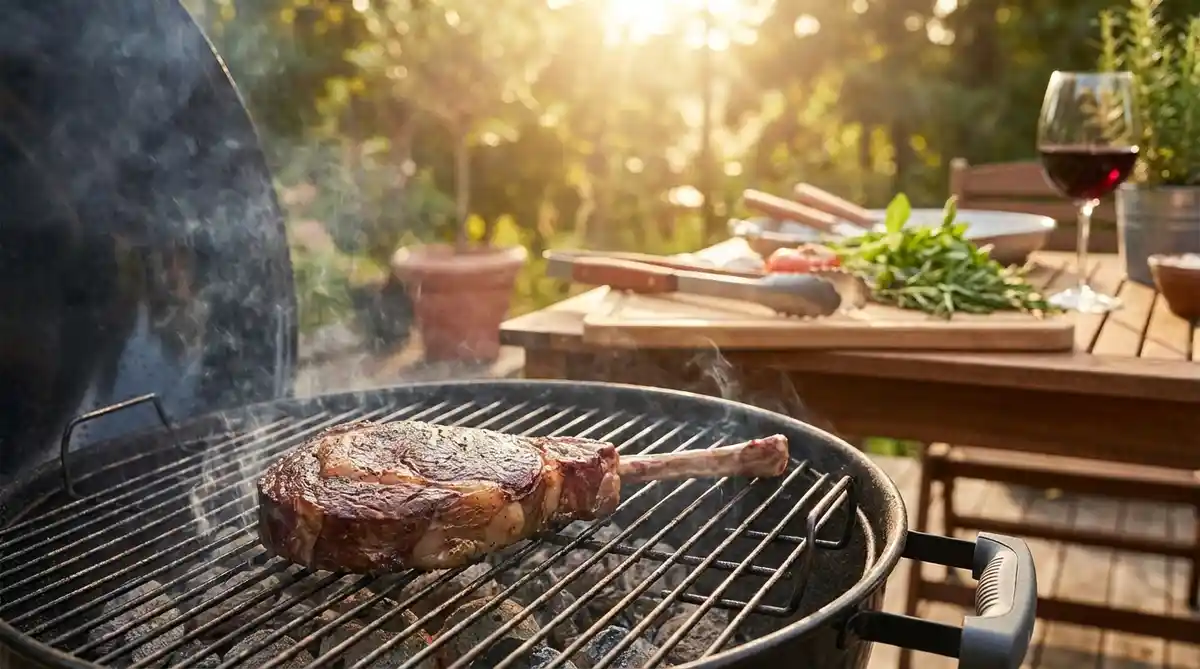
- Tomahawk: A bone-in ribeye. At 2 inches or more, reverse sear is the right method, not a preference.
- Filet: Works, but it is mild and tender already. Not the best use of the method.
Buy the best you can reasonably afford. A good steak shows off this technique. A poor one shows it off in the other direction.
Equipment
- A probe thermometer. Non-negotiable for the low phase. You want a reading you trust and, ideally, an alarm.
- A cast iron skillet or very hot grill for the sear.
- Tongs. Piercing a steak with a fork lets juice out.
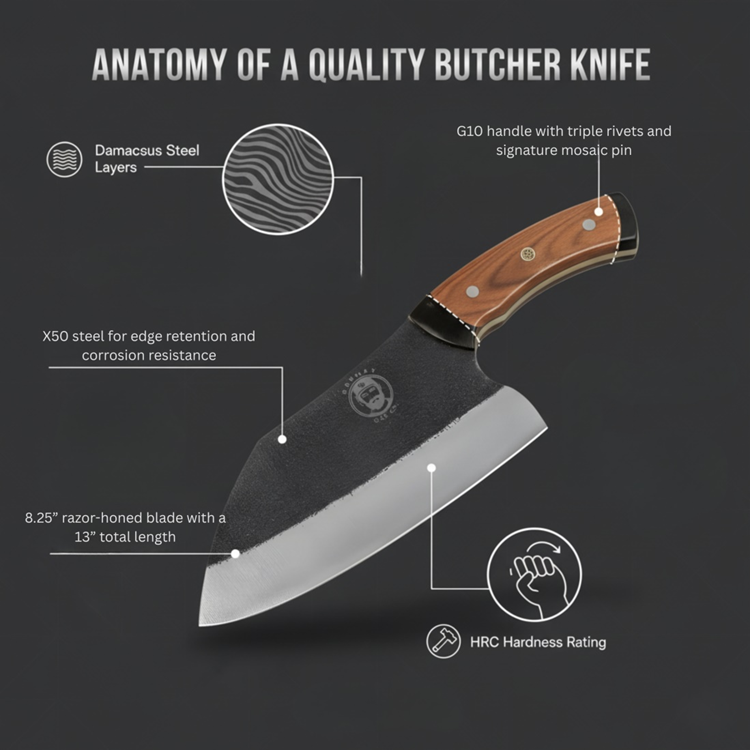
- A sharp knife for slicing. A clean slice keeps the juice in the meat. For a thick ribeye or tomahawk, the Grumpy Dad Heavy-Duty Butcher Knife ($64.98, 8″ blade, full tang) has the weight to handle the cut. For slicing and plating at the table, the Satake Houcho VG10 Chef Knife ($145, 180 mm VG10 blade) does it neatly.
- A board with a juice groove, like the walnut end-grain board ($30.99).
Not sure which blade to slice with? Slicing vs. carving explains how the edge changes the result.
The Method
Step 1: Season and dry
Salt generously on all sides, plus coarse black pepper. Pat dry, set the steak on a wire rack over a sheet pan, and leave it uncovered in the fridge for at least an hour, up to overnight. Take it out 30 to 45 minutes before cooking.
Step 2: Low cook
Oven: Preheat to 250°F. Rack and pan in the middle, probe in the thickest part, not touching bone.
Grill: Set up for indirect heat and aim for roughly 225°F to 275°F on the cool side. Steak on the cool side, probe in.
Pull the steak about 10°F below your final target. The sear and rest will carry it the rest of the way. Go by the probe, not the clock. A 1.5-inch steak often takes 30 to 45 minutes, a 2-inch steak longer.
Step 3: Sear
Get the skillet very hot, about four to five minutes. Add a thin layer of high-smoke-point oil. Lay the steak in and leave it alone for 45 to 60 seconds. Flip. Sear the edges and fat cap briefly.
Last 30 seconds, optional: add a tablespoon of butter, a couple of smashed garlic cloves and some thyme. Tilt the pan, baste, and look smug.
On a grill, crank everything to maximum, let the grates heat, and sear 45 to 60 seconds a side.
Step 4: Rest
Move the steak to a board. Rest 5 to 10 minutes. Skip tight foil, which traps steam and softens the crust.
Step 5: Slice
Cut against the grain, about a half inch thick. Look at the cross-section. Pink edge to edge, thin band of darker meat under the crust. That is the reverse sear working.
Pull Temperatures at a Glance
Final temperature is what you want on the plate. Pull about 10°F under it.
| Doneness | Pull from low cook | Final after sear and rest |
|---|---|---|
| Rare | about 115°F | about 125°F |
| Medium-rare | about 120–125°F | about 130–135°F |
| Medium | about 130–135°F | about 140–145°F |
| Medium-well | about 140–145°F | about 150–155°F |
Carryover varies with thickness and heat. When in doubt, pull a little early. You can always cook it more.
When Not to Use It
A thin weeknight sirloin does not need this. A 3/4-inch flat iron over direct heat is correct. The reverse sear is for the steak you decided deserves it: the thick ribeye on a Saturday, the tomahawk for a birthday.
That steak deserves the method.
FAQ
Can I reverse sear on a gas grill?
Yes. Light one side, cook on the other with the lid closed, then finish over the hot side.
Why is my steak not browning in the sear?
Usually a wet surface or a pan that is not hot enough. Dry the steak well and preheat longer.
What knife should I slice a reverse seared steak with?
Something sharp. The Butcher Knife suits big bone-in cuts, and the Satake chef suits neat slices. Either beats a dull knife you have been meaning to sharpen.