Carbon vs. Stainless vs. Damascus: Which Knife Steel Should You Actually Buy?

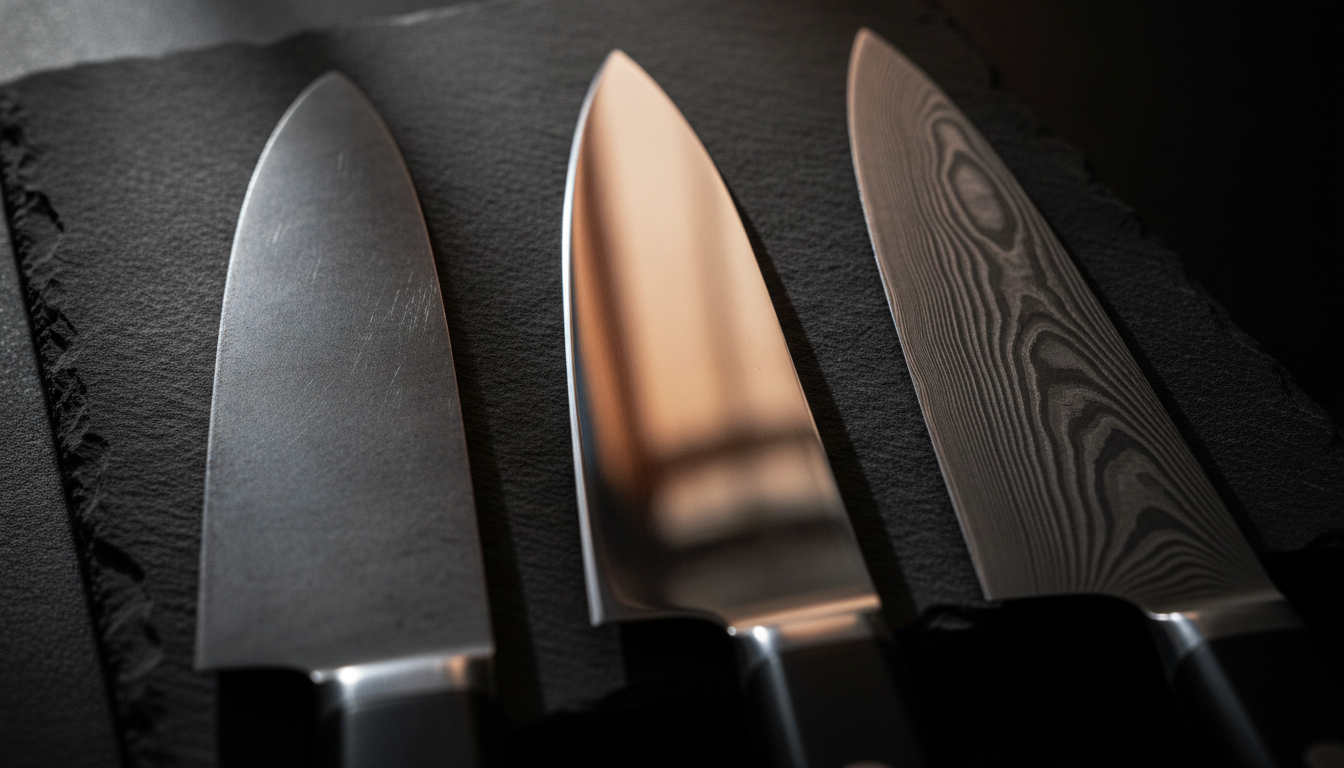
Walk into any knife conversation online and within ninety seconds someone is arguing about steel like it’s a religion. Carbon people sneer at stainless. Stainless people point at rust. Damascus people post photos. Meanwhile you just want to cut an onion without it sliding off the blade.
So here’s the no-nonsense version: what carbon, stainless, and Damascus actually mean, what they do for you, and how to pick without joining a cult.
First, a myth to kill: “Damascus” is not a steel
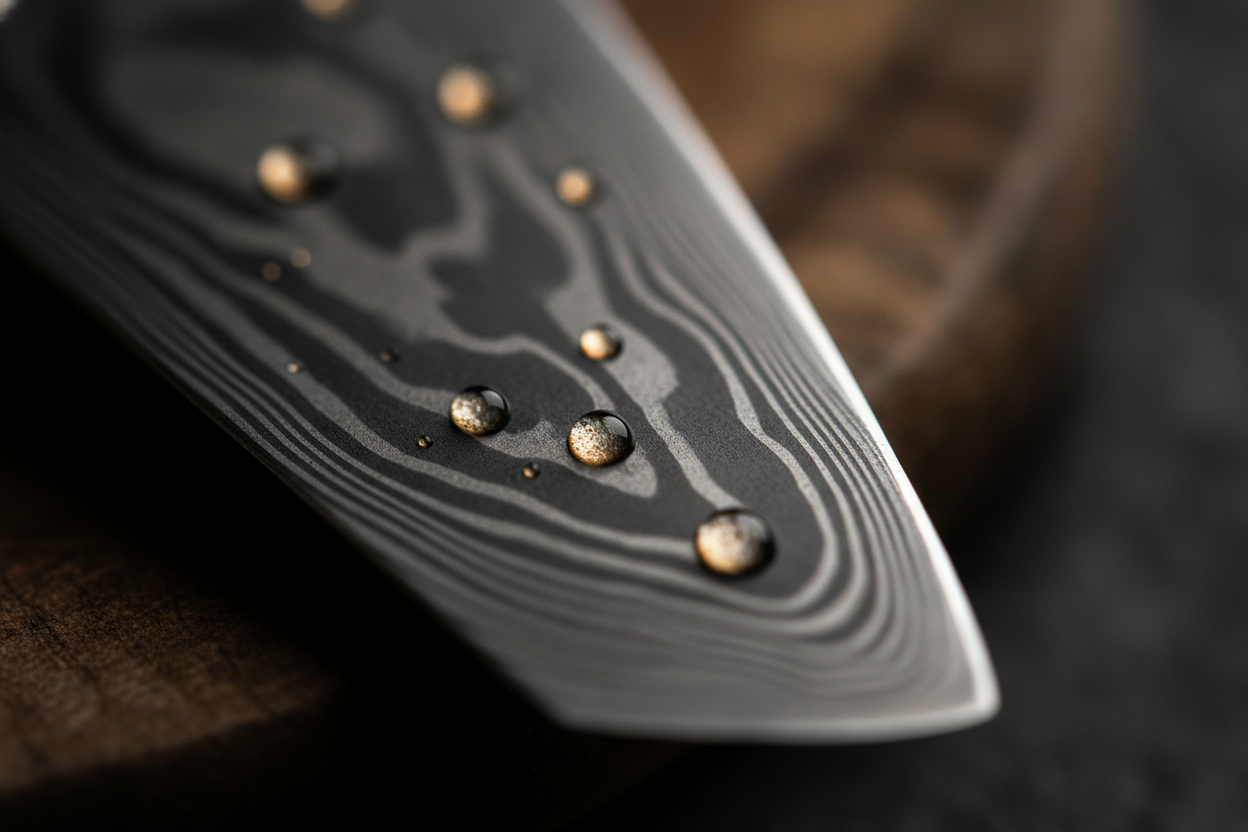
Let’s clear this up immediately, because the marketing world has muddied it on purpose. Damascus is not a type of steel. It’s a pattern. Those gorgeous wavy lines come from forge-welding many layers of steel together and etching them so the layers show. The pattern is cosmetic. What matters is the core steel doing the cutting — the hard center the blade is ground to.
A Damascus knife is only as good as the steel hidden in the middle of all those pretty layers. Beautiful cladding wrapped around mediocre steel is just a nice-looking butter spreader.
This is why our Satake 69-Layer Damascus Chef Knife tells you exactly what’s in the core, not just the layer count. Layer count is jewelry. Core steel is the knife.
Carbon steel: the sharp, demanding one
Carbon steel (in the Japanese world you’ll see names like Aogami / “blue paper” and Shirogami / “white paper”) is the steel that knife nerds get misty-eyed about, and for good reason.
- It gets ridiculously sharp. Carbon steel takes a finer, keener edge than most stainless.
- It holds that edge longer. Higher hardness means fewer trips to the whetstone.
- It sharpens easily when it finally does need it.
The catch — and it’s the whole catch — is that carbon steel rusts and reacts. Leave it wet, cut a lemon and walk away, and it’ll spot and discolor. Most carbon-steel users actually like this: over time the blade develops a grey “patina” that protects it and looks earned. But if “wipe it dry every time” sounds like too much commitment, be honest with yourself now. Our Aogami Bunka and Yoshida Hamono Nakiri are carbon-core knives for people who’ll treat them right.
Stainless steel: the forgiving one
Stainless has more chromium, which is what stops it rusting. For a long time stainless meant “duller but easier,” and carbon snobs never let it go. Modern Japanese stainless has mostly closed that gap.
- It shrugs off rust and acids. Cut tomatoes, citrus, whatever — it doesn’t care.
- It’s low-maintenance. Wash, dry-ish, done. No patina to manage.
- Modern stainless gets genuinely sharp — close enough to carbon that most home cooks would never feel the difference.
The trade-off: top-tier stainless can be a touch harder to sharpen to that last razor degree, and the very keenest carbon edge still edges it out on paper. In a real kitchen? You’ll be thrilled. If you want stainless that looks like a million bucks, the Satake Hammered Damascus Petty is stainless under the pattern.
The straight comparison
| Carbon steel | Stainless steel | |
|---|---|---|
| Sharpness ceiling | Highest | Very high |
| Edge retention | Excellent | Good–very good |
| Rust resistance | Low (needs care) | High |
| Maintenance | Wipe dry, oil, patina | Minimal |
| Best for | People who enjoy the ritual | People who just want to cook |
So which should YOU buy?
Forget what the internet argues about. Answer one question honestly: will you wipe your knife dry right after using it, every time?
- Yes, gladly → Carbon steel. You’ll get the sharpest edge and a blade with character. Start with the Funkai Santoku.
- Honestly, probably not → Stainless. No shame in it. You’ll have a knife that’s sharp, beautiful, and bulletproof. Look at the Satake 69-Layer Stainless Chef.
And if you want the looks of Damascus with steel you can trust underneath, that’s most of our Knives & Accessories range — we pick cores first and let the pattern be the bonus.
Whatever you buy, the maintenance is the same idea
Carbon or stainless, the rules barely change: hand-wash, dry it, store it somewhere the edge isn’t banging into other metal, and keep it sharp. Carbon just adds a thin wipe of camellia oil before storage. If rust ever does sneak up, a rust eraser block takes it off in two minutes. Full routine lives in our Care Guide.
The grumpy bottom line
Damascus is the suit; the core steel is the person wearing it. Carbon is sharper and needier; stainless is easier and nearly as good. Pick based on how you actually live in your kitchen, not on which forum has the angriest users. Then go cut something.
Browse steel you can trust in the Japanese Knives collection.