
Sunday Cook Day: Prep Once, Eat Like a King All Week (The Grumpy Dad Method)

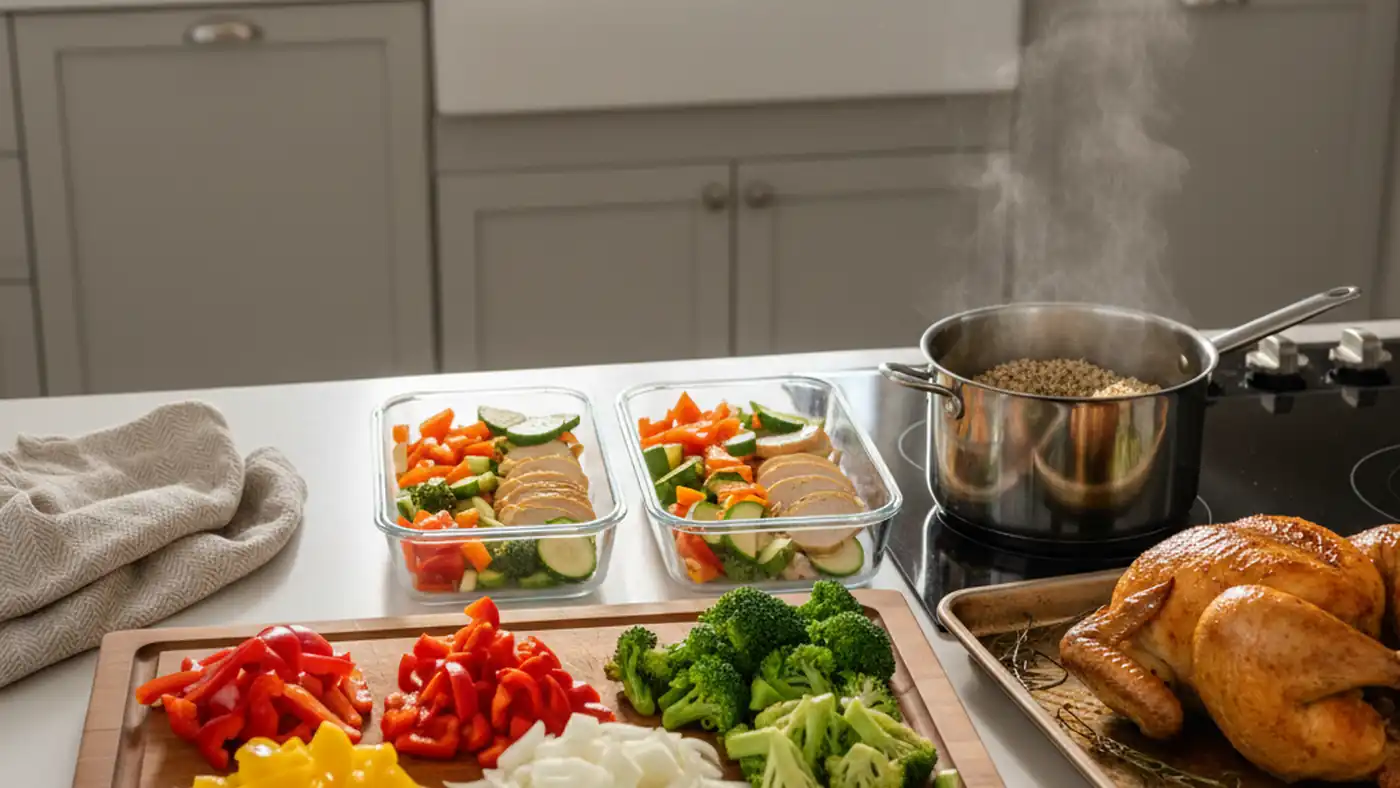
Six o’clock on a Tuesday. Kid practice ran late. Wife’s still at work. Nobody knows what’s for dinner. The fridge contains: half an onion, three condiments past their prime, and a tortilla. You order takeout. Again. The card hits $48 for food the kids barely touch. You promise to “do better” tomorrow. Tomorrow you don’t.
This is the weeknight cycle. Tens of millions of households running it on repeat. The fix isn’t a meal prep service. It isn’t a cookbook with 200 recipes you’ll never make. It’s four hours on a Sunday afternoon, executed once a week, that feeds your family well for the next six dinners.
This is the no-nonsense breakdown. The Sunday Cook Day method — what to actually cook, how to layer the work, what containers to use, what stays fresh and what doesn’t, and how to keep this sustainable for years instead of three weeks. The goal isn’t impressive Instagram lunches. The goal is dinner happening on Tuesday at 6:15 without a phone call to a delivery app.
The 30-second answer
Sunday afternoon, 4 hours, three categories: one big protein (roast chicken, pork shoulder, or pot of beans), one big grain (rice, quinoa, or pasta — cooked but not sauced), one big vegetable batch (roasted, sautéed, or salad-ready). Plus a sauce or two. By Wednesday you’ve remixed it three different ways. By Friday it’s gone. By Saturday you grocery shop. Repeat.
Why most meal prep fails
The internet’s version of meal prep is six identical Tupperware containers with chicken breast, broccoli, and rice. Eat the same meal five days in a row. By Wednesday you hate it. By Friday it’s still in the fridge.
The fix is flexibility — cook ingredients, not meals. The same roasted chicken becomes:
- Monday: chicken thighs over rice with sauce.
- Tuesday: chicken tacos with the leftover meat shredded.
- Wednesday: chicken-fried rice using the cold rice and leftover chicken.
- Thursday: chicken salad sandwiches.
- Friday: chicken soup from the carcass and a pot of broth.
One protein, five different dinners. The variety comes from sauces, sides, and shape — not from cooking five different meals.
The Sunday Cook Day playbook (4 hours)
Hour 1: Prep and the longest cook
- Preheat the oven to 425°F. Get the slowest part started first.
- Roast a whole chicken (or 8 chicken thighs, or a pork shoulder if you’ve got more time). Salt, pepper, oil. 75–90 minutes for whole bird, 45 for thighs.
- Start a pot of rice or grain. 2 cups dry rice = 6 cups cooked = 6 portions. Or quinoa, farro, barley.
- Wash all your vegetables for the week. Lettuce, spinach, carrots, peppers, cucumbers, whatever. Spin-dry, store in containers.
While the bird is cooking, you have 60–75 minutes of freed-up time. Use it.
Hour 2: The big vegetable batch
- Roast 2–3 sheet pans of vegetables. Cut everything to similar size, oil, salt, 425°F. Broccoli, cauliflower, sweet potato, carrots, brussels sprouts — whatever’s seasonal. 25 minutes per tray.
- Prep a raw veg batch. Sliced cucumbers, shredded carrots, halved cherry tomatoes, sliced bell peppers. These hold 3–4 days.
- Make one big pot of beans, lentils, or stew base. Or skip this and use canned for the week.
The chicken comes out around now. Let it rest 20 minutes before carving.
Hour 3: Sauces and the secondary protein
Sauces are the secret weapon. They turn the same protein into different meals.
Make 2–3 of these. They keep 7–10 days in the fridge:
- Garlic-tahini sauce: tahini, lemon juice, garlic, water, salt. Whisk to drizzle consistency. Mediterranean meals.
- Chimichurri: parsley, garlic, vinegar, oil, red pepper flakes. Beef or chicken.
- Peanut sauce: peanut butter, soy sauce, lime juice, ginger, sriracha, water. Asian meals.
- Salsa verde or tomatillo: store-bought is fine. Tacos, eggs, anything.
- Yogurt-cucumber (tzatziki): Greek yogurt, grated cucumber, garlic, dill. Wraps, grilled meats.
- Chili crisp / Lao Gan Ma: store-bought. Spoonful turns plain rice into dinner.
Optional secondary protein: hard-boil 6–8 eggs (10 minutes). Cook 1 lb of ground beef or turkey with onion and garlic — base for tacos, pasta sauce, rice bowls.
Hour 4: Pack and clean
- Carve the chicken. Pull most meat off bones; save carcass for stock (later in the week or freeze for next Sunday).
- Portion into containers. Glass meal-prep containers (Pyrex, Snapware) keep food fresher and reheat better than plastic.
- Label. Sharpie on a piece of tape. Date and contents. Saves you opening containers all week to figure out what’s what.
- Clean as you go. Wash sheet pans while pasta water heats. Knife, cutting board, bowls — all into the dishwasher (everything except the knives — see our Knife in the Dishwasher guide).
What the week looks like
By 5:30 PM Sunday, the fridge contains:
- 1 whole roasted chicken, carved (4–6 portions of meat).
- 1 sheet-pan worth of mixed roasted vegetables (4–5 portions).
- 1 batch of rice or grain (6 portions).
- 1 batch of raw vegetable mix.
- 2–3 sauces in jars.
- Hard-boiled eggs (4–6).
- 1 lb cooked ground beef (3–4 portions).
That’s the dinner pantry. Now the week:
| Day | Dinner | Time to Plate |
|---|---|---|
| Monday | Chicken + roasted veg + rice, drizzle sauce | 8 min |
| Tuesday | Ground beef tacos with raw veg + cheese + salsa | 10 min |
| Wednesday | Fried rice with leftover rice, chicken, eggs, frozen peas, soy sauce | 12 min |
| Thursday | Chicken salad over greens with sauce and hard-boiled eggs | 5 min |
| Friday | Pasta + ground beef + jarred marinara + parmesan (kids universal) | 15 min |
| Saturday | Wildcard / takeout / pizza night / cooked fresh | — |
Total weeknight cooking time: under 60 minutes across the week. No “what’s for dinner” panic. No takeout default. The hard work happened Sunday.
The food safety reality
Cooked meat: 3–4 days fresh, 4 days max. After day 4, freeze it or eat immediately.
Cooked grains: 4–5 days fresh.
Roasted vegetables: 4–5 days fresh, but the texture deteriorates after day 3 — they get softer.
Raw cut vegetables: 3–4 days for most, longer for hardy stuff (carrots, peppers).
Sauces: 7–10 days for most refrigerated mixtures. Vinegar and citrus-based last longer than dairy-based.
Pull the Friday-night meal forward to Thursday if you cooked something protein-heavy. Eat the longest-lasting things last.
Containers: the part that matters more than people admit
Cheap plastic containers warp, leach, and stain. They also make food look gross by Tuesday. Spend $80 once on a real set.
- Glass meal-prep containers (Pyrex, Snapware Pyrex, OXO): dishwasher, microwave, oven safe. Last forever. $50–$80 for a set of 8.
- Quart-size deli containers (Cambro, Restaurant Depot): stack flat in fridge, easy to label, dishwasher safe. $20 for 12 with lids.
- Mason jars: sauces, dressings, pickled things. Ball quart jars run $1.50 each.
- Stasher silicone bags or vacuum-sealer bags: for freezer portions and bulk vegetables. The vacuum-seal extends fridge life noticeably.
Skip: cheap take-out plastic containers (warp), thin Ziplocs (leak), single-use anything (defeats the point).
The shopping list system
The honest sustainable version of Sunday Cook Day is built around 3–4 staples that repeat plus 1–2 weekly variations. Here’s a typical week:
Always
- 1 whole chicken (or 6–8 thighs)
- 1 lb ground beef or turkey
- 2 lbs rice / quinoa / farro
- 4–6 lbs mixed roasting vegetables (whatever’s on sale)
- Bag of greens or salad mix
- Hard cheese (parmesan, sharp cheddar)
- Eggs (dozen)
- Tortillas / flatbread / pasta
Sauce ingredients (rotate)
- Tahini, soy sauce, fish sauce, peanut butter (lasts months)
- Fresh herbs (parsley, cilantro, scallions — buy whatever’s freshest)
- Yogurt or sour cream
- Lemons / limes
- Garlic, ginger, jalapeños
Wildcards
- Whatever protein is on sale (salmon, pork, ground lamb)
- 1–2 specialty vegetables (asparagus, artichokes)
- Fresh fruit for the week
Total grocery time: 25 minutes if you know your store. Total grocery cost (family of 4): $80–$120 for 6 dinners. Per-meal cost: $13–$20. Beats takeout, beats meal-kit services, beats most restaurants.
The 4-hour timeline (a literal Sunday afternoon)
| Time | What’s Happening |
|---|---|
| 1:00 PM | Preheat oven, salt the chicken, set out vegetables. |
| 1:15 PM | Chicken in oven. Start rice. Wash all veg. |
| 1:30 PM | Rice rests, start chopping for roast vegetables. |
| 1:45 PM | First sheet pan of veg goes in. Chop second batch. |
| 2:00 PM | Make sauce #1. |
| 2:15 PM | First veg out, second tray in. Make sauce #2. |
| 2:30 PM | Take chicken out, let rest. |
| 2:45 PM | Cook ground beef. Slice cucumbers and peppers. |
| 3:00 PM | Hard boil eggs. Carve chicken. |
| 3:15 PM | Portion food into containers. Label. |
| 3:45 PM | Clean kitchen. Make stock from carcass (optional). |
| 4:30 PM | Done. Drink the cold beer you’ve earned. |
Realistic total: 3.5–4 hours. About half of that is hands-on cooking. The other half is the oven doing its job while you do other things.
The mindset shift
Sunday Cook Day requires one philosophical change: cooking happens once a week, not five times.
The dad who cooks fresh Tuesday + Wednesday + Thursday + Friday burns out by Wednesday. The dad who cooks once Sunday and reheats / remixes Monday through Friday has dinner sorted in 10 minutes a night.
The reheated chicken from Sunday tastes essentially the same as fresh. The roasted vegetables hold up well. The grain is forgiving. The protein-grain-vegetable-sauce framework stays interesting because the sauce changes the meal.
“But fresh is better!” Sometimes. For most weeknight dinners, no — you eat too fast to notice, and the kids don’t care. Save your “fresh” cooking energy for Saturday night when you actually have time.
Mistakes that ruin Sunday Cook Day
- Cooking 5 meals instead of components. The Tupperware-of-identical-dinners approach gets boring by Wednesday.
- Forgetting the sauce. Plain reheated chicken + plain rice + plain vegetables = sad dinner. Sauce is the variety lever.
- Over-prepping greens. Lettuce wilts. Don’t dress salads ahead.
- Buying ingredients you won’t use. The $7 bunch of fresh dill that goes black in the produce drawer. Stick to ingredients you know you’ll use.
- Skipping containers and using random Tupperware. Mismatched lids = lost food + frustration.
- Doing Sunday Cook Day on Saturday. By Friday, the food is too old. Sunday is timed for the week.
- Setting it up perfectly the first week and burning out by week 3. Start small — protein and grain only. Add roasted veg week 2. Add sauces week 3. Build the habit, not the hero week.
The kids problem
Kids are picky. The 3-year-old loves chicken Monday and refuses it Tuesday. Real talk:
- Plain rice is universal. Always.
- Sliced cucumber and carrot survive most kid moods.
- Scrambled eggs (2 minutes) cover the “I won’t eat that” emergency.
- Cheese on pasta is the universal save.
- The chicken is the chicken. Try not to negotiate.
You’re not cooking restaurant-grade kid pleasing dinners. You’re feeding humans nutritionally, on time, with minimal evening drama. That’s the whole goal.
Variations by week
The Mediterranean week
Roast chicken with lemon and oregano. Quinoa or farro. Roasted eggplant, zucchini, tomatoes. Tzatziki and chimichurri. Hummus from the store. Pita.
The Mexican-leaning week
Pulled pork shoulder. Rice and black beans. Sautéed peppers and onions. Salsa verde and chipotle crema. Tortillas. Queso fresco.
The Asian-leaning week
Roasted soy-ginger chicken thighs. Jasmine rice. Stir-fried greens. Peanut sauce, chili crisp, kimchi. Cold noodle option.
The “kids will riot” week
Plain roast chicken. Plain rice. Plain steamed broccoli. Plain pasta with butter and parmesan in reserve. Boring is sometimes the answer.
Sustainability over a year
The first month is exciting. The third month is when you skip a Sunday. The sixth month is when this becomes a real lifestyle.
Tricks for the long haul:
- Don’t try to be impressive. Roast chicken every other week is fine. Variety isn’t always virtue.
- Set up the playlist or audiobook. Sunday Cook Day with no audio gets dull. With music or a podcast, it’s relaxing.
- Get the kids to help (eventually). Eight-year-olds can wash vegetables. Twelve-year-olds can chop softer things. Twenty-somethings can carve a chicken. Build the next generation.
- Take a Sunday off when you need to. One week of takeout is fine. Don’t quit the system over a single bad week.
- Reuse the same recipes for months. You’re not running a restaurant. The chicken recipe doesn’t need to change every week.
Tools that make Sunday Cook Day easier
- Sharp chef’s knife (the difference between 4 hours and 5 hours).
- 2 sheet pans (can roast multiple veg simultaneously).
- Large cutting board (you’ll be on it the whole time — see our Cutting Board Showdown).
- Glass meal-prep containers.
- Sharpie + masking tape for labels.
- A dishwasher (real one, not “rinse and stack” pretending).
- Decent cookware (a Dutch oven for stews/braises is non-optional in cold months).
If you only remember five things
- Cook ingredients, not meals. The remix is what makes it work.
- Sunday afternoon, 4 hours, protein + grain + vegetables + sauces.
- Glass containers. Labels. Real organization.
- Don’t try to be impressive. Roast chicken is enough.
- The first month is hard. The sixth month is automatic.
FAQ
Can this work for a couple, not a family?
Yes — scale down. Half a chicken instead of whole, 1.5 cups rice instead of 2. A couple cooks for 4 dinners on Sunday and freezes 2 portions for the next week.
What about the spouse who cooks differently than I do?
Sunday Cook Day works best when one person owns it and the other partners on shopping or cleanup. If both partners cook differently, alternate weeks (you do this Sunday, they do next Sunday with their preferences).
Is it cheaper than meal kit services?
Yes. Meal kits run $9–$15 per serving for a family of 4. Sunday Cook Day runs $4–$7 per serving with bulk-bought ingredients. The savings on a year: $1,500–$3,000.
What if my schedule doesn’t allow Sunday afternoons?
Move it. Saturday morning. Sunday morning. Friday night. Whatever block of 4 hours fits. The day name doesn’t matter; the once-a-week framework does.
How do I keep things from drying out reheating?
Splash of water or broth + cover with a paper towel + microwave at 60% power. For oven reheating: cover with foil at 300°F. Avoid full power microwave reheating — it dries chicken to leather.
Can I freeze portions for “future weeks”?
Some things freeze well: cooked rice, cooked beans, sauces, soups, ground meat. Some things don’t: roasted vegetables get mushy, leafy greens disintegrate, dairy-based sauces break. Freeze what’s freezable; eat what isn’t.
What about specific dietary stuff (gluten-free, dairy-free, vegan)?
The framework is fully adaptable. Vegan: substitute proteins with beans, lentils, tempeh. Dairy-free: skip cheese, use coconut yogurt for dressings. Gluten-free: rice and corn-based grains, gluten-free pasta. The protein + grain + vegetables + sauce structure works everywhere.
The Grumpy Dad Promise
Spend four hours on Sunday afternoon. Cook protein, grain, vegetables, and sauces — not meals. Pack into glass containers. Label. By Tuesday at 6:15 PM, dinner is on the table in 10 minutes. By Friday, the leftovers are gone, the takeout app hasn’t been opened, and the family has eaten well all week.
This isn’t meal prep theater. It’s the practical adult solution to weeknight dinner chaos. Now go get a chicken in the oven.