Grilling Vegetables Without Ruining Them: The Grumpy Dad Way

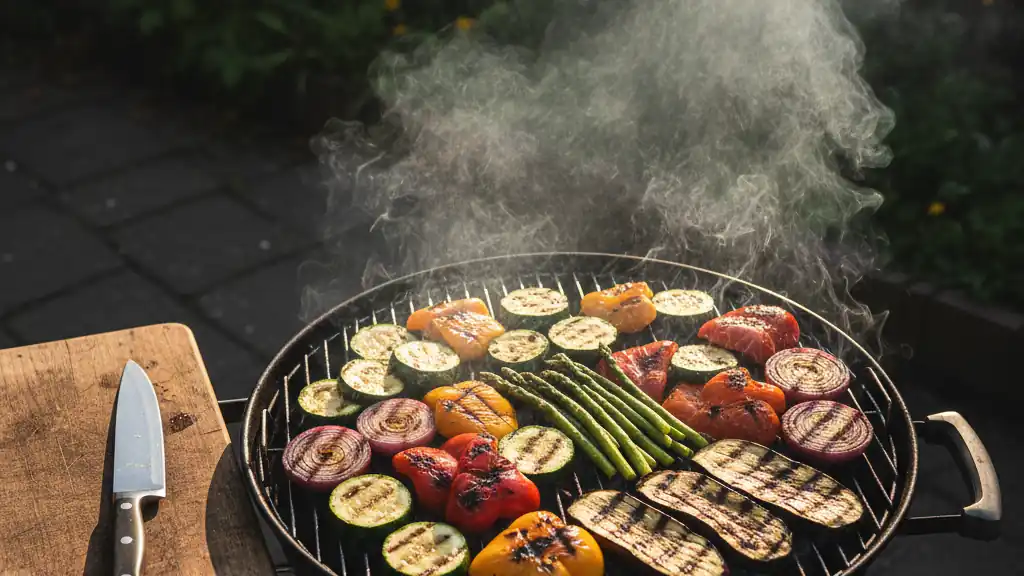
Every dad has done this. Crank the grill to “as hot as it goes.” Throw on a bunch of zucchini slices. Five minutes per side. Pull them off looking like blackened roof shingles. Serve them with apologies. Watch the kids push them to the side of the plate. Promise yourself you’ll “do better next time” and then forget by the next cookout.
Vegetables are the most-abused part of the grilled meal. Most dads treat them as the side dish that doesn’t really matter — same heat as the steak, same timing, same lack of attention. The result: scorched outside, raw inside, no flavor in the middle. Then everyone agrees grilled vegetables are “fine” while reaching for more meat.
Here’s the truth: grilled vegetables done right are the best part of the meal. Caramelized exterior, tender-but-not-mushy interior, smoky sweetness that no oven can match. The technique is different from grilling protein. Once you stop treating them like burgers, you stop ruining them.
This is the no-nonsense breakdown. Why the grilling vegetables wrong is so common. The right heat zones. The five vegetables that take the most patience. Oil, salt, and seasoning timing. The two methods (direct vs indirect) and which to use when. And the marinade rules that turn good vegetables into the centerpiece nobody saw coming.
The 30-second answer
Use medium heat (350–425°F), not high. Oil the vegetables, not the grill grate. Salt right before grilling, not earlier. Cut to consistent sizes for even cooking. Use direct heat for soft vegetables (zucchini, peppers), indirect for dense ones (potatoes, beets). Don’t move them every 30 seconds — let one side caramelize before flipping. Most veg take 8–15 minutes total, not 5.
Why vegetables get ruined on the grill
Three main reasons:
- Wrong heat. The “grill on full blast” mentality scorches vegetable cell walls before the inside softens. Burned outside, raw inside.
- Wrong oil moment. Oiling the grill grate before vegetables go on burns off in seconds. Vegetables hit a dry hot grate and stick. Oil should go on the vegetables, not the grates.
- Too much movement. Vegetables need time to release from the grate naturally. Constant flipping prevents the surface caramelization (Maillard reaction) that creates flavor. Patience beats activity.
Fix those three and 80% of grilled-vegetable problems disappear.
The right heat for vegetables
Steaks want high direct heat (500°F+) for a fast hard sear. Vegetables want medium heat (350–425°F) for slower caramelization that lets the inside cook through.
This is one reason a two-zone grill setup matters. Not every food on the grill wants the same temperature.
| Vegetable Type | Heat Setting | Method |
|---|---|---|
| Zucchini, summer squash | Medium (400°F) | Direct |
| Bell peppers | Medium-high (425°F) | Direct |
| Asparagus | Medium (400°F) | Direct |
| Eggplant | Medium (375°F) | Direct |
| Red onion | Medium (400°F) | Direct |
| Mushrooms (whole portobello) | Medium (400°F) | Direct |
| Corn on the cob | Medium (400°F) | Direct |
| Cherry tomatoes (skewered) | Medium-high (425°F) | Direct |
| Sweet potato slices | Medium-low (350°F) | Direct then indirect |
| Potatoes (small whole) | Indirect (350°F) | Foil-wrapped or basket |
| Beets (whole) | Indirect (350°F) | Foil-wrapped |
| Brussels sprouts (halved) | Medium (400°F) | Cast iron pan or basket |
For two-zone setups: vegetables on the cooler side, proteins on the hot side. (Covered in our Charcoal vs Gas vs Pellet guide.)
Oil: vegetables, not grates
Standard kitchen advice says “oil the grill grate.” For vegetables, that’s wrong. Here’s why:
- Oil on a hot grate burns off in 30 seconds, leaving a sticky carbonized residue that vegetables stick to worse than a clean grate.
- The smoke from burning oil tastes acrid, not pleasantly grilled.
- The vegetables themselves need oil for proper heat transfer and caramelization.
The right way:
- Cut vegetables to consistent size.
- Place in a bowl. Drizzle with oil — about 1 tablespoon per pound of vegetables.
- Toss to coat all surfaces evenly.
- Salt and season just before grilling.
- Place on a clean dry grate. Don’t oil the grate.
The oil on the vegetables provides the lubrication and heat transfer needed. Clean dry grates release more cleanly than oiled-and-burned ones.
Best oils for grilling vegetables
- Avocado oil: high smoke point (~520°F), neutral flavor. The pro choice.
- Refined olive oil: neutral flavor, decent smoke point (~430°F). Not extra-virgin (smoke point too low).
- Grapeseed oil: neutral, high smoke point. Good budget option.
- Vegetable / canola oil: works fine, no character.
Skip extra-virgin olive oil for high-heat grilling — it smokes and turns bitter. Save it for finishing after the vegetables come off the grill.
The salt-timing rule
Salting vegetables 30+ minutes before grilling pulls moisture to the surface (osmosis). The wet surface steams instead of caramelizing on the grill. Result: limp, watery vegetables instead of charred ones.
Salt right before grilling — within 5 minutes of putting them on the grate. The salt sits on the surface, the surface stays dry enough to caramelize, and the seasoning is balanced.
Exception: eggplant. Salt eggplant 20–30 minutes ahead, let it sit, blot off the moisture and excess salt with a paper towel before oiling and grilling. The salt draws out bitterness from the eggplant; you wash it off before cooking.
Cutting strategy: consistent sizes, optimized for the grate
Most home cooks under-cut vegetables, ending up with pieces that fall through the grates or cook unevenly.
- Zucchini, summer squash, eggplant: 1/2-inch thick rounds or long planks (1/2″ thick × 2-3″ wide).
- Bell peppers: quarters or halves with seeds removed. Don’t dice — they fall through.
- Asparagus: whole spears, woody bottom snapped off.
- Red onion: 1/2-inch thick rounds, secured with toothpicks if they want to fall apart.
- Portobello mushrooms: whole caps (gill side up first, then flip).
- Corn: husked, whole on the cob.
- Cherry tomatoes: skewered. Otherwise they roll and fall through.
- Sweet potato: 1/4–1/2″ rounds. Pre-cooked (microwave 4 minutes) for faster grilling.
- Brussels sprouts: halved, in a cast iron pan or grill basket.
Pieces that fall through the grates are wasted. Pieces too thick don’t cook through. Pieces of inconsistent size cook unevenly. The right cut prevents three problems at once.
Direct vs indirect: when to use which
Direct heat (over the flame/coals)
Use for: vegetables that cook in 5–15 minutes, soft and mid-density. Get char marks, caramelization, fast Maillard. Most everyday grilled vegetables fall here.
Indirect heat (off to the side, lid down)
Use for: dense vegetables that need 20–60 minutes. Whole potatoes, beets, hard winter squash. Acts like an oven — even cooking through without scorching exterior.
Hybrid (start direct, finish indirect)
Use for: medium-density vegetables you want with both char and tenderness. Cut sweet potatoes, thick eggplant slices, large mushroom caps. Get the marks first, then move to the cooler side to cook through.
The five most-ruined vegetables (and the fix)
1) Zucchini and summer squash
The mistake: Cut too thin (1/4″) so they overcook and turn to mush. Or too thick (3/4″) and they turn raw inside, burnt outside.
The fix: 1/2″ rounds or planks. Medium heat. 3–4 minutes per side, no more. Salt right before grilling. They should still have a slight bite when you pull them off — they finish cooking from carryover heat.
2) Bell peppers
The mistake: Diced into small pieces that fall through grates. Or grilled whole and the inside steams instead of charring.
The fix: Quarters or halves, seeds removed. Skin-side down first for char marks (5–7 minutes), then flip briefly to soften the inside (2–3 minutes). The blistered skin is delicious — leave it on.
3) Asparagus
The mistake: Whole spears placed perpendicular to the grates so they fall through.
The fix: Snap off woody ends. Place spears parallel to the grates, or use a perforated grilling pan. 4–6 minutes total, rolling them once. Done when bright green and slightly tender — overcooked asparagus is sad.
4) Eggplant
The mistake: Skipped the salt-and-rest step. Eggplant comes off bitter, soggy, and undercooked in the middle.
The fix: 1/2″ rounds, salt heavily, rest 20 minutes, blot off moisture with paper towels. Oil generously (eggplant absorbs oil hungrily). Grill medium heat, 4–5 minutes per side. Should be golden-brown and creamy inside.
5) Onion
The mistake: Cut thin enough to fall apart on the grill, or grilled whole so only the outside layers cook.
The fix: 1/2″ thick rounds, kept together with toothpicks pushed horizontally through the layers. Or skewer multiple rings. Medium heat, 6–8 minutes per side. Sweet, charred, no longer “raw onion” pungent.
The marinade rules
Vegetables marinate faster than meat — 15–30 minutes is plenty. Long marinades (4+ hours) make vegetables soggy.
Quick marinade base (everything-friendly):
- 3 tablespoons olive oil (refined)
- 1 tablespoon vinegar (balsamic, sherry, or red wine)
- 1 tablespoon soy sauce
- 1 clove garlic, minced
- 1 teaspoon honey or maple syrup
- Salt, pepper
Toss vegetables in this 15–30 minutes ahead. Drain excess marinade before grilling (the sugars and oil burn fast).
Specialty marinades:
- Asian-style: sesame oil, soy sauce, rice vinegar, ginger, garlic. Good for asparagus, broccoli, peppers, mushrooms.
- Mediterranean: olive oil, lemon juice, oregano, garlic, salt. Good for zucchini, eggplant, peppers, onions.
- Smoky: oil, smoked paprika, cumin, salt, lime juice. Good for corn, sweet potatoes, peppers.
The grilling-pan and basket question
For loose or small vegetables (cherry tomatoes, mushrooms, broccoli florets, brussels sprouts halves), a grilling basket or perforated pan changes everything.
- Grilling basket: open-top mesh box, vegetables go in, basket goes on the grates. Easy stir-and-shake while cooking.
- Perforated grill pan: flat sheet with holes, vegetables go on top. Better for things that need to caramelize without rolling around.
- Cast iron pan on the grill: for brussels sprouts, mushrooms, and anything that benefits from a fond developing. The pan acts like a grilled-in skillet.
For about $20–$40 you double the kinds of vegetables you can grill effectively.
The “don’t move them” rule
Most home cooks flip vegetables every 30 seconds. This prevents caramelization from setting and keeps the vegetables from releasing cleanly.
The right approach:
- Place vegetables on the grate.
- Close the lid (gas grill) or leave open (charcoal/wood).
- Wait at least 3 minutes before lifting any.
- Test by trying to lift a piece — if it’s sticking, give it another minute. When ready, it releases naturally.
- Flip once. Cook the second side similarly.
- Move to the cool zone if needed for finishing.
The single-flip method beats constant fussing for almost every grilled vegetable.
The Grumpy Dad standard grilled-veg setup
For a typical family grill night, this is the realistic playbook:
- Set up two-zone grilling. Hot side at 425°F+, cool side around 350°F.
- Prep vegetables 30 minutes ahead. Cut, marinate (optional), set aside.
- Cook proteins on the hot side. Steaks, burgers, chicken on direct high heat.
- Add vegetables to the cool side while proteins are searing on the hot side. Medium heat, lid closed.
- Move proteins to cool side to finish cooking through. Move vegetables to the now-vacated hot side for the last 2–3 minutes for char marks.
- Pull everything off at staggered times based on what’s done. Vegetables usually finish before proteins because proteins need to rest.
Vegetables come off looking restaurant-quality. Proteins are properly rested. Everyone eats well.
Finishing: oil, salt, herbs
Grilled vegetables benefit from a finishing touch right before serving:
- Drizzle of extra-virgin olive oil: after they come off the grill, on the serving platter. The oil wakes up flavor without being burned during cooking.
- Flaky salt: Maldon or other large-flake salt sprinkled on top. Adds crunch and flavor pop.
- Fresh herbs: torn basil, parsley, mint, or chives. Adds freshness against the smoky grilled flavor.
- Lemon or vinegar: a squeeze of lemon juice or splash of balsamic. Brightens the whole platter.
This 30-second finish elevates grilled vegetables from side dish to centerpiece.
Marketing traps to avoid
- “Vegetable-specific grill seasoning.” Salt, pepper, garlic powder, dried herbs — all in one bottle for $9. Save the money. The seasoning at home is a quarter of the price.
- “Smoke flavoring liquid for vegetables.” If you’re using a grill, you don’t need it. If you’re cooking inside, a few drops can help — but a whole bottle isn’t necessary.
- “Veggie-friendly grilling sauces.” Most are sugar-heavy and burn at grilling temps. Use them as finishing sauces after the vegetables come off the grill.
- “Special vegetable grilling accessories” worth $40+. A $15 grilling basket and a $20 cast iron pan cover 90% of what you need.
- “Pre-marinated grilled vegetables” at the grocery store. Usually drowned in oil and salt, mushy from too long in marinade. Buy fresh, marinate yourself in 20 minutes.
Common mistakes that ruin grilled veg
- Crank-it-up high heat. Caramelizes too fast, burns the outside.
- Oiling the grates instead of the vegetables.
- Salting 30 minutes ahead. Surface gets wet, vegetables steam.
- Cutting too small. Falls through grates, overcooks.
- Cutting too big. Doesn’t cook through.
- Constant flipping. Prevents the caramelization that creates flavor.
- No two-zone setup. Everything cooks at the same heat — proteins want hot, vegetables want medium.
- Forgetting the finish. Plain grilled vegetables on the plate vs. drizzled, salted, herbed grilled vegetables on the plate is the difference between “fine” and “wow.”
- Using a dull knife to cut the vegetables (this damages cell walls before they hit the grill — covered in our Honing vs Sharpening guide).
What works for kids
Kids reject grilled vegetables for two reasons: bitter (overcooked, charred bitter) or weird (textures they’re not used to).
- Cherry tomatoes (sweet, familiar, finger food).
- Corn on the cob (always a winner).
- Bell pepper strips (sweet when grilled).
- Sweet potato rounds (carb-friendly).
- Mild zucchini planks with parmesan finish.
Skip for picky kids: eggplant, brussels sprouts, anything bitter or unusual texture. Earn those over time.
If you only remember five things
- Medium heat (350–425°F), not high. Vegetables aren’t burgers.
- Oil the vegetables, not the grate.
- Salt right before grilling, not earlier (except eggplant).
- Cut consistent sizes, optimized for the grate.
- Don’t move them every 30 seconds. One careful flip.
FAQ
Can I grill frozen vegetables?
Generally no. Frozen vegetables release water on the grill, steaming instead of charring. Thaw fully and dry with a towel first if you must.
Why do my mushrooms shrink to nothing on the grill?
Mushrooms are 90% water — they release it under heat. Use whole portobellos (less surface area to lose water). Or pre-roast in the oven to drive off moisture before finishing on the grill.
Can I grill leafy greens like kale or romaine?
Yes — quickly. Romaine halves on direct medium heat, 1–2 minutes per cut side. Kale leaves whole, 1 minute per side. Both go from raw to charred fast — watch them.
What’s the trick for grilled corn?
Husk completely (more flavor than husk-on, which is essentially steaming). Oil and salt. Direct medium heat, rolling every 2 minutes for 8–12 minutes total. Look for char marks on multiple sides. Finish with butter, lime, and chili powder for elote-style.
Is a grill basket worth it?
For loose vegetables, yes. About $15–$30. Doubles the kinds of vegetables you can grill effectively. Lasts 5+ years with care.
Can I grill vegetables in foil packs?
Yes, but it’s steaming, not grilling. Different texture and flavor — softer, no char marks. Useful for things like potatoes that need long cook times. Don’t use foil packs for things you’d want grilled-charred (zucchini, peppers, asparagus).
How do I prevent vegetables from sticking?
Clean grates (brush before lighting). Oil the vegetables generously. Don’t move them too soon — let them release naturally. Use a thin metal spatula, not tongs, for delicate items that might tear.
The Grumpy Dad Promise
Stop grilling vegetables like they’re burgers. Drop the heat. Oil the vegetables. Salt last second. Cut for the grates. Flip once. Finish with good oil and herbs. Do that, and the side-dish-nobody-wanted becomes the centerpiece-everyone-asks-about.
The grill isn’t just for protein. It’s the secret weapon for making vegetables actually taste like something. Now go grill something green. The kids might surprise you.