
Moka Pot 101: Espresso Without the Espresso Machine (And Why Most People Ruin It)

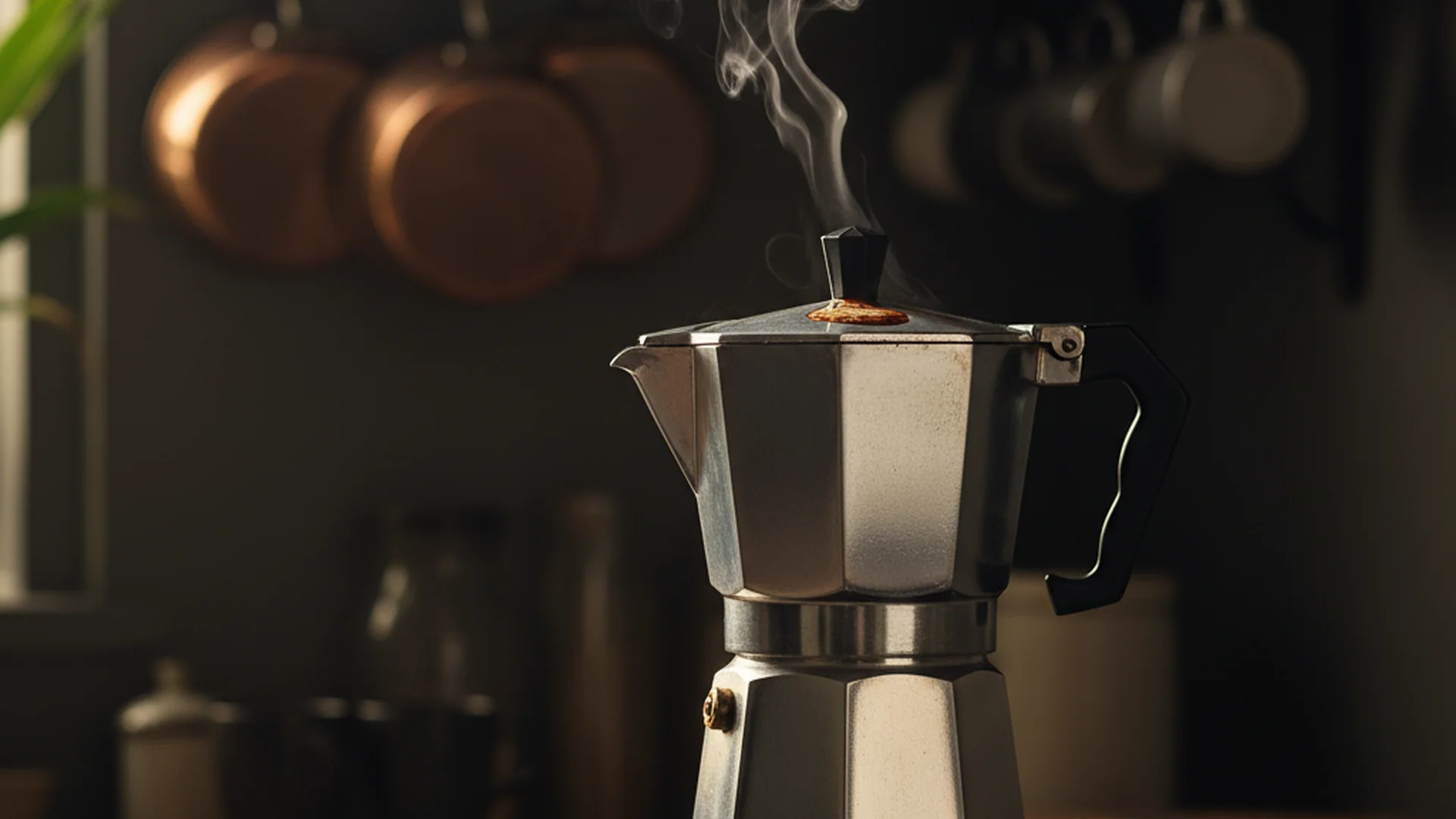
You bought the Moka pot at Target on a whim. Or your in-laws gave it to you in 2017. Either way, it sat on the back of the cabinet for two years. You finally pulled it out, packed it with grocery-store Folgers, cranked the stove to high, and produced something that tasted like burnt rubber smelled. You dumped it. The Moka pot went back in the cabinet. You bought a Keurig.
The Moka pot is one of the most misunderstood coffee tools in America. It’s not a coffee maker that makes regular drip coffee. It’s not exactly an espresso machine either. It’s a stovetop pressure brewer that produces concentrated, intense, espresso-adjacent coffee — when you use it correctly. Most dads have never actually had Moka pot coffee that wasn’t ruined.
This is the no-nonsense breakdown. How the Moka pot actually works (the physics matter). What grind, water, and heat produce a great cup. The mistakes that kill the brew before it starts. The aluminum vs steel question. And why this $40 piece of cookware is the smartest coffee upgrade for a household that doesn’t want a $700 espresso machine.
The 30-second answer
Use medium-fine grind (between drip and espresso), preheated water (almost-boiling), medium-low heat. Stop the brew when it sounds like a hissing kettle before it sputters. Don’t tamp. Don’t fill above the safety valve. The result is rich concentrated coffee somewhere between strong drip and weak espresso. Perfect for milk drinks (lattes, cortados) and serious black coffee drinkers.
How the Moka pot actually works
A Moka pot has three chambers stacked vertically:
- Bottom chamber: holds water. Has a safety valve on the side.
- Middle chamber (filter basket): holds the coffee grounds. Has a fine metal filter at the top.
- Top chamber: collects the brewed coffee. Has a spout for pouring.
The physics: as the water in the bottom chamber heats, it boils and creates steam pressure. The pressure pushes hot water up through the coffee grounds, through the filter, and into the top chamber.
This is brewing under pressure — about 1–2 bars (vs 9 bars in a real espresso machine). Not enough to produce true espresso (no real crema, lower extraction), but enough to produce concentrated coffee with much more body than drip.
The whole brew takes 4–6 minutes from cold water to finished coffee. Hands-off most of that time, with the critical moment being when to take it off the heat.
The grind: where most people fail
Wrong grind is the #1 reason Moka pot coffee tastes terrible.
| Grind Size | Result |
|---|---|
| Coarse (French press) | Watery, under-extracted, weak |
| Medium (drip) | Acceptable but lacks body |
| Medium-fine | Right answer — between drip and espresso |
| Fine (espresso) | Over-extracted, bitter, may clog filter |
| Very fine (Turkish) | Stalls the pump, causes safety-valve venting, ruined |
The grind should look like fine table sugar — slightly coarser than espresso. If your fingertip can pinch a small amount and feel separate particles, the grind is right. If it feels like flour, too fine.
A burr grinder is non-negotiable for consistent Moka pot results. Blade grinders make uneven particles that produce muddy, inconsistent coffee. (Covered in our Coffee Grinder Guide.)
The water: the underrated detail
Most people fill the bottom chamber with cold tap water and turn on the heat. This works, but it overheats the coffee grounds during the long warm-up phase, scorching the flavor.
The pro move: fill the bottom chamber with already-hot water (just off boiling). This dramatically reduces the time the metal pot is heating up while in contact with the coffee grounds, which preserves more of the delicate aromatic compounds and prevents the bitter “burnt” taste.
Practical method:
- Boil water in a kettle.
- Pour just-boiled water into the bottom chamber up to the safety valve (not above).
- Place the filter basket with grounds in the bottom chamber.
- Quickly screw on the top chamber (use a towel — it’s hot).
- Place on stovetop with heat already on medium-low.
This single change — pre-heated water — turns a mediocre Moka pot brew into a genuinely good one. Italian grandmothers have been doing this for 70 years and the internet keeps re-discovering it.
The heat: medium-low, not high
Cranking the stove to high is the second-biggest Moka pot sin. High heat:
- Boils water too aggressively, causing it to surge through the grounds at high pressure (over-extraction, bitter).
- Heats the metal of the pot rapidly, scorching the coffee grounds in contact with the bottom of the filter basket.
- Pushes the brew through too fast, leaving water in the bottom chamber that flashes to steam at the end (the dreaded “sputter”).
Use medium-low heat. The brew should take 4–6 minutes. If yours is finishing in 2 minutes, the heat is too high.
Adjust by stove type:
- Gas stove: medium flame, smaller burner.
- Electric coil: medium-low setting, allow time to heat up.
- Glass-top induction: medium setting; aluminum Moka pots may not work — need stainless or a magnetic adapter disc.
The technique (step-by-step)
- Boil water in a kettle to about 200°F (just off the boil).
- Grind beans medium-fine. Amount: enough to fill the filter basket level, no tamping.
- Fill the bottom chamber with hot water up to (not above) the safety valve.
- Insert filter basket with leveled coffee grounds.
- Screw on the top chamber firmly but not over-tight. Use a towel for grip.
- Place on stove at medium-low heat.
- Listen carefully after 3–4 minutes. You’ll hear a gentle gurgling sound as coffee starts flowing into the top.
- Watch the spout. Coffee should flow as a thin smooth stream, dark brown.
- Pull off the heat when the stream becomes blonde/yellowish or the gurgling becomes a hissing noise. This signals the water is mostly gone and steam is starting to push through.
- Cool the bottom by placing it briefly under cold tap water (just the bottom chamber). Stops residual brewing.
- Pour and serve. The brew is concentrated — about 2–4 oz from a typical home Moka pot.
The “don’t tamp” rule
Espresso enthusiasts tamp their grounds firmly. Moka pot grounds should be level but loose. Tamping creates too much resistance for the low pressure (1–2 bars) of the Moka pot, which leads to:
- Water failing to push through the grounds, instead venting through the safety valve.
- Uneven extraction with channeling.
- Sputtering at the end as the bottom chamber boils dry without proper flow.
Just shake the filter basket to level the grounds. That’s it. The coffee should be packed snugly by gravity, not by force.
Aluminum vs stainless steel
| Feature | Aluminum (Bialetti Moka Express) | Stainless Steel |
|---|---|---|
| Heat distribution | Excellent | Good |
| Weight | Light | Heavier |
| Induction compatible | No (without adapter) | Yes (most) |
| Patina/seasoning | Develops over time | Stays clean-looking |
| Reactivity to water | Slight (mineral build-up) | Inert |
| Price | $25–$50 | $50–$130 |
| Lifespan | 10–20 years | 20+ years |
The traditional choice is aluminum (Bialetti Moka Express has been the standard for 90+ years). Italian families often have the same Moka pot for 30 years and pass it down. The aluminum develops a coffee patina that’s said to enhance flavor over time.
Stainless steel is heavier, induction-compatible, and slightly easier to maintain. Some flavor purists prefer aluminum’s slight mineral interaction; others prefer stainless’s neutrality.
For most home cooks: aluminum Bialetti is the honest answer. Inexpensive, time-tested, easy to find replacement gaskets and filters.
The five worst Moka pot mistakes
1) Cold water in the bottom chamber
The metal heats up while in contact with the grounds, scorching them. Use just-boiled hot water.
2) High heat
Bitter, fast-pushed, sputtery brew. Medium-low only.
3) Too-fine grind
Espresso grind clogs the filter, causes safety valve venting, over-extracts. Medium-fine is the answer.
4) Tamping the grounds
Creates too much resistance for low-pressure brewing. Level, don’t pack.
5) Letting it brew until it sputters
The sputtering sound = bottom chamber dry, steam pushing through grounds. The final drops are bitter and ruin the whole pot. Pull off heat when the stream goes blonde.
Cleaning and care
- Rinse with hot water only. Don’t use soap. The Italian tradition: water-only wash preserves the seasoning. Soap leaves residue that interferes with flavor.
- Dry all parts immediately after rinsing. Aluminum can pit if left wet.
- Replace the rubber gasket every 1–2 years (or when it starts losing its seal). Cheap part, $4–$8.
- Replace the metal filter if it warps or develops holes.
- Don’t put it in the dishwasher. Heat warps aluminum, detergent strips the patina.
- Store disassembled. The chambers separated, gasket free to breathe. Prevents rubber degradation.
The best beans for a Moka pot
Moka pot brewing concentrates flavors more than drip. Coffee that tastes “fine” in a drip brewer can taste over-roasted or sour in a Moka pot.
What works:
- Medium to medium-dark roast. The Moka pot likes the body and chocolate notes of medium-dark.
- Italian-style or “espresso roast” blends. Designed for pressure brewing.
- Single-origin Brazilian, Sumatra, or Central American. Lower acidity, more body, suit the brewing method.
What struggles:
- Light roasts. Their delicate floral/fruit notes get crushed by the pressure brewing.
- Very fresh beans (under 4 days post-roast). Too much CO2, can cause uneven extraction.
If you’re buying beans specifically for a Moka pot: medium-dark Italian or “espresso” labeled blends from local roasters.
Moka pot vs other brewing methods
| Method | Strength | Hands-on Time | Equipment Cost |
|---|---|---|---|
| Drip coffee maker | Mild | Low | $30–$200 |
| French press | Medium-strong | Low | $25–$100 |
| Pour-over | Medium, complex | Medium-high | $30–$80 |
| AeroPress | Medium-strong | Medium | $40 |
| Moka pot | Strong, espresso-adjacent | Medium | $25–$80 |
| Real espresso machine | Strongest, with crema | Medium | $300–$3,000+ |
The Moka pot’s niche: stronger than any non-pressure brewer, no electricity required, $40 entry, real concentrated coffee experience without the espresso machine investment. For anyone who likes lattes, cortados, or just strong black coffee, this is the smart upgrade.
Moka pot drinks (beyond just black coffee)
Caffè latte
Brew a Moka pot. Steam or microwave-froth 6 oz of milk. Combine. Adjust ratio to taste. The Moka pot’s concentrated brew holds up against the milk where drip coffee gets diluted.
Cortado
Equal parts Moka pot brew and warm milk. Smaller drink, more coffee-forward than a latte.
Americano
2 oz Moka pot brew + 6 oz hot water. Lengthens the coffee for those who find Moka brew too intense.
Iced Moka
Brew Moka pot, pour over ice, add splash of milk. The concentration prevents the dilution problem of iced drip coffee.
Affogato
Vanilla ice cream in a small bowl. Pour 2 oz hot Moka brew over the top. Eat immediately. Restaurant-quality dessert in 90 seconds.
The Grumpy Dad recommendation by household
“I drink one strong cup in the morning and that’s it”
Bialetti Moka Express 3-cup ($25). Makes about 4 oz of concentrated brew — enough for a strong cup or a small latte.
“My wife and I both want a serious morning coffee”
Bialetti 6-cup ($35) or 9-cup ($45). The “cup” measurement is small espresso-cup sized, so 6-cup actually makes about 8 oz.
“I have an induction stovetop”
Stainless steel Moka pot like Alessi 9090 or Bialetti Class. Or buy a magnetic adapter disc ($20) for the standard aluminum Bialetti.
“I want to upgrade from drip without buying an espresso machine”
Bialetti Moka Express 6-cup + a burr grinder ($80–$150 from our Grinder Guide). Total under $200, lifetime of strong daily coffee.
“I camp / travel / want a backup”
Aluminum 3-cup + a portable burner. Indestructible, no electricity, works anywhere there’s heat.
Marketing traps to avoid
- “Moka pots that brew espresso.” They don’t. The pressure is wrong. They brew espresso-adjacent concentrated coffee. The marketing oversells.
- “Self-frothing Moka pots.” Some have a spring-loaded chamber that supposedly creates crema. The “crema” is fragile foam, not real espresso crema. Skip.
- “Electric Moka pots.” Convenience option for offices. Less control over heat, often produce worse coffee than the stovetop version. The whole point is the stovetop ritual.
- “Premium chrome-plated Moka pots.” Some are aluminum underneath with chrome plating. Looks fancy, performs identically to the $25 Bialetti. Pay for performance, not finish.
- “Bialetti dishwasher-safe models.” Even Bialetti’s “dishwasher-safe” line gets damaged faster in dishwashers. Hand-wash regardless.
If you only remember five things
- Pre-heated water in the bottom chamber. Game-changer.
- Medium-low heat. Never high.
- Medium-fine grind. Not espresso fine.
- Don’t tamp. Level, don’t pack.
- Pull off heat when the stream goes blonde. Don’t wait for sputter.
FAQ
Is Moka pot coffee really espresso?
No. Real espresso is brewed at 9 bars of pressure with a precise grind, dose, and water temperature. Moka pot is 1–2 bars. The result is “espresso-style” — concentrated, intense, but without the crema and complexity of real espresso. Closer to espresso than drip coffee, but not the same thing.
Can I use my Moka pot on an induction cooktop?
Aluminum Moka pots aren’t induction-compatible without an adapter disc. Stainless steel models work directly. Check the bottom of your pot for the induction symbol.
Why does my Moka pot’s safety valve vent?
Three usual causes: (1) grind too fine, water can’t push through, (2) too much coffee in the basket (above level), (3) clogged filter. Coarsen the grind, level the dose, and clean the filter.
How long should a Moka pot last?
10–20 years for the body. The gasket and filter are consumable parts (replace every 1–2 years). Italian families have Moka pots from grandparents that still work after 40+ years.
Should I brew a half-pot if I only want one cup?
No — Moka pots work best when fully filled (water to safety valve, basket leveled with grounds). Half-loading creates pressure imbalances and inconsistent extraction. Either drink the whole pot, share, or save the rest for iced drinks.
Can I use Moka pot grounds in my garden?
Yes — same as drip or French press grounds. Compost-friendly, slightly acidic. Good for tomatoes, blueberries, hydrangeas.
What’s the difference between a 3-cup and a 6-cup Moka pot?
The cup count refers to the small Italian espresso cup measurement. A 3-cup makes about 4 oz total brew (2 American small cups). A 6-cup makes about 8 oz. A 9-cup makes about 12 oz. Choose by daily volume, not by “number of people.”
The Grumpy Dad Promise
Get a Bialetti Moka Express. Spend $25–$35. Use pre-heated water, medium-low heat, medium-fine grind, no tamping, pull off heat at the right moment. The result: concentrated, rich, espresso-adjacent coffee that beats anything from a drip machine and costs less than a single trip to a coffee shop.
This is the most under-appreciated coffee tool in American kitchens. Italian families have known the secret for 90 years. Your morning is about to get noticeably better. Now go boil some water.