The 4 Best Things to Cook in a Cast Iron Skillet (Starting This Weekend)

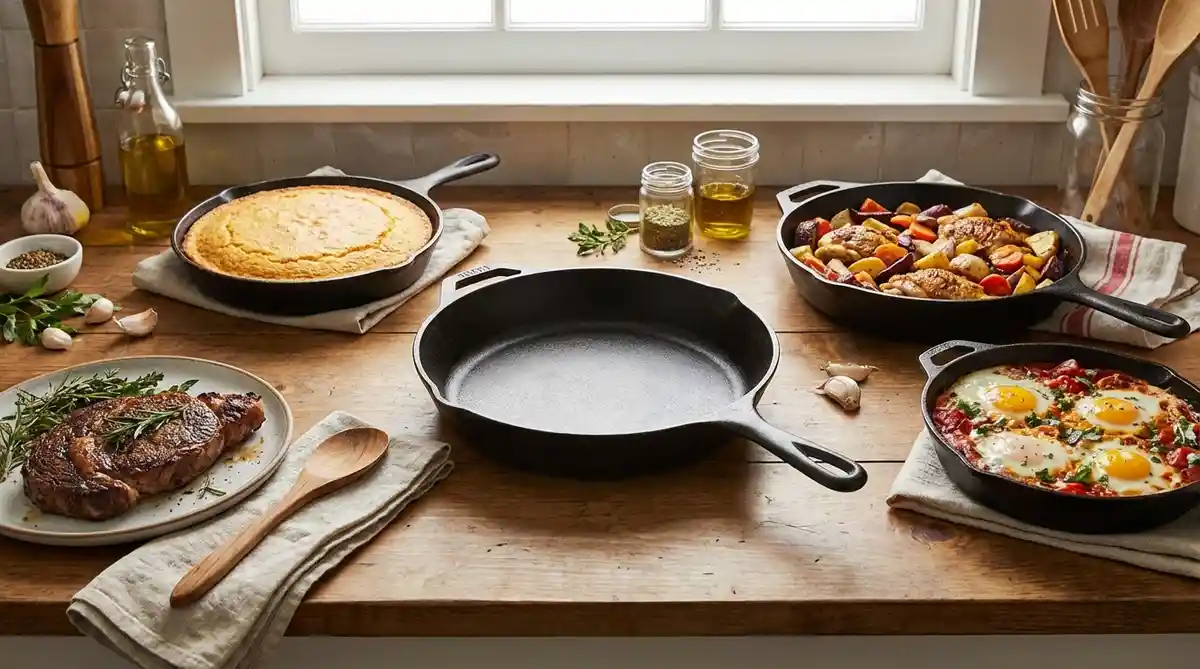
A cast iron skillet can cook almost anything. That’s also its problem — “almost anything” doesn’t tell you where it’s exceptional.
Here are the four specific tasks where cast iron doesn’t just work, it outperforms every other option in the kitchen. Four things worth making this weekend, in order of impact.
1. Bone-In Chicken Thighs with Crispy Skin
This is the highest-return cook in the cast iron repertoire. The combination of cast iron’s heat retention with the specific requirements of a chicken thigh — fat needs to render, skin needs to crisp, interior needs to reach 175°F — produces a result that nonstick and stainless can’t replicate.
Why cast iron wins here: The skin of a chicken thigh releases significant fat during cooking. In a nonstick pan, that fat pools and the skin partly steams. In a properly preheated cast iron skillet, the fat renders immediately into the hot surface, the skin makes full contact with metal at consistent temperature, and it crisps rather than steams. The result is deep golden, crackling skin with fully rendered fat beneath it.
The method:
Pat the thighs completely dry with paper towels — moisture is the enemy of crispy skin. Season aggressively with salt and pepper, both sides, under the skin if possible.
Preheat the cast iron over medium heat for 4 minutes. The pan is ready when a drop of water skitters immediately across the surface.
Add a tablespoon of neutral oil. Let it shimmer. Place thighs skin-side down without moving them. Do not press. Do not move. The pan will tell you when the skin is ready — it releases cleanly from the surface when the crust has formed. That takes 6 to 8 minutes.
Flip. Add two smashed garlic cloves and a few sprigs of thyme. Transfer to a 400°F oven for 12 to 15 minutes until the internal temperature reaches 175°F in the thickest part.
That’s it. The skin will be the best chicken skin you’ve made.
2. Cornbread
Cast iron cornbread is not the same as cornbread baked in a baking dish. The hot skillet creates an immediate, aggressive crust on the bottom and sides that a cold baking dish never produces. The bottom of the cornbread is almost a different food — deeply browned, slightly crisp, flavorful from the direct contact with seasoned iron.
The method:
Preheat the oven to 425°F with the cast iron skillet inside it. The skillet needs to be hot before the batter goes in.
The batter:
– 1.5 cups cornmeal (stone-ground preferred)
– 0.5 cup all-purpose flour
– 1.5 teaspoons baking powder
– 0.5 teaspoon baking soda
– 1 teaspoon salt
– 1 tablespoon sugar (optional — omit for more savory cornbread)
– 2 large eggs
– 1.5 cups buttermilk
– 4 tablespoons melted butter, plus 1 tablespoon for the pan
Mix dry ingredients. Whisk wet ingredients separately. Combine, don’t overmix — lumps are fine.
Remove the hot skillet from the oven. Add 1 tablespoon of butter and swirl to coat. Pour in the batter immediately — it should sizzle on contact with the hot pan. Return to the oven.
Bake 20 to 22 minutes until golden brown on top and a toothpick inserted in the center comes out clean.
The bottom crust alone justifies the cast iron for this application.
3. Seared and Basted Steak
The sear and baste technique — protein seared hard in a hot cast iron, then basted continuously with foaming herb butter — is one of the great cooking experiences a home kitchen offers. The steam from the butter carries aromatics into the meat while the pan’s heat retention maintains the sear temperature throughout.
The method:
For a 1-inch ribeye or New York strip: pat completely dry. Season heavily with salt and pepper 30 minutes before cooking. Let it sit at room temperature.
Preheat the cast iron over high heat until it begins to smoke lightly — 4 to 5 minutes. Add a thin film of high-smoke-point oil.
Place the steak in the pan. Don’t move it for 60 to 90 seconds. Flip. Add 2 tablespoons of butter, 2 smashed garlic cloves, and 2 sprigs of rosemary or thyme. As the butter foams, tilt the pan toward you and use a large spoon to continuously baste the top of the steak with the butter. 60 to 90 seconds on this side.
Flip and baste once more, 30 seconds. Hold the steak upright to sear the edges, 15 seconds per edge.
Pull at 125°F for medium-rare. Rest 5 minutes. Slice.
The basting is the difference. A steak seared in cast iron and basted correctly has flavor in the crust that no other home method replicates.
4. Pan Pizza
Cast iron skillet pizza produces a thick, focaccia-like crust with a deeply browned, almost fried bottom — a completely different product from the thin-crust pizza most people make at home. It’s also more forgiving: the thick dough is harder to burn and easier to top evenly than a thin stretched crust.
The setup:
Use a store-bought pizza dough or a simple homemade dough. Drizzle 2 tablespoons of olive oil in a 12″ cast iron skillet. Press and stretch the dough to fill the skillet — it will spring back. Let it rest 15 minutes, then press again. The rest allows the gluten to relax.
Let the dough rise in the oiled skillet for 45 minutes to 1 hour at room temperature, covered loosely with plastic wrap.
Top lightly — heavy toppings weigh down the rise and prevent the bottom from crisping. Sauce, mozzarella, two or three toppings maximum.
Bake at 475°F for 18 to 22 minutes on the lowest oven rack. The bottom should be deeply golden brown and pulling away from the sides when done. Use a spatula to lift the edge and check — it should have a crust that taps hollow.
Run the skillet under the broiler for 2 minutes if you want more color on the top.
The Common Thread
All four of these techniques work in cast iron because of the same two properties: heat retention and the seasoned surface. The retained heat means nothing drops temperature on contact. The seasoned surface develops and enhances flavor over time.
Neither property is optional for these cooks. Both are what cast iron is built for.
Start with the chicken thighs. That’s the fastest conversion from “I have a cast iron” to “I understand why people are this way about cast iron.”
Grumpy Dad Co. — The tools that earn their place.
Find the Lodge 12″ Cast Iron Skillet in the outdoor cooking collection at grumpydadco.com