The Best Meats for Summer Grilling, Ranked Honestly

Not all grilling cuts are the same.
Some are forgiving — they tolerate a few minutes of inattention, a slightly wrong temperature, a grill that runs hot on one side. Some are narrow-margin — a two-minute window between perfect and overdone. Some are crowd-pleasers regardless of your skill level. Some are the most impressive thing you can put on a table and require you to earn that.
This is the honest ranking. Not by prestige, not by price, not by what looks best in a photo. By return on effort — the combination of flavor, forgiveness, and the satisfaction of having done it right.
Nine cuts. Ranked. With the truth about each one.
1. Chicken Thighs (Bone-In, Skin-On)
The most underrated cut on the grill. The most forgiving protein in any outdoor cooking context. The one that delivers the best ratio of flavor to effort of anything on this list.
Chicken thighs have fat. Fat means they baste themselves during the cook. Fat means a few minutes over temperature produces a crispy-skinned, juicy thigh rather than a dried-out disaster. The bone slows the cook from the center, giving the exterior time to develop color and the skin time to render before the interior overcooks.
You can marinate them aggressively — acid, oil, garlic, any herb combination — and they absorb it. You can cook them at a range of temperatures. You can leave them over indirect heat for 35 minutes without checking and come back to a properly cooked piece of chicken. Try that with a breast.
The cook: Indirect heat at 350°F for 35 to 40 minutes. Move to direct heat for the final 5 minutes to char the skin. Target 175°F internal — not the food-safety threshold of 165°F, but the temperature where the connective tissue and collagen have broken down and the thigh is actually tender.
The flavor: Richer, more chicken-forward than breast. Takes smoke well. Develops mahogany color under high heat. Feeds a crowd cheaply. Disappears first at every cookout.
The catch: None. This is the correct choice for a weeknight grill and a crowd cook alike. If you’ve been grilling boneless skinless breasts, stop. Thighs.
2. Skirt Steak
The most efficient steak on the grill. It takes a marinade better than any other beef cut, cooks in under 10 minutes, and rewards a hot fire and a confident hand.
Skirt steak comes from the diaphragm muscle — it works continuously, which means significant fat marbling and a deep, minerally beef flavor that more expensive cuts often can’t match. The long grain structure that makes it work hard also makes it potentially tough, which is why two things are non-negotiable: marinade and slice direction.
The cook: Hot and fast. Direct heat at the highest temperature your grill will produce. 3 to 4 minutes per side for a 3/4-inch skirt, with a good sear developing quickly. Let it rest 5 minutes. Slice against the grain — perpendicular to the long muscle fibers — in thin diagonal cuts.
The marinade: Acid is the key. Citrus juice (lime, orange), vinegar, or wine — combined with oil, garlic, and whatever herbs fit the direction of the meal. 30 minutes minimum. 4 hours is better. The acid begins breaking down the outer fibers and makes a tough-by-nature cut genuinely tender.
The flavor: Bold. Beefy. Better with the marinade than without. One of those cuts where the knife work at the end — slicing correctly — makes the difference between tender and chewy. A sharp blade that separates cleanly matters here.
The catch: It moves fast. A skirt steak over high heat doesn’t wait. If you walk away for 3 extra minutes, you’ve overcooked it. Attention required during the actual cook. Everything before and after is easy.
3. Pork Shoulder (Slow-Smoked)
The long game. The cook that starts before sunrise and finishes when it’s ready, not when the clock says so. The result that justifies every hour invested.
A bone-in pork shoulder — Boston butt — is 8 to 12 pounds of intermuscular fat, connective tissue, and collagen that transforms into pulled pork at around 200°F internal. The collagen breaks down into gelatin. The fat renders into the meat. What emerges is the most forgiving, most crowd-pleasing, self-basting slow-cooked protein available to the backyard cook.
The shoulder is ranked here — and not at #1 — because of the time commitment. This is a 10 to 14-hour cook. It’s not a spontaneous decision. But the return on that time is significant: a shoulder that feeds 15 people generously, holds for hours in a foil-wrapped cooler without quality loss, and produces the best pulled pork most people will ever eat.
The cook: 225°F to 250°F, indirect heat, wood smoke (apple or cherry for mild sweetness, hickory or oak for more intensity). The internal temperature will stall between 160°F and 170°F — evaporative cooling from the rendering fat. Wait it out, or wrap in butcher paper to push through. Pull at 200°F to 205°F. The probe should slide in with zero resistance.
The flavor: Deep pork, smoke, rendered fat. Pull with forks or claws. The bone slides out cleanly when done correctly.
The catch: The timeline. Plan the day around the cook, not the cook around the day.
4. Baby Back Ribs
Ribs are the universal grilling symbol. They look like what BBQ is supposed to look like. They eat with your hands. They suit a crowd the way few other proteins do.
Baby backs are the more tender, leaner rib — cut from where the rib meets the spine, above the spare rib. They cook faster than spare ribs (4 to 5 hours versus 5 to 6) and are slightly more forgiving of timing. The meat is less fatty than spare ribs but more tender by default.
The cook: 225°F to 250°F, indirect, using the 2-2-1 method: 2 hours unwrapped, 2 hours wrapped in foil with a splash of liquid (apple juice, cider vinegar, or bourbon), 1 hour unwrapped with sauce if desired. Done when the meat has pulled back from the bone ends by at least a quarter inch and the rack bends 45 degrees when lifted from one end.
The flavor: Sweet from the rub, smoky from the cook, the pull-clean-off-the-bone texture that people drive to BBQ restaurants to get. At home, done right, it’s better.
The catch: It’s a full-day commitment — not as long as a pork shoulder, but you’re starting at 9 a.m. to eat at 3 p.m. Also: ribs don’t hold as well as pulled pork. Serve within 30 to 45 minutes of pulling off the grill.
5. Thick-Cut Bone-In Ribeye
The premium steak. The occasion cut. The one that earns steak’s reputation when done at the level it deserves.
A bone-in ribeye at 1.5 to 2 inches — cowboy ribeye, tomahawk if theatrical is what you’re after — cooked by reverse sear (see the full reverse sear guide on this blog) is the closest a home cook gets to a $90 restaurant steak without the restaurant.
The cook: Low and slow at 250°F indirect to 115°F internal, then screaming-hot direct heat or a preheated cast iron for the sear. 60 to 90 seconds per side. Rest 10 minutes.
The flavor: Complex. The fat cap renders during the low cook. The marbling distributes through the meat. The sear produces a crust with Maillard-reaction depth. Three or four different textures in a single cut.
The catch: Expensive. Requires attention during both phases of the cook. Rewards the effort fully when executed correctly. Unforgiving of a rushed sear phase.
6. Flank Steak
Skirt steak’s slightly more manageable sibling. From the abdominal muscles rather than the diaphragm — similar flavor profile, slightly less intense, more uniform thickness that makes timing easier.
Everything that applies to skirt steak applies here: marinade required, high heat, slice against the grain. The grain on a flank steak is easier to identify than skirt, which makes the final slicing step more straightforward for newer cooks.
The cook: Direct high heat, 4 to 5 minutes per side for a standard flank. Rest 8 minutes. Slice thin, perpendicular to the grain, on a long diagonal.
The flavor: Leaner than skirt. Takes a marinade well. Better for larger portions (flank steaks run larger — one feeds 3 to 4 people). The go-to for fajitas, steak salads, and anything where sliced beef serves as one component of a larger plate.
The catch: Even thinner margin of error than skirt. Medium-well or well-done flank steak is shoe leather. Cook it to medium-rare and slice it correctly or don’t cook it at all.
7. Whole Chicken (Spatchcocked)
A whole chicken on the grill sounds impressive and often ends in disappointment — the breast overcooks before the thigh finishes, or the skin doesn’t crisp properly, or the timing is off and the interior is still pink.
Spatchcocking solves this. Remove the backbone with kitchen shears, press the chicken flat, and the breast and thigh cook at the same rate because they’re now the same distance from the heat source. The skin is fully exposed across the entire bird. It cooks in 35 to 45 minutes instead of 90.
The cook: Direct medium heat, skin side up, first 20 minutes. Flip skin-side down for the final 15 to 20 minutes over medium-direct heat. Target 165°F in the breast, 175°F in the thigh. The skin should be deep golden and pulling away from the meat.
The flavor: A whole chicken’s skin, properly crisped over live fire, tastes like something no roasting pan in an oven ever produces. The smoke, the direct heat, the rendered fat dripping onto the coals and coming back up as flavorful smoke — it’s a different category of result.
The catch: The spatchcock step requires kitchen shears that can cut through a backbone, which most households have. The skill requirement is lower than it looks. The timing still requires a probe thermometer — “done” on a whole chicken means both the breast and thigh are done, simultaneously.
8. Sausages and Bratwurst
Lower-ranked not because they’re worse to eat but because they require the least skill and deliver accordingly. Sausages are great. They’re also grilling on easy mode.
Indirect heat until 150°F internal, then direct heat for char and snap. Or in a beer braise first (onions, butter, beer in a cast iron pan on the grill), then direct heat. Either way: 20 minutes, hard to overcook, universally well received.
The catch: None. That’s why they’re ranked here rather than higher.
9. Chicken Breast (Boneless, Skinless)
Last. Intentionally.
Chicken breast is not a bad ingredient. It’s a good ingredient cooked wrong on grills across the country every weekend. It’s lean, which means it goes from safe to dry in about two minutes. It’s boneless, which means there’s nothing slowing the heat. It’s skinless, which means there’s no fat rendering to protect the muscle.
Done correctly — brined for at least an hour (1 tablespoon kosher salt per cup of water, 30 to 60 minutes), grilled at medium heat to an internal temperature of exactly 160°F and immediately removed — a chicken breast can be good. Juicy even.
Done the way most chicken breasts are done at backyard cookouts — thrown directly from the refrigerator onto a hot grill, cooked until someone’s phone says 15 minutes have passed, checked by cutting into it and watching the juice run out — it’s dry. It’s always dry.
This cut is ranked last not as a condemnation but as a reminder: if your go-to is boneless skinless breast, the thighs are right next to them at the butcher counter. Try those instead.
The Tools That Apply Across All of These
A probe thermometer covers the top five cuts on this list. Pork shoulder at 200°F. Ribs tender to the probe. Ribeye at 115°F before sear. Skirt steak off before it overheats. Whole chicken at 165°F and 175°F simultaneously. The MEATER Plus handles all of it.
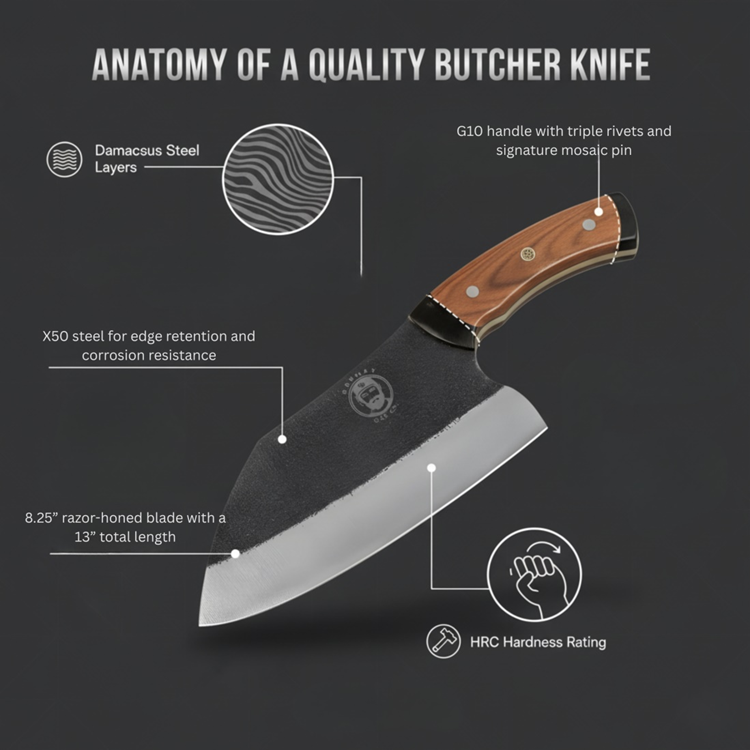
A sharp knife for the cuts that require slicing — skirt steak, flank steak, ribeye. The cut matters as much as the cook. A blade that separates cleanly lets you serve what the grill produced. A blade that tears it is working against you.
A cast iron skillet for the sear on thick steaks and for the smash burgers that are the fast-cook support at any large cookout.
The Short Version
Chicken thighs for reliability. Skirt steak for speed. Pork shoulder for a crowd. Ribs for the occasion. Thick ribeye for the statement.
All nine are worth knowing. Four or five are worth having in regular rotation. The rankings reflect how the effort and the result align — not a judgment on flavor or merit.
Cook what the day calls for. Use the right tools. Don’t overcook the flank steak.
Grumpy Dad Co. — The right tool for the right cook.
Browse thermometers, knives, and the full outdoor cooking collection at grumpydadco.com