How to Make a BBQ Sauce From Scratch (And Why It’s Worth It)

Bottled BBQ sauce is fine. It’s also one of the easiest things in cooking to replace with something better.
A scratch BBQ sauce takes 20 minutes. It costs less than a bottle. It tastes like something that was made with the specific meal in mind rather than formulated for a grocery store demographic. And because you control the sweetness, the acid, and the heat, it’s adjustable in a way that a bottle never is.
Here’s the base recipe that works, and four regional variations worth knowing.
The Base: Kansas City-Style
This is the sweet-tangy tomato-based style most people mean when they say “BBQ sauce.” It works on ribs, pulled pork, chicken, and as a dipping sauce. It’s the most versatile of the regional styles and the right starting point.
Ingredients:
- 1.5 cups ketchup
- 1/4 cup apple cider vinegar
- 1/4 cup dark brown sugar, packed
- 2 tablespoons Worcestershire sauce
- 1 tablespoon yellow mustard
- 1 tablespoon smoked paprika
- 1 teaspoon garlic powder
- 1 teaspoon onion powder
- 1/2 teaspoon black pepper
- 1/2 teaspoon cayenne (adjust to preference)
- 1/2 teaspoon kosher salt
Method:
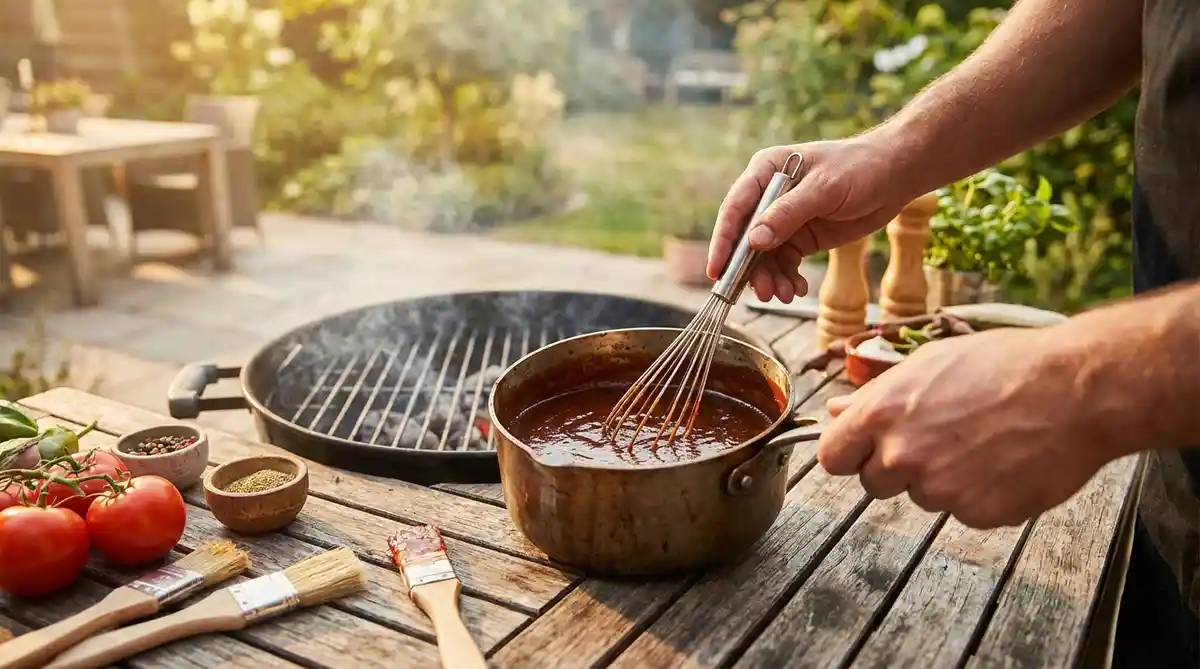
Combine all ingredients in a small saucepan over medium heat. Stir to incorporate. Bring to a gentle simmer, stirring occasionally. Reduce heat to low and simmer 15 to 20 minutes until slightly thickened and the flavors have melded.
Taste after 15 minutes. Adjust: more vinegar for tang, more brown sugar for sweetness, more cayenne for heat, salt to taste.
Let it cool before using or storing. The flavor improves overnight — the spices integrate and the vinegar mellows. Make it the day before if you can.
Storage: Covered in the refrigerator for up to three weeks.
Applying It Correctly
This is where most people go wrong: they apply sauce too early.
BBQ sauce contains sugar. Sugar burns at around 325°F. Applied early in a low-and-slow cook — hours before the protein is done — the sugar caramelizes and then burns over the long cook time, producing a black, bitter exterior rather than a lacquered, glossy crust.
The rule: Apply sauce in the final 20 to 30 minutes of cooking only. For ribs: in the last stage of the 2-2-1 method, unwrapped. For chicken: in the last 10 minutes over indirect heat. For pulled pork: mixed into the pulled meat after it comes off, not during the cook.
Multiple thin coats are better than one thick coat. Apply, let the first coat set for 5 to 7 minutes, apply a second coat. The layers build the glaze without burning.
The Four Regional Variations
Eastern North Carolina: Vinegar-Based
No tomato. No sugar. Just vinegar, pepper, and heat. This is the oldest American BBQ sauce tradition — the style that existed before ketchup and before sweetness became the default.
Recipe:
– 1 cup apple cider vinegar
– 1/2 cup white vinegar
– 1 tablespoon red pepper flakes
– 1 tablespoon black pepper
– 1 teaspoon cayenne
– 1 teaspoon salt
– 1 tablespoon sugar (optional — traditionalists omit it)
No cooking required. Combine, stir, done.
Best on: Pulled pork. The acid cuts through the fat of the shoulder better than any sweetened sauce. It’s not a glaze — it’s a finishing sauce added directly to the pulled meat.
Western Carolina: Tomato-Vinegar (Lexington Style)
The bridge between Eastern’s pure vinegar and Kansas City’s sweet tomato. Called “dip” in the Lexington, NC tradition.
Recipe:
– 1 cup apple cider vinegar
– 1/2 cup ketchup
– 2 tablespoons brown sugar
– 1 teaspoon red pepper flakes
– 1 teaspoon black pepper
– 1/2 teaspoon salt
Combine in a saucepan. Simmer 10 minutes. The ketchup adds body and mild sweetness while the vinegar stays dominant.
South Carolina: Mustard-Based (Carolina Gold)
Yellow mustard as the base instead of tomato. Tangy, bright, deeply regional. Common confusion: people who haven’t had it expect it to taste like plain mustard. It doesn’t. The cooking mellows and integrates the mustard into something complex.
Recipe:
– 1/2 cup yellow mustard
– 1/4 cup apple cider vinegar
– 2 tablespoons honey
– 1 tablespoon brown sugar
– 1 tablespoon Worcestershire sauce
– 1 teaspoon garlic powder
– 1/2 teaspoon black pepper
– 1/2 teaspoon cayenne
Combine in a saucepan. Simmer 10 minutes.
Best on: Pulled pork. Also excellent on chicken.
Alabama: White BBQ Sauce
The outlier. Mayonnaise-based, tangy, slightly peppery. Sounds wrong. Tastes right on grilled chicken, particularly smoked or charcoal-grilled.
Recipe:
– 1 cup mayonnaise
– 1/4 cup apple cider vinegar
– 1 tablespoon prepared horseradish
– 1 teaspoon black pepper
– 1 teaspoon garlic powder
– 1/2 teaspoon cayenne
– 1/2 teaspoon salt
– 1 teaspoon sugar
No cooking. Combine and refrigerate at least 30 minutes before using.
Best on: Grilled chicken. Also a surprisingly good dipping sauce for smoked ribs.
When Bottled Sauce Is Fine
Homemade BBQ sauce is worth making for occasions. For a weeknight chicken cook or a backyard gathering, a quality bottled sauce (Stubb’s Original, Lillie’s Q, any regional producer you like) is completely acceptable.
The case for scratch is: you control the sweetness, the acid, and the heat. You can adjust on the fly. And when you make the sauce for the occasion — Memorial Day ribs, a pork shoulder for a party — it completes the cook in a way that a store label doesn’t.
Make it for the cooks that matter. Use the bottle when efficiency is the priority. Both are legitimate choices.
Grumpy Dad Co. — The right finish on the right cook.
Browse the full outdoor cooking and grilling collection at grumpydadco.com