Why Japanese Knives Cut Better: The Real Difference You’ll Feel

You know that moment when a knife doesn’t fight back?
The tomato doesn’t squish. The onion doesn’t skid. Your wrist doesn’t complain.
That ‘whoa’ feeling isn’t magic—it’s control. And once you feel it with a Japanese knife, it’s hard to go back to anything else.
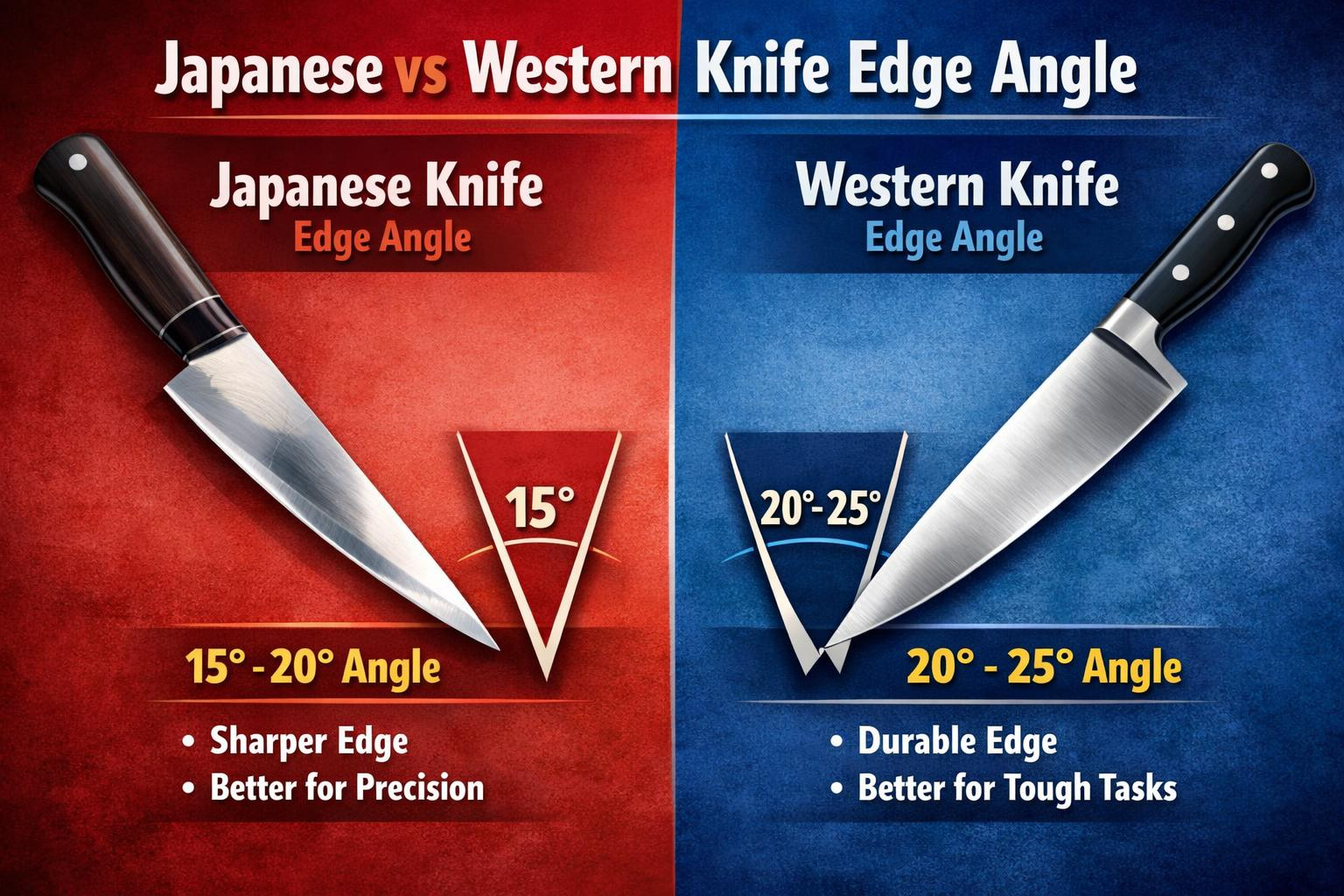
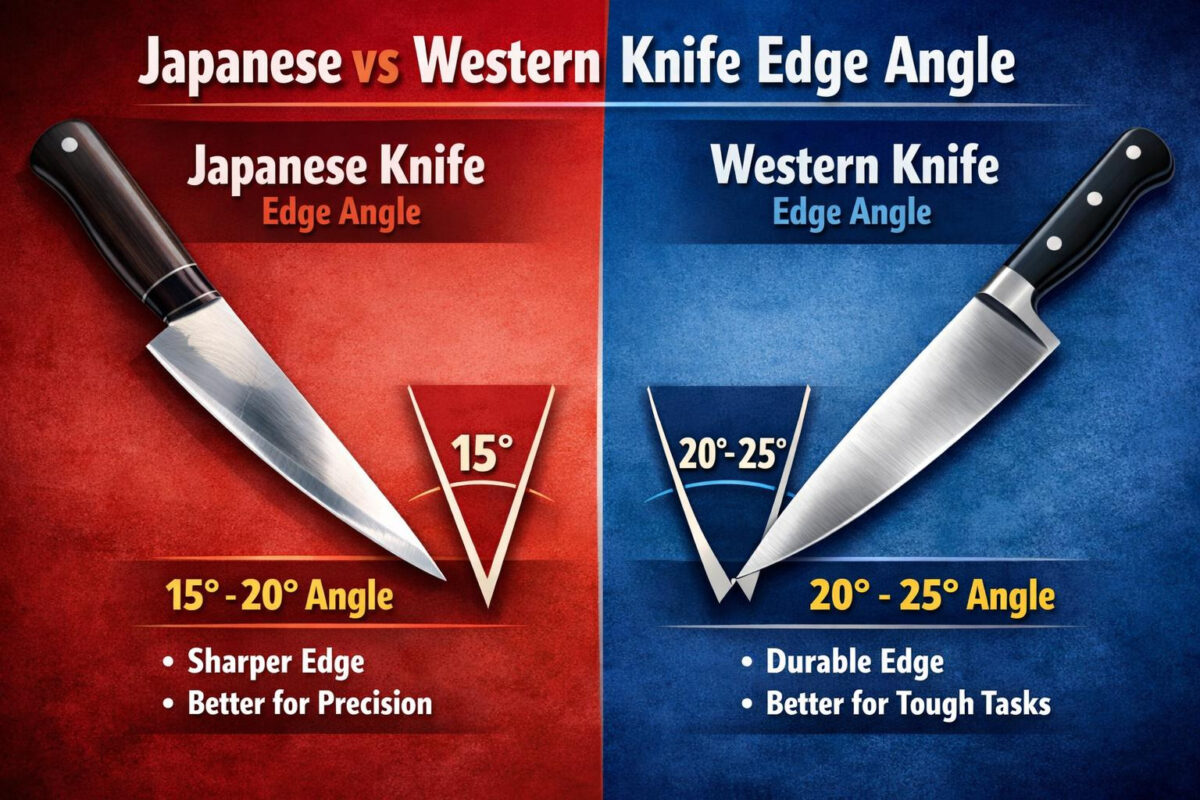
Here’s what’s actually different: Japanese knives use thinner blade geometry (typically 15° edge angle vs. 20° on Western knives) and harder steel (HRC 60-62 vs. 56-58). This creates less resistance when cutting, which means cleaner cuts with less effort. You’re not pushing through food—you’re guiding the blade through it.
That’s the short answer. Here’s why it matters if you cook at home.
What Makes Japanese Knives Cut Differently Than Western Knives
Most people think it’s just about sharpness. It’s not.
A sharp knife cuts. A well-designed knife listens.
Japanese chef knives have this quality where they give you feedback. The blade tells you where it is, how deep it’s going, what it’s touching. You’re not guessing. You’re not sawing. You’re just cutting.
Less force. More accuracy. Fewer accidents.
Western knives—your typical German chef knife—are built like tanks. Thicker blade. Softer steel. Designed to take a beating and stay sharp enough for most tasks.
Japanese knives are built like scalpels. Thinner. Harder. Designed for precision work where the cut quality matters.
Different tools. Different jobs. Most home cooks would benefit from both, but if you only pick one, you need to know what you’re getting into.
Feature |
Japanese Knives |
Western Knives |
Edge Angle |
15° (sharper) |
20° (more durable) |
Steel Hardness |
HRC 60-62 (harder, holds edge longer) |
HRC 56-58 (softer, easier to sharpen) |
Blade Thickness |
Thinner behind the edge |
Thicker, more wedge-like |
Best For |
Precision slicing, vegetables, fish |
Heavy-duty tasks, poultry, general use |
Maintenance |
More care needed, sharpen less often |
More forgiving, sharpen more often |
Weight |
Lighter, more nimble |
Heavier, feels substantial |
Price Range |
$80-$300 for quality |
$50-$200 for quality |
Neither is ‘better.’ They’re designed for different things. If you prep a lot of vegetables, slice fish, or care about clean herb cuts, Japanese geometry wins. If you’re breaking down chickens and don’t want to baby your tools, Western is fine.
But if you’ve never used a proper Japanese knife for vegetable prep, you don’t know what you’re missing.
Why Japanese Knife Geometry Matters More Than Sharpness
Here’s the thing people get wrong.
A dull knife is a problem. But a sharp knife with bad geometry is still frustrating.
Western knives wedge through food. The thick blade behind the edge creates resistance. You push, the onion resists, you push harder. The layers crack. The tomato juices spray. Your hand gets tired.
Japanese knives? The blade is thinner behind the edge. Less steel means less resistance. The knife slices instead of wedges.
You’re not muscling through—you’re guiding. The knife does the work. You just aim.
That’s the ‘glide’ people talk about. It’s not mystical. It’s physics you can feel in your hand.
And once you feel it, every other knife feels like it’s arguing with you.
3 Everyday Cuts That Show the Japanese Knife Difference
The Tomato Test (You’ll Know in One Slice)
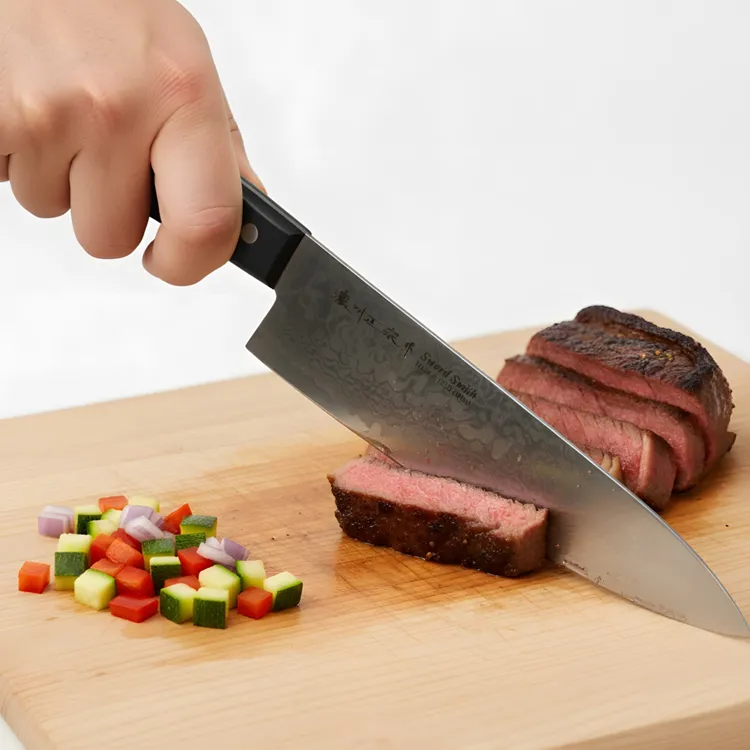
Ripe tomato. Thin skin. Try slicing it with a typical kitchen knife and the skin either tears or you’re sawing back and forth like you’re starting a campfire.
Japanese knife? Blade touches skin, skin splits. No pressure. No drama.
This is the fastest way to test if your knife is working with you or against you. If you have to saw a tomato, your knife isn’t good enough.
Onion: Clean Vertical Cuts Without the Mess
Dicing an onion shouldn’t feel like construction work.
With a proper Japanese chef knife, you make clean vertical cuts through the layers. They stay together. No cracking, no separation, no onion shrapnel across the cutting board.
The knife goes where you point it. The onion behaves. You move on with your life.
If your onions are falling apart mid-dice, that’s your knife creating resistance where there shouldn’t be any.
Herbs That Don’t Turn Brown and Sad
Ever chop basil and it immediately looks bruised and oxidized?
That’s because your knife is crushing the cells instead of slicing them. A sharper, thinner blade cuts clean. Less cellular damage. Greens stay green.
You’ll taste the difference. Or at least you won’t taste that weird metallic bitterness from mangled herbs.
This matters more if you’re making pesto, garnishing, or doing anything where fresh herbs are the main event.
Are Japanese Knives Worth It for Home Cooks?
Depends on what you cook and how much you care.
If you’re meal prepping Sunday vegetables for the week, slicing fish, doing any serious knife work—yes. The difference is immediate and it compounds over time.
If you’re mostly opening packages and cutting the occasional sandwich, probably not. A decent Western knife will do fine and you won’t baby it as much.
Japanese knives are worth it if:
-
- You cook 4+ times a week
- You prep a lot of vegetables (stir-fry, salads, roasted veg)
- You slice proteins thin (sashimi, carpaccio, brisket)
- You’re tired of fighting your tools
- You want something that’ll still be good in 15 years
Stick with Western knives if:
-
- You’re hard on your tools
- You mostly use knives for basic tasks
- You’re not interested in learning different sharpening techniques
- You want something you can throw in the dishwasher (don’t do this, but some people do)
No judgment either way. But if you’re in the first camp and you’ve never used a proper Japanese knife, you’re working harder than you need to.
FAQ: Japanese Knives
Are Japanese knives sharper than Western knives?
Out of the box? Usually yes, because the edge angle is sharper (15° vs 20°). But sharpness fades. What lasts is the geometry—Japanese knives stay easier to cut with even when they dull slightly because the blade is thinner behind the edge.
Do Japanese knives need special sharpening?
Yes and no. You can use a Western-style sharpening steel, but it’s not ideal. Most people use whetstones, which aren’t hard to learn but do require practice. Or you can send them out for professional sharpening 1-2 times a year. The edge lasts longer than Western knives, so you sharpen less often.
Will a Japanese knife break if I drop it?
Harder steel means more brittle. Drop it tip-first on tile and you might chip the edge. This isn’t common, but it happens. Don’t use Japanese knives like hammers and you’ll be fine.
Can I put a Japanese knife in the dishwasher?
No. The heat, harsh detergent, and banging around will ruin the edge and potentially crack the handle. Hand wash, dry immediately, move on with your life.
Do Japanese knives rust?
Stainless steel Japanese knives (VG-10, Aichi) resist rust well but should still be dried after washing. Carbon steel Japanese knives (White #2, Blue #2) will absolutely rust if you leave them wet. Most home cooks should stick with stainless unless they want the maintenance ritual.
What to Do Next
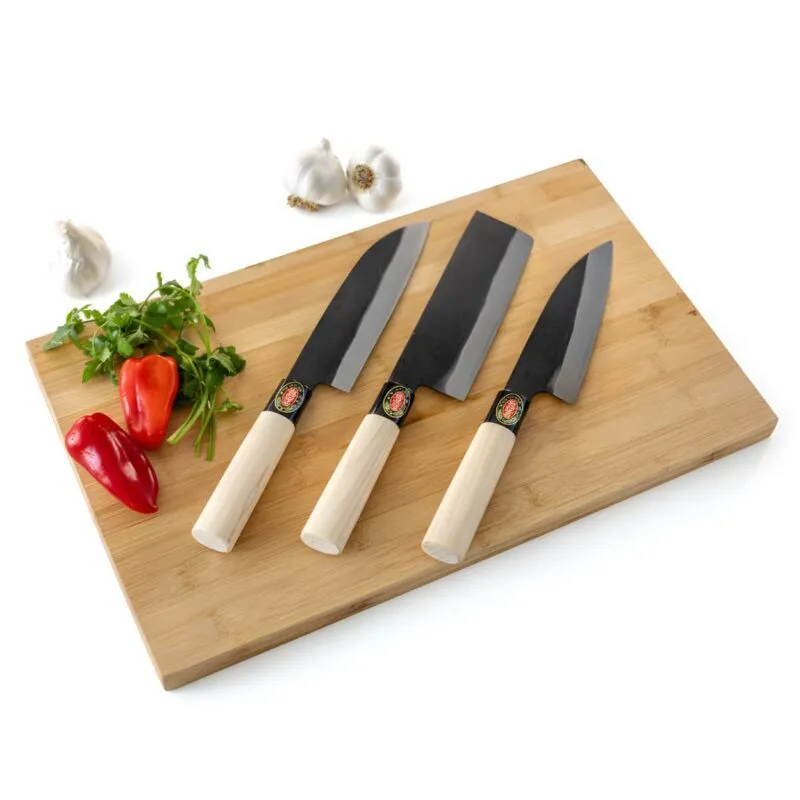
If you’re curious, start with one knife. An 8-inch gyuto. Use it for a week. Pay attention to how it feels when you slice a tomato or dice an onion.
You’ll know pretty quickly if this is for you.
We sell two versions:
Stainless Steel – VG-10 core. Won’t rust if you forget to dry it. Sharpens easy. This is the one for most people.
Blue #2 (Aogami) Carbon Steel – Gets sharper. Stays sharper longer. Needs more care (dry it immediately or it’ll rust). This is the one if you’re already into knives or you want the best edge possible.
Both cut the same vegetables. Both last 15+ years. The stainless is more forgiving. The carbon steel is more satisfying.
Pick one. Use it. If it’s not better than what you have now, you can return it.
The knife either works, or it doesn’t. You’ll feel it the first time you use it.
[Shop Stainless Steel] | [Shop Blue #2]
Read more