Posts

Carbon Steel Knife Care Guide | Prevent Rust & Maintain Sharpness

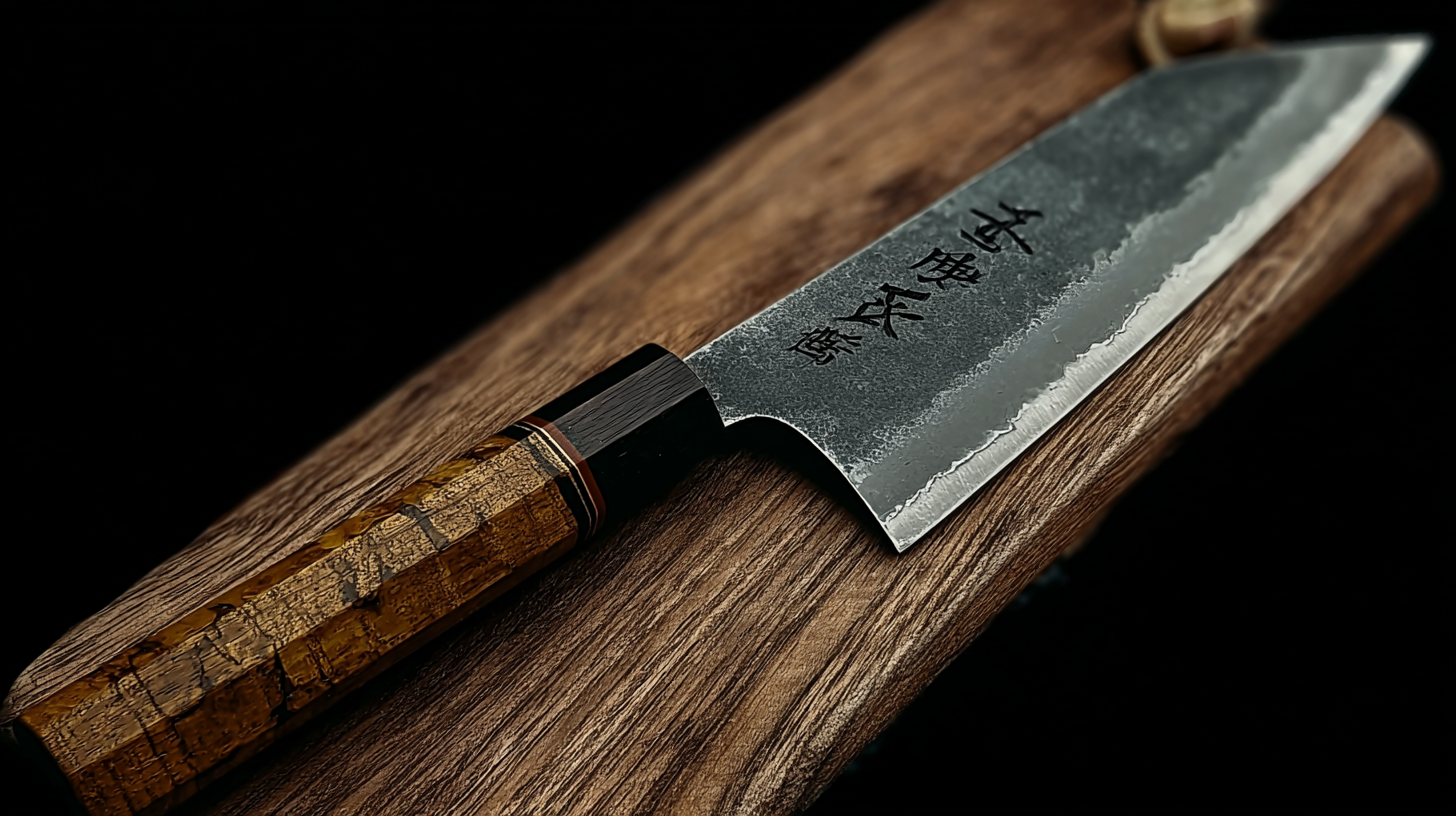
Japanese chef knife on wooden board close-up.

A practical, no‑nonsense guide for keeping your carbon steel knife sharp, rust‑free, and ready for daily use.

Japanese chef knife on wooden board close-up.

Why Carbon Steel Is Different (and Worth It)

Carbon steel knives—like those made with Aogami (Blue Steel)—are loved for one simple reason: performance. They take a sharper edge, feel more alive in the hand, and reward good technique.

The trade‑off? Carbon steel is more reactive than stainless steel. Moisture, acids, and oxygen can cause discoloration or rust if the blade isn’t cared for properly.

That’s not a flaw. It’s the nature of the material—and once you understand it, carbon steel is easy to live with.

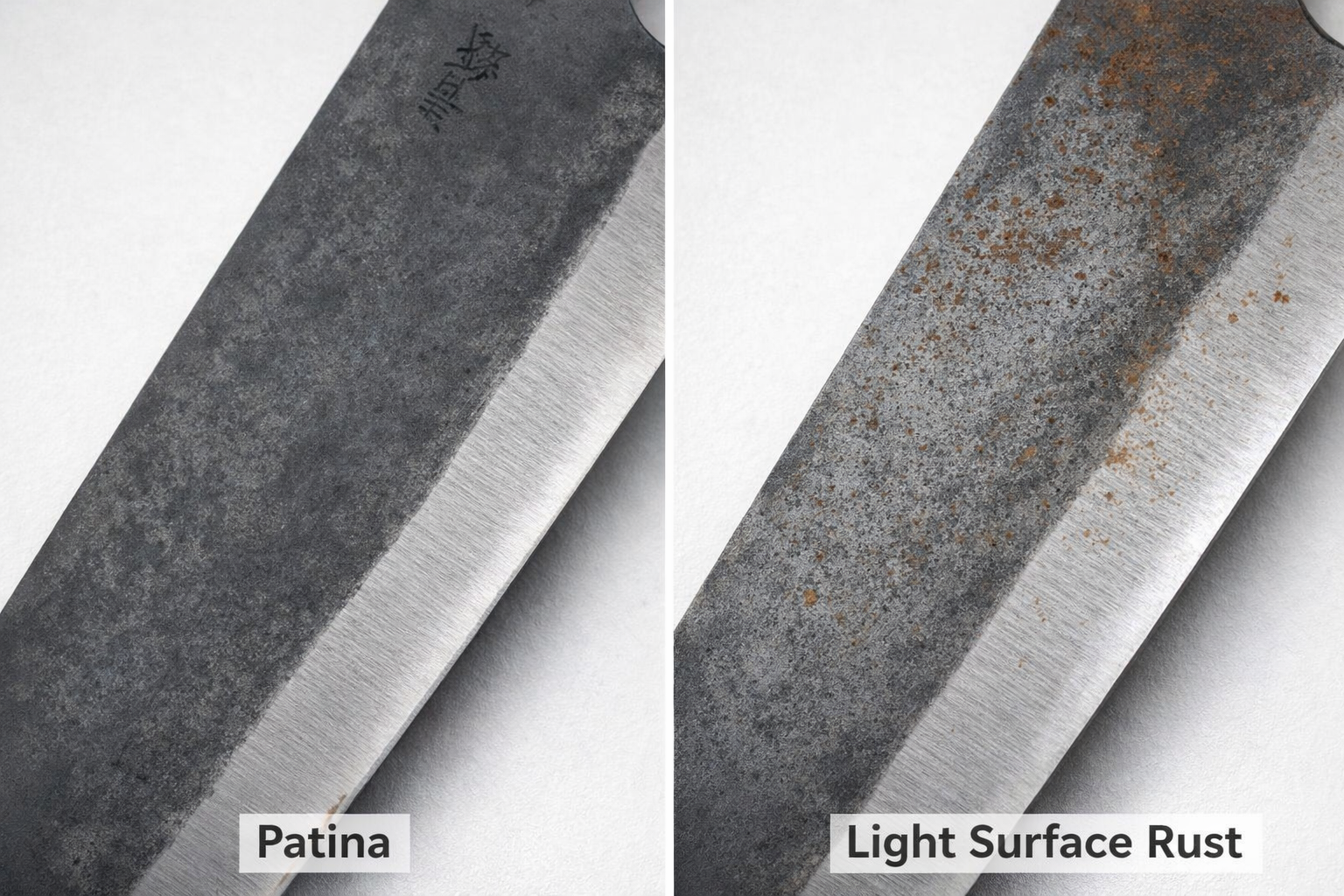
Comparison of blade patina and light rust.

Patina vs. Rust: What’s Normal and What’s Not

Patina (Good)

Patina is a dark gray, blue, or brown discoloration that forms naturally as the blade reacts with food. It actually protects the steel and slows down rust.

Think of it as seasoning a cast‑iron pan.

Rust (Not Ideal)

Rust appears as bright orange or red spots. It means moisture sat on the blade too long.

Light surface rust is common and usually easy to remove. It does not mean your knife is ruined.

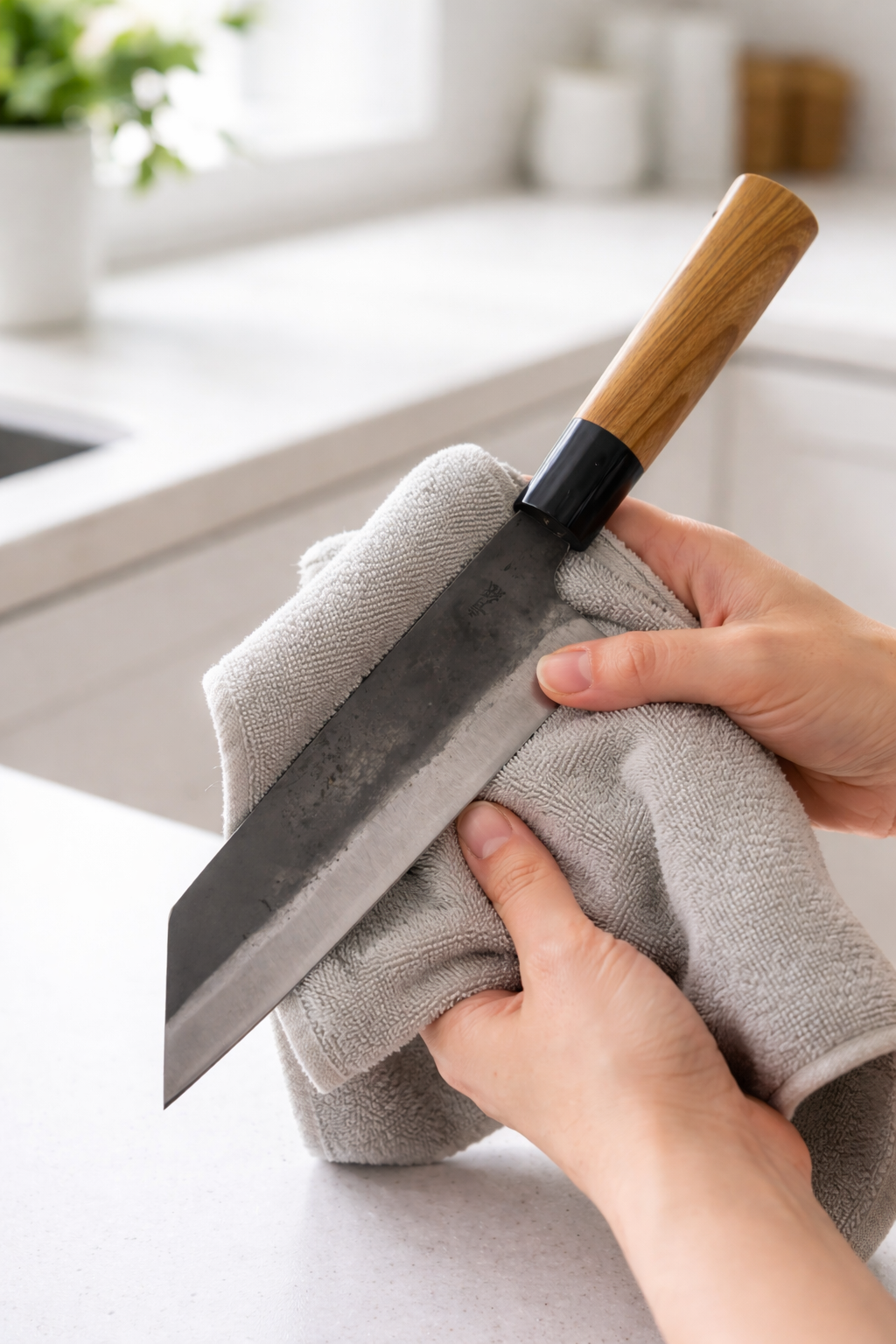
Person cleaning a kitchen knife with cloth.

Daily Care: What to Do Every Time You Use the Knife

  1. Hand wash only
    Use warm water and mild soap. Never put carbon steel in the dishwasher.

  2. Dry immediately
    Wipe the blade completely dry with a towel—don’t air dry.

  3. Wipe during prep if needed
    When cutting acidic foods (onions, citrus, tomatoes), a quick wipe during use helps.

  4. Light oil before storage (optional but recommended)
    Apply a very thin coat of food‑safe mineral oil, especially if the knife won’t be used for a few days.

Cutting Boards Matter More Than You Think

Best options:

  • End‑grain wood (walnut, maple, cherry)
  • Soft rubber boards

Avoid:

  • Glass

  • Bamboo

  • Granite

  • Very hard composite boards

Hard boards don’t just dull the edge—they increase the chance of micro‑damage on harder steels.

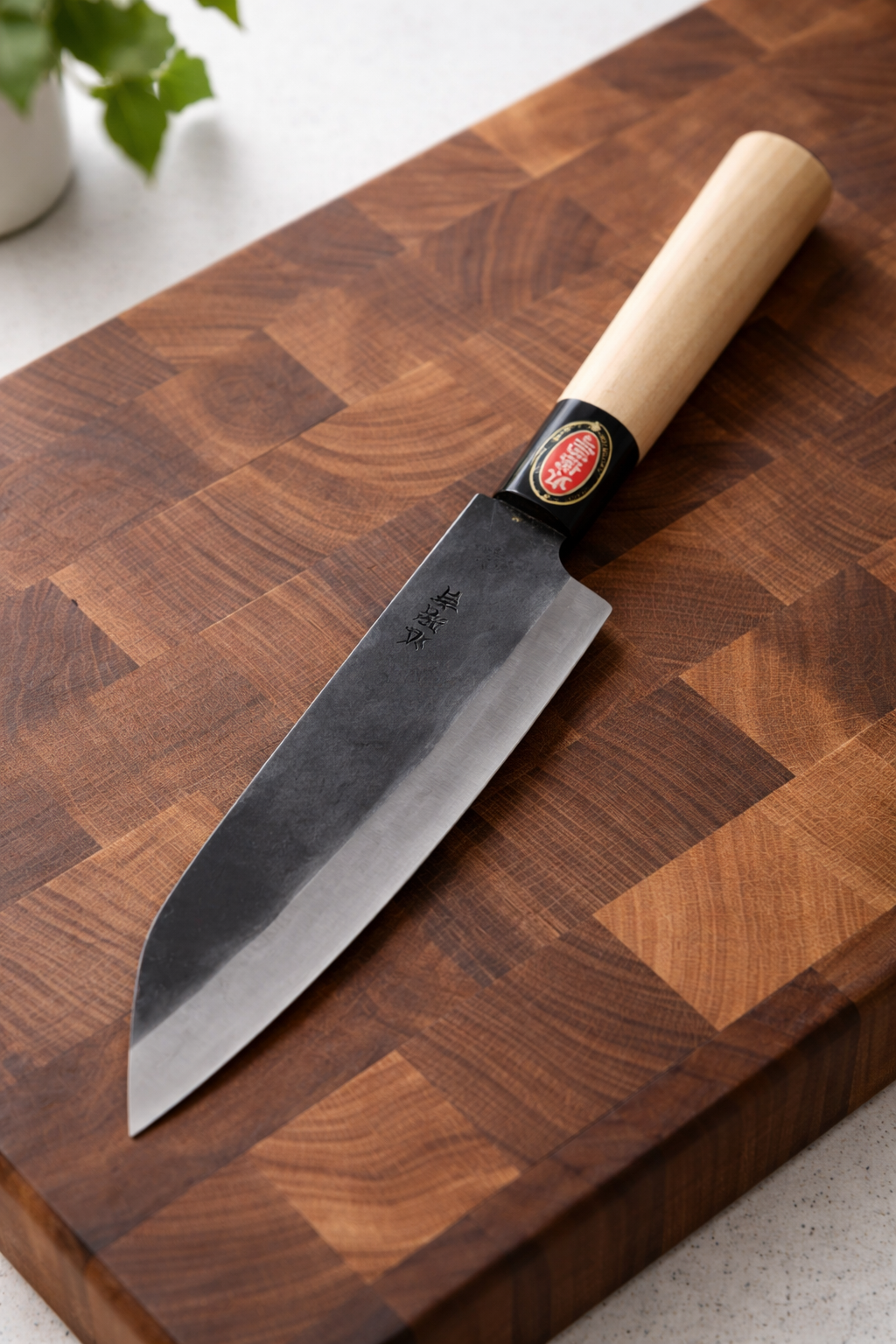
Japanese knife on wooden cutting board.

Storage: The #1 Cause of Surprise Rust

At Home

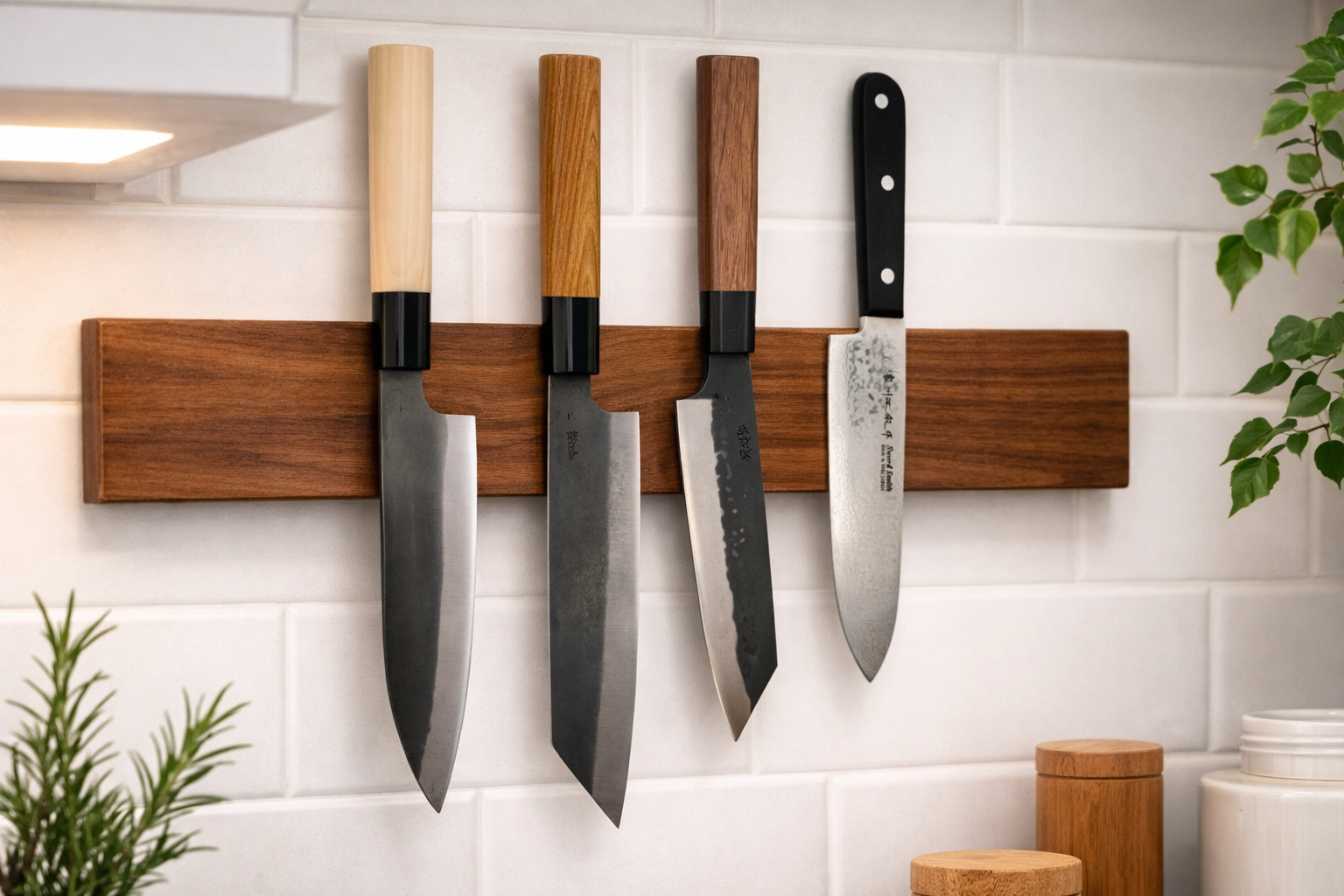
  • Magnetic strip in a dry area

  • Knife block with airflow

  • Saya (wooden sheath) that stays dry

Knife Covers & Travel

Soft or furry knife covers can trap humidity, especially during travel or long storage.

If you use a cover:

  • Make sure the knife is completely dry

  • Apply a thin oil layer

  • Avoid long‑term storage in fabric sleeves

  • Consider adding a small silica/desiccant packet when traveling

Magnetic knife rack with four kitchen knives

Traveling With a Carbon Steel Knife

Before travel:

  1. Wash and dry thoroughly

  2. Apply a thin coat of mineral oil

  3. Store in a dry sleeve or saya (not plush fabric)

  4. If possible, add a small desiccant packet

After travel:

  • Wipe the blade again before use

A little preparation prevents rust surprises.

Removing Light Rust (When It Happens)

If you see light orange rust:

Rinse, dry immediately, and re‑oil lightly.

Avoid aggressive abrasives unless absolutely necessary.


Final Thought

Carbon steel knives aren’t fragile—they’re honest.

They tell you when they’re wet. They reward good habits. And once they develop a patina, they become easier to care for, not harder.

Treat the knife with a little respect, and it will return the favor every time you cook.

Leave a Reply

Your email address will not be published. Required fields are marked *